
THE QUESTION
Can traceability and climate risk protection be bundled into a single coffee transaction, improving market access for smallholders while meeting buyer demands?
LOCATION: Vietnam
SECTOR: Climate, Agriculture
TECH: Digital Tools and Services, Sensors
TIMELINE: January - March 2026
PARTNERS: Hillridge Technology
The Challenge
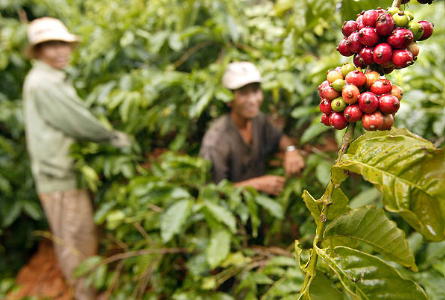
Vietnam is the world’s second-largest coffee exporter, yet much of its coffee is produced by smallholder farmers who remain disconnected from premium international markets. Even farmers producing specialty coffee — which should command higher prices — often sell into fragmented domestic supply chains where quality is not consistently rewarded, transparency is limited, and incentives to invest in sustainable production remain weak.
These market constraints are increasingly compounded by climate risk. Coffee production is highly sensitive to rainfall patterns, particularly during flowering, berry development, and harvest. In recent seasons, Vietnamese coffee farmers have experienced both prolonged droughts and unseasonal heavy rainfall, leading to yield losses, quality deterioration, and income volatility.
At the same time, international buyers are facing growing pressure to demonstrate responsible sourcing, stronger supply chain transparency, and compliance with traceability requirements such as the European Union Deforestation Regulation (EUDR). Roasters are seeking high-quality coffee with verified provenance, but also greater confidence that their supply base is resilient to climate disruption.
The Idea
This pilot will test a “farm to roaster” model that integrates three elements into a single commercial transaction: digital traceability, direct market access, and climate risk protection. Hillridge will work with 100 smallholder coffee farmers in Vietnam, sourcing 100 tonnes of specialty green coffee that is digitally traced from farm to buyer and sold to an international roaster.
Hillridge will deploy its traceability platform to register participating farms, capture geolocation data, and assign unique digital identities to coffee lots. This information will follow the coffee through aggregation, processing, and export, enabling verified evidence of origin and supporting buyers’ expectations for transparent, compliant sourcing.
A core innovation of the pilot is embedding climate adaptation finance directly into the purchase itself. When coffee is procured from participating farmers, a defined portion of the transaction value will be allocated to purchase Comprehensive Coffee Insurance for the upcoming production year. This creates a mechanism for farmers to benefit from insurance coverage without separate enrolment or upfront premium payments, while ensuring that climate risk protection is linked to participation in a premium, traceable supply chain.
The insurance provides index-based coverage against drought and excess rainfall at critical stages of the agronomic cycle, with payouts triggered automatically using objective satellite-based rainfall data. By bundling traceability, market access, and insurance into one transaction within a single season, the pilot will generate fast evidence on whether this integrated model can work operationally under commercial conditions — and what would be required to scale it across other value chains and contexts.
Our learnings and stories so far


Exploring shared challenges around widening access to justice, from the courts of East Africa to the fields of Colombia.