On the Frontier of Biodiversity Data
This is a published version of our On the Frontier (OtF) newsletter series. Every month we take one global critical challenge and explore what’s at the cutting edge of it, together. Click here to join the FT Network and receive our newsletter directly.

Biodiversity in a Backpack
Life on Earth is disappearing before our eyes. Insect populations have declined by 75% over the past three decades. Waterborne diseases are rising, and over 2 billion people now face reduced water availability.
But we can't protect what we don't understand, and some of our most vulnerable ecosystems are deeply understudied in megadiverse regions.
Our new short film follows two UK technologies being adapted for use in Kenya and Colombia — bringing world-class biodiversity science within reach of those on the front lines of nature loss. And both are small enough to fit in a backpack.
If the tech already exists, why isn't it everywhere?

Our new report shares what we’ve learned from supporting early-stage biodiversity innovations: deep-sea cameras built from hardware-store parts, portable DNA sequencers and AI that identifies insects through sound.
But despite the incredible potential of frontier technologies to save our planet, our pilots revealed an uncomfortable pattern:
We can identify trafficked parrots in 48 hours, but prosecutors aren't trained to use genetic evidence.
We can monitor insects easily, but there's no centralised database to store fragmented data.
We can build deep-sea cameras for a fraction of the usual cost, but significant delays outlast the grant period in which to test them.
We increasingly see that the gap isn't usually about the tech but about the enabling environment surrounding its use. Policy, regulation, and infrastructure all contribute to challenges that need to be overcome.
But there are bright spots: partnerships, resource pooling and local manufacturing are just some proven approaches to overcome barriers. Our forward-looking conclusion determines what it will take to translate high-potential technologies into real impact for biodiversity and nature.
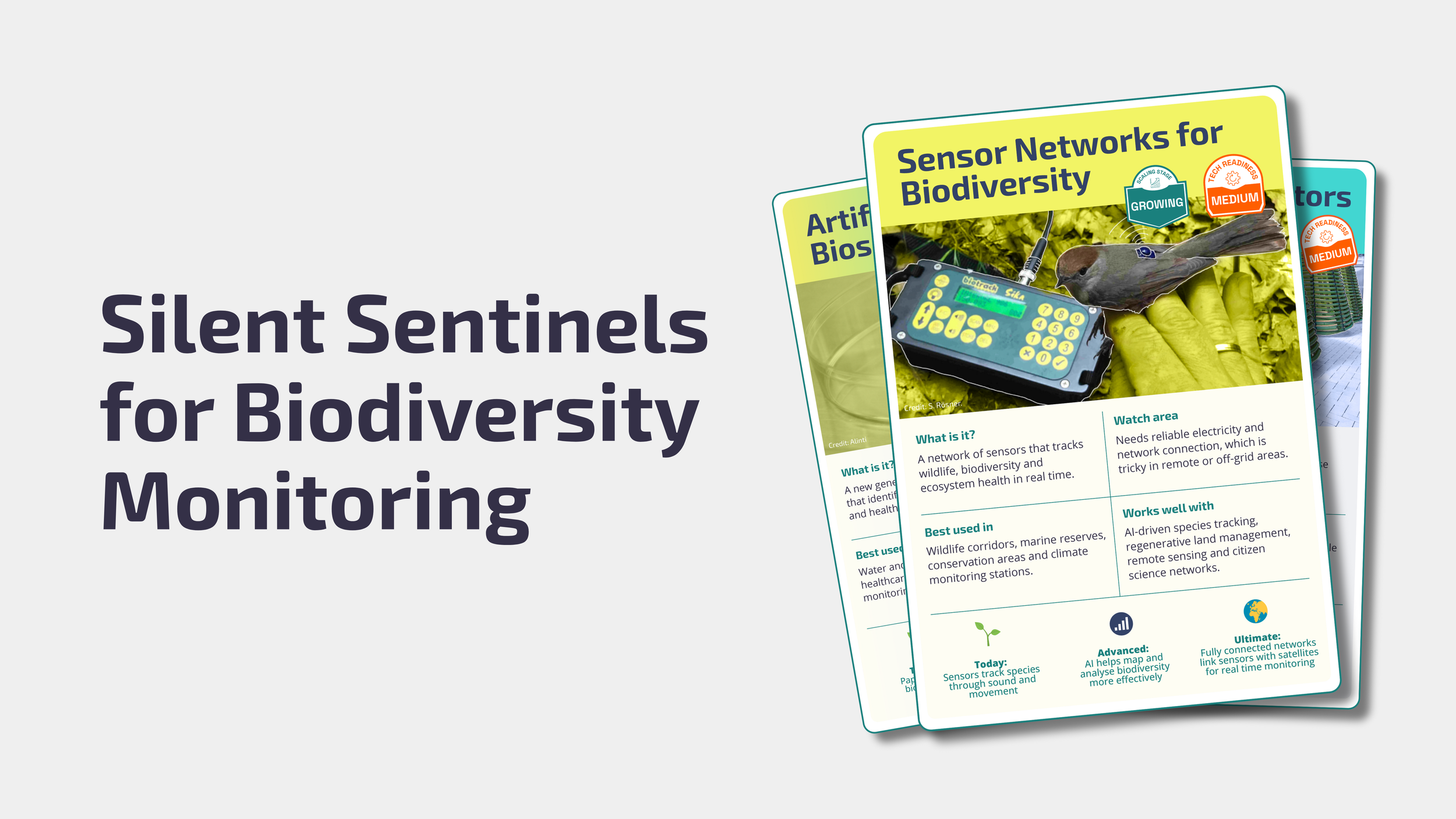
How can we harness sensor networks and a decolonising stance for local, effective conservation?
Our AI podcast hosts are back with a new episode. During this 15-minute conversation, they unpack one of our Underhyped Frontier Technologies: Sensor Networks for Biodiversity.
We know that some of the world's most biodiverse countries are the least studied. November 1st marks 1 year since world leaders at COP16 highlighted the need to support capacity-building in biodiversity conservation in LMICs.
The combination of affordable, connected, low-power sensors and AI tools can generate real-time biodiversity data at scale, in remote environments.
But when so much tech and expertise have previously come from the Global North, it is crucial to shift from deploying sensors for communities to enabling them to adapt and harness hardware themselves.
Still feeling curious? Here are three more highlights

In the news: Australia's parliament is about to reform its biodiversity law, but will regulations be acted on?
If you missed our last exploration on Failure, explore our Five Failure Stories here.
Watch another film about the MinION tech being used to tackle illegal wildlife trade.
Thanks for exploring with us. If you want to join us again to explore what's On the Frontier, then sign up to the Frontier Tech Network to recieve it directly!