Pradita’s story: opening access to learning beyond Kathmandu
Part of a series of impact stories for International Women’s Day 2026: Invest in people, not tech.
Pilot: 3D printing in Nepal
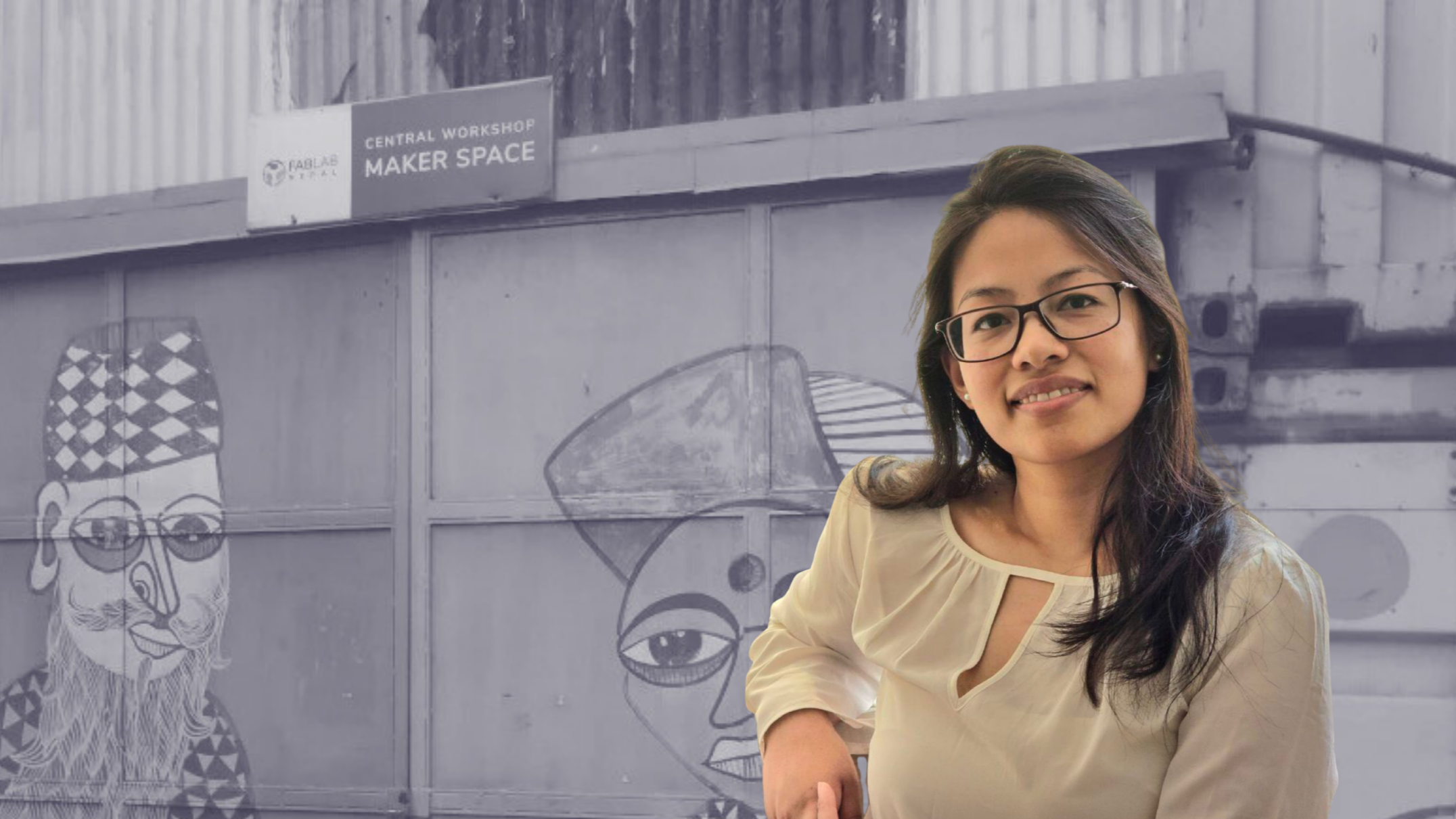
Pradita Pradhan remembers the moment clearly. She was working as an intern at Field Ready Nepal, newly arrived in a small office buzzing with engineers and designers. On a table in the corner sat the first 3D printer she had ever seen in person. “I got a chance to use it, to feel it, to work on it,” she recalls. “Even though I had studied engineering in Kathmandu, that was something tangible for me. It turned theory into something real.”
That moment in 2017 was her entry point into the Frontier Tech Hub’s 3D Printing in Nepal pilot, a project exploring whether locally manufactured humanitarian supplies could be produced faster, cheaper, and closer to the communities that needed them. Pradita joined as an intern with a background in electronics engineering and a willingness to figure things out. Eight years later, she is the Founder and Executive Director of Fab Foundation Nepal, an organisation established to decentralise Fabrication Laboratories, practical STEM education and digital fabrication skills beyond Kathmandu.
Space to learn
Engineering in Nepal remains a male-dominated field, and Pradita was among the few women who chose it. At Field Ready, she found herself amongst primarily male colleagues. But what she found at Field Ready was something different from the lecture halls she had left behind. It had a culture of experimentation in which uncertainty was expected, and failure was part of the process. Her early tasks involved replicating component designs on the fly, guided by the project’s lead engineer. “I was simultaneously learning and also trying to do the work,” she says, laughing at the memory.
From intern, she progressed to Programme Manager and, with the help of UKAid funding and the Frontier Tech Hub, eventually helped Field Ready establish Nepal’s first FabLab in partnership with Impact Hub Kathmandu and the Royal Academy of Engineering. The FabLab became a hub for innovators, students, and businesses to experiment with digital fabrication tools, from 3D printers to laser cutters. Pradita grew with it, taking on more responsibility, building relationships with organisations across Nepal’s nascent innovation ecosystem, and developing a clear-eyed view of where the gaps remained. That experience gave her the technical confidence, professional networks, and international exposure that she credits with accelerating her career.

Field Ready testing a 3D printed water pipe fitting supplying a camp for earthquake survivors in Nuwakot, Nepal.
Paying it forward
The biggest gap she saw was access. In Nepal, around 75 per cent of resources and opportunities are concentrated in Kathmandu. Young people outside the capital, particularly young women, rarely encounter spaces where they can try things, make mistakes, and learn by doing. But things are changing. Pradita reflects that this opportunity to learn by doing is the kind she wishes she had found earlier. “If I had this kind of guidance when I was younger, I would have been at least four years ahead of where I am now,” she says.
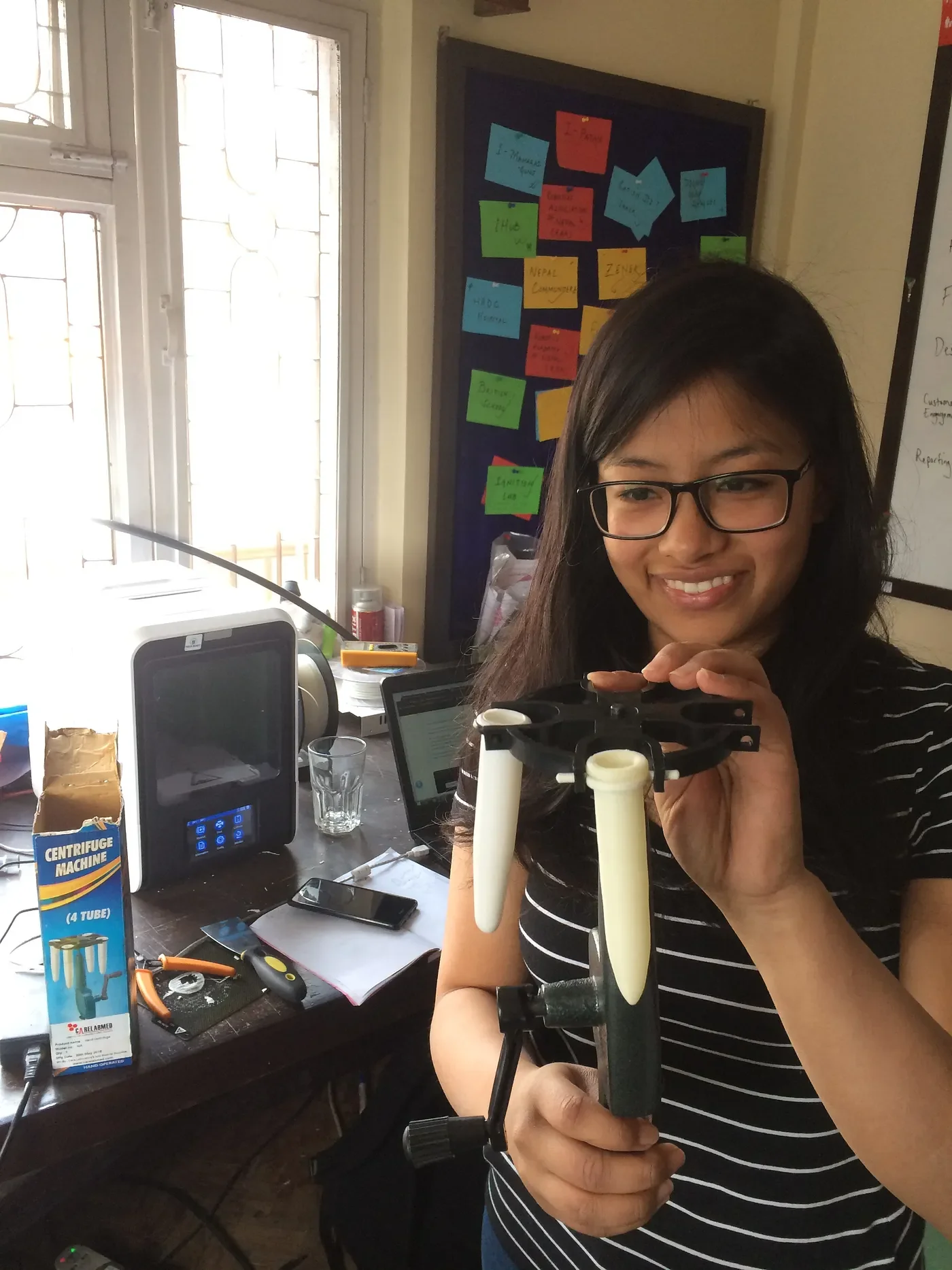
Pradita as an intern with Field Ready during the pilot project in 2017
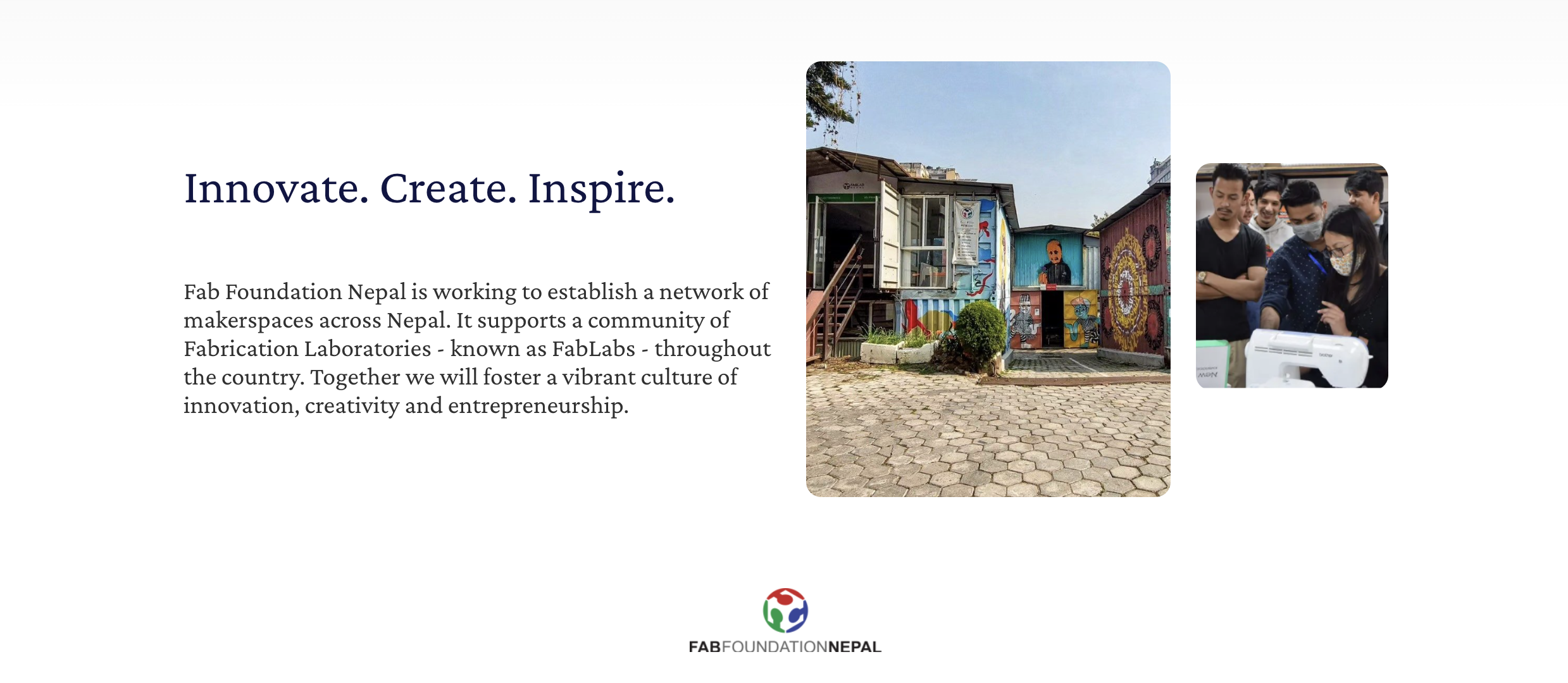
That conviction is what led her to found Fab Foundation Nepal in 2024. The organisation is not just about FabLabs, but about building the conditions for creative learning to take root in communities across the country. Fab Foundation Nepal creates bilingual training resources in Nepali and English, delivers human-centred design workshops, and supports schools to establish small FabLabs of their own. In its first project, funded by Lloyd’s Foundation, the organisation reached 55 students in Sindhuli district, outside Kathmandu. In contrast to the gender balance Pradita experienced earlier in her career, 45.5% of these 55 students were female. Online courses are in development, designed to reach learners wherever they are. Currently, they are widening their reach by planning online sessions for approximately 300 students over the next two weeks.
“Fab Lab could be a platform where people get an opportunity and guidance to do something. To learn, or at least to make mistakes, without being judged,” Pradita explains. “Because I didn’t have that when I was growing up, I feel I can give it to this generation.”
The invisible shift
Pradita is candid about the challenges of building an organisation from scratch: the proposal writing, the administrative complexity, the difficulty of sustaining momentum as the only person running things. But she is equally clear about what the Frontier Tech pilot gave her that she could not have acquired any other way: confidence. Not just in her technical abilities, but in herself as someone who could lead, articulate ideas, navigate international partnerships, and take risks on unproven things.
“The exposure I got through the Frontier Tech pilot completely changed me,” she says. “Inside and out. It gave me the technical confidence and international experience that would otherwise have taken me years to gain.” The connections made during those years have also endured: a board member recruited during a needs assessment years ago, a curriculum partner still in regular contact, a network that makes it easier to pick up the phone when she needs guidance.
Fab Foundation Nepal is, in many ways, the direct continuation of the question the FT Hub first asked in 2017: what becomes possible when people get a real space to learn by doing? Pradita has spent eight years living with that answer. Now she is building the spaces so others can too. Fab Foundation Nepal is her way of continuing the legacy of what was started with Field Ready in opening access to creative learning beyond Kathmandu.
If you’d like to dig in further…
🔘 Explore this pilot’s profile page
🔘 Explore the work of Fab Foundation Nepal
🔘 Read our exploration: what’s On the Frontier of Localised Manufacturing?