Five barriers preventing climate finance from working for those who need it most
A blog from the Frontier Tech Hub
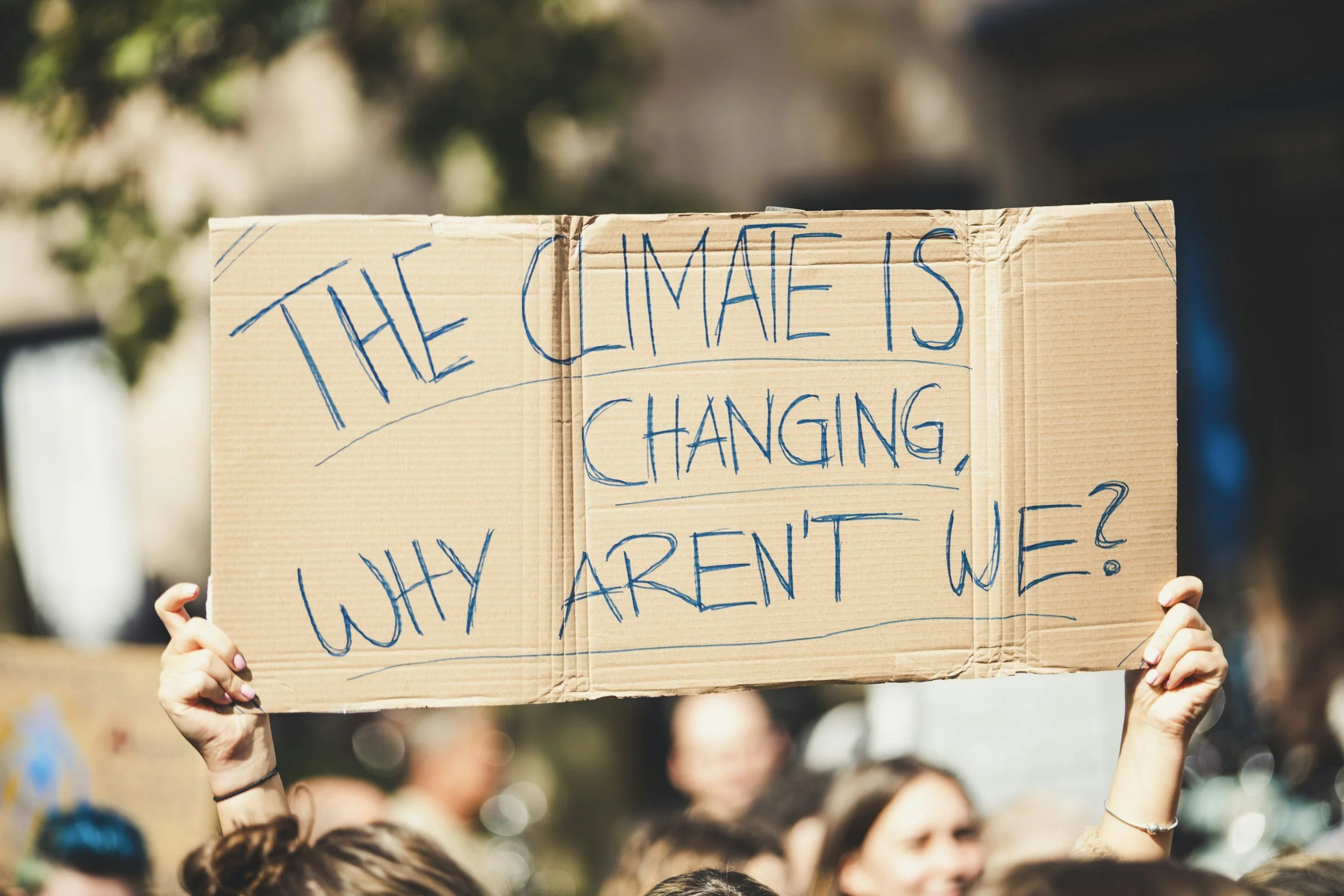
As climate finance needs grow and budgets decrease, leaders have called for alternative and blended-finance mechanisms like social investing and carbon markets to fill the gap. The World Bank calls carbon markets "essential for accelerating climate action in developing countries," and while developing countries need $310-365 billion per year by 2035 for adaptation alone, they received only $26 billion in 2023.
The gap isn't just about money though. There’s another gap between policy ambition and implementation reality. Since 2016, the Frontier Tech Hub has coached 108 pilots in partnership with 134 FCDO staff across 44 countries, and we’ve seen first-hand that sophisticated financial architecture doesn’t equal opportunity for those on the ground. We should be designing carbon markets for the smallholder farmers who need them most.
This isn’t new information. We’ve written about our vision for a fairer voluntary carbon market in our exploration, On the Frontier of Carbon Markets, and published research on making climate finance work for LMICs.
In this piece, we’re distilling our learnings a little further. This covers the five ground-level barriers that determine whether ambitious frameworks can deliver for the communities they're meant to serve.
1) "Best practice" too often means "what worked in the last place we tried this”
This means more than translating interfaces. One common thread exists throughout our portfolio of pilot projects: technology that works in one environment doesn't automatically work in another, for example, if we’re hoping to transfer technology from the global north to the global south.
When one pilot set out to harness AI to scale access to forest carbon credits in Tanzania, the AI models available couldn’t recognise Miombo woodlands because they were trained on North American forests. Until models are trained on these woodlands, Tanzanian communities are potentially missing out on millions of dollars of potential climate finance.

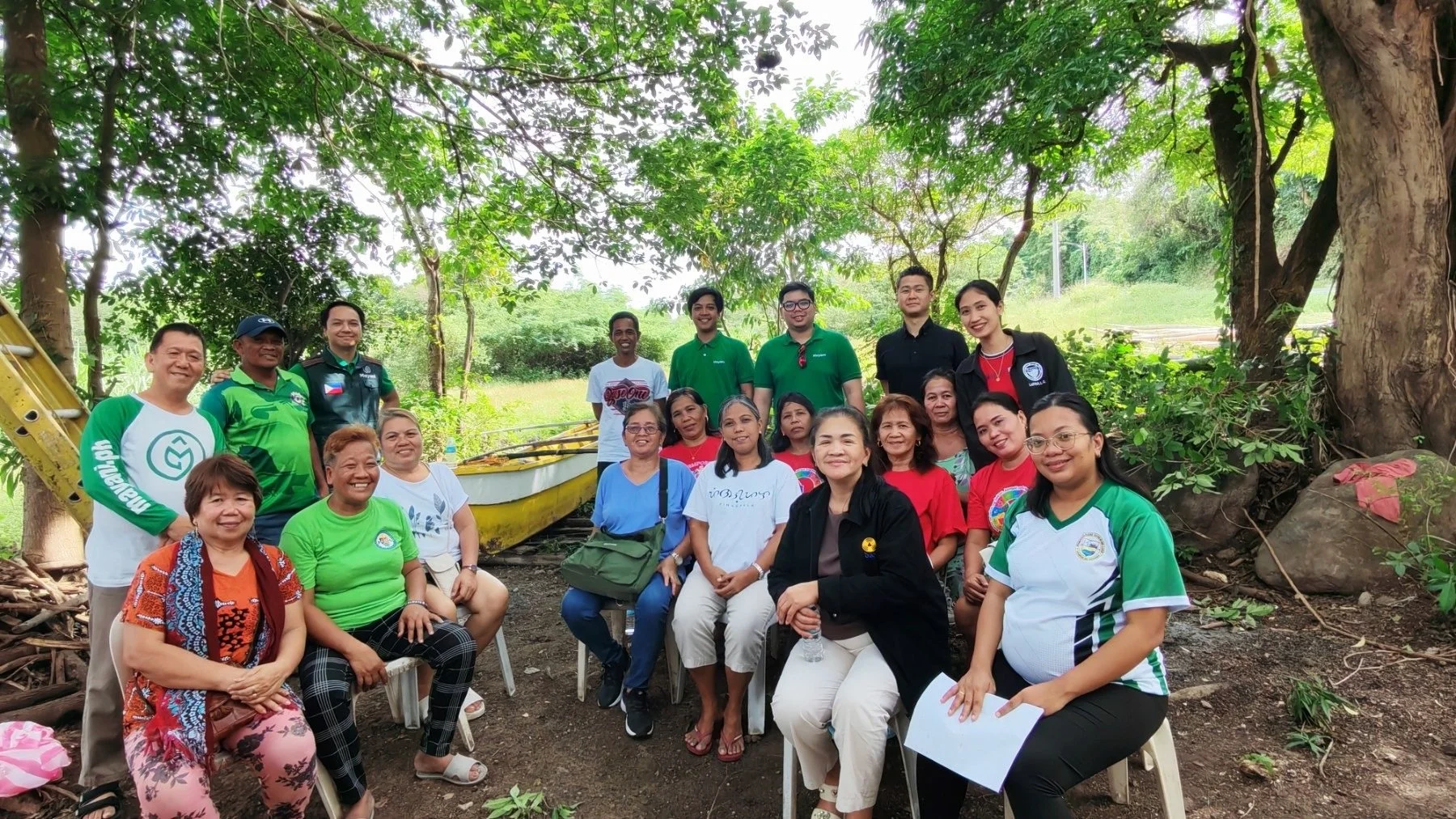
The network around Drylands, getting finance to farmers
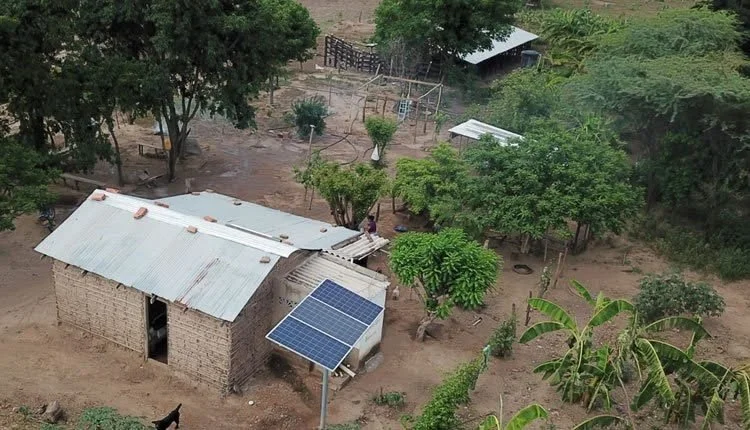
In Senegal, our Drylands pilot set out to rehabilitate degraded lands through connecting rural communities to the voluntary carbon market (VCM). But the data the team needed was hard to track down. They compromised by using data from similar plots in Kenya that employ similar agricultural practices to run a comparative analysis that could be extrapolated to estimate carbon sequestration. It wasn't an ideal fix, but did offer something to work with – other projects are less fortunate and that data gap can mean the exit point for a climate finance opportunity.
This is the gap between global frameworks and local reality, and it’s not just about software retraining. If your monitoring system can't recognise what matters, you're measuring the wrong thing, and climate finance flows get stuck in the middle.
2) Sophisticated solutions fail without affordable, maintainable hardware
Where manual monitoring is expensive and hard to scale, end-to-end technologies can provide the monitoring and reporting needed for projects to access credits. But these solutions rely on building supply chains that can maintain hardware without flying in parts and developing expertise among the people who will use the tools long-term.
You can't vibe-code your way around a broken sensor in rural Sierra Leone - the person who can fix it needs parts, training, and payment.
One approach is to co-design versions of existing tech directly in context. In Kenya, an existing UK biodiversity-monitoring system has been redesigned at 50% of the original cost. The final product is 5x smaller than its bulky equivalent, can be carried in a backpack and is just as manufacturable and fixable in Nairobi, as in London.

The redesigned insect monitor in Kenya
Another default needs to be nurturing local talent. In Tanzania, local "AI Chapters" were established to train 50 young engineers capable of maintaining and refining the AI models described earlier (in order to rule out reliance on expensive foreign consultants).
3) Markets need to get comfortable with uncertain futures rather than only rewarding fully-grown forests
Climate finance can't rely on communities absorbing years of upfront costs. Funds must be disbursed earlier to help vulnerable communities access and realise outcomes over time.
In Sierra Leone, rural poverty drives deforestation for firewood because the immediate financial reward from cutting a tree outweighs the years-long carbon market returns. As FCDO Pioneer Christina Toepell told us: "people need to be able to make more money from a living tree than a dead one. Otherwise this just doesn't work."
Climate finance mechanisms need to restructure their timelines to match lived reality. If a model requires farmers to wait 5-10 years for payoff while they're focused on affording their basic needs today, it will fail regardless of how sophisticated the satellite monitoring is.
Christina’s pilot, Project Sapling, tackled this temporal mismatch head-on by experimenting with "forward credits" (ex-ante). Drones and mobile apps verify that saplings are planted and surviving, creating a trusted record that allows them to sell credits before trees fully mature. This unlocks early funding to cover upfront costs and compensate communities sooner, aligning immediate incentives with long-term ecological health.
4) If upfront costs stay with the people who can least afford them, climate finance just becomes another extractive system dressed in green language
Those who receive the lowest share of supply chain value cannot be expected to absorb the prohibitive verification expenses required to participate in carbon markets. Likewise, essential intermediaries like cooperatives and NGOs cannot be left to navigate the market without support.
Either verification costs should be covered by those demanding compliance (and who profit the most), or we accept that carbon markets will systematically exclude the communities who need them most.
CAVEX is another FCDO funded project which aims to tackle this. Cavex is a cloud-hosted platform that manages end-to-end transactions between carbon buyers and investors and projects on the ground generating positive climate impacts. It shifts the responsibility of validation to the platform instead of the supplier, making the cost of entry minimal (and therefore accessible) for small-scale suppliers.
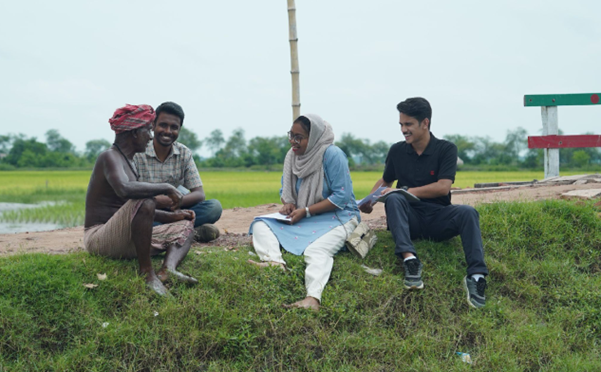
The same dynamic exists in export markets. In Colombia, growing cocoa is a legal alternative to cultivating coca, but complying with the EU Deforestation Regulation’s requirements is expensive and technically difficult. We supported FOLIA to develop a digital platform integrating satellite data with farm boundaries to automate the relevant deforestation risk reports. We found that farmers are willing to provide data, but the system becomes extractive if it adds financial strain rather than facilitating market access.
The tech provides a solution that works — but who should bear the cost?

Carlos Pedraza sharing the FOLIA platform with a cocoa farmer
5) Commercialisation is key
If a plan relies on government adoption, the solution needs to be cheap and low-risk. If it relies on donors or philanthropic foundations, it’s competing more than ever before to demonstrate scalability. Commercialisation is now the inevitable endgame, and that shifts everything.
In our recent call for applications, we received incredible pitches involving carbon credits - from Gabon and South Africa to Mexico and Peru, some explicitly exploring blockchain ledgers for carbon markets. But in a world with decreasing development funding, we can't fund ideas without clear commercialisation routes.

Types of endgames, including commercial adoption
We all want to live in a society which doesn't suffer the devastation of the climate crisis, so we need the public and private sectors to work hand in hand. There is money to be made if both groups can put in the effort to understand and support the sector, and design mechanisms that allow collaboration to happen in practice. Models like the Climate Finance Partnership use public funds as 'first loss' guarantees to insulate private investors, providing the funding infrastructure that helps entrepreneurs survive the “valley of death.”
That’s why the Frontier Tech Hub tests ideas on a small scale, with small amounts of funding. We validate the riskiest assumptions one by one, uncover blind spots and work with local partners to ensure an idea is deeply rooted in context. This helps bridge the gap between uncertain, promising ideas and scalable, impactful solutions. Ampersand is one of our early pilots. Starting in 2018 as a pilot with a £75k grant, it scaled its e-moto battery swapping model in Rwanda and raised $21.5m in 2023 to expand into Kenya.
Ultimately, the timelines for catalytic capital must match the reality of what it takes to achieve viable models. Solutions typically need 3-5 year horizons, not 2-year grant cycles. Even after five years, many successful 'commercial' ventures won’t achieve full cost recovery, instead maintaining 40-60% earned revenue with ongoing support (eg. from grants, debt or concessional loans), which is why strategic hybrid resilience is a powerful lever.

Ampersand scaled its e-moto battery swapping model in Rwanda and raised $21.5m in 2023
Where this leaves us
Tech transfer is never automatic - what worked elsewhere will fail until adapted for local ecosystems and made affordable to maintain. Temporal mismatches doom participation when payoff is years away, but needs are immediate. Verification burdens land on the wrong people when compliance costs are borne by those least able to pay. And commercialisation only works if it builds sustainable capacity, not new dependencies.
We see a future where climate finance delivers a wide range of mitigation and adaptation solutions that support livelihoods, biodiversity, climate resilience, and ecosystem health. We want to create a cohesive system in which finance, policy, technology, and local engagement work together to support resilient, scalable, and community-centred climate solutions.
Check out some of our pilots working on climate solutions to change the game.





If you’d like to dig in further…
🚀 Explore the research: Making climate finance work for early-stage innovations in low-income country settings
📚 Explore our UK tech for biodiversity stories
📚 Check out FCDO-supported Cavex - Climate finance with impact.