Vai’s story: the first frame, groove and complex cut
Part of a series of impact stories for International Women’s Day 2026: Invest in people, not tech.
Pilot: Localised distributed production techniques in the Pacific
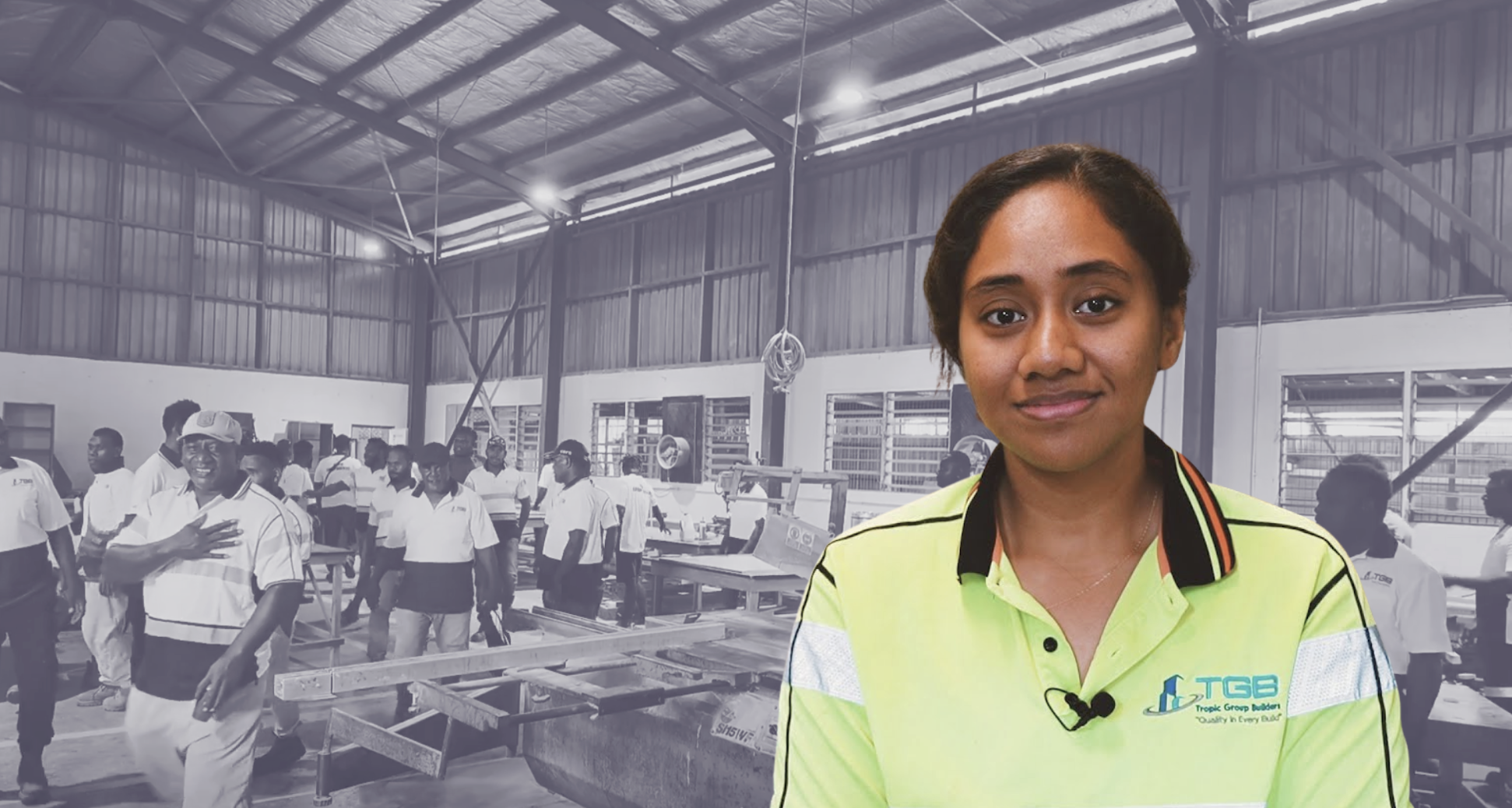
Vai didn’t set out to be part of a pioneering pilot project. She finished high school, started applying for scholarships, and took her older sister’s advice to work part-time at Tropic Group Builders (TGB) in the meantime. At that point, she wanted experience and a better sense of what she wanted to do.
She didn’t know that in the next three years she would use YouTube to teach herself AutoCAD, 3D computer-aided design software for precise modelling used in architecture, engineering, and manufacturing. She didn’t know that this initiative would lead her to work with a piece of technology that barely existed in the Solomon Islands.
From 3D printing to CNC milling
At the end of 2024, the Solomon Islands was given its first CNC (Computer Numerical Control) milling machine, with support from UK Aid, to expand local manufacturing capacity, provide skilled opportunities, and capitalise on the island's incredible resource of world-famous tropical hardwoods.
This could cut timber with a precision no hand tool could match; the requirement for the operator role was a familiarity with the AutoCAD design software. In a company of nearly 100 people, six were women, and only two of them knew AutoCAD: Vai, and her sister. The opportunity went to Vai.
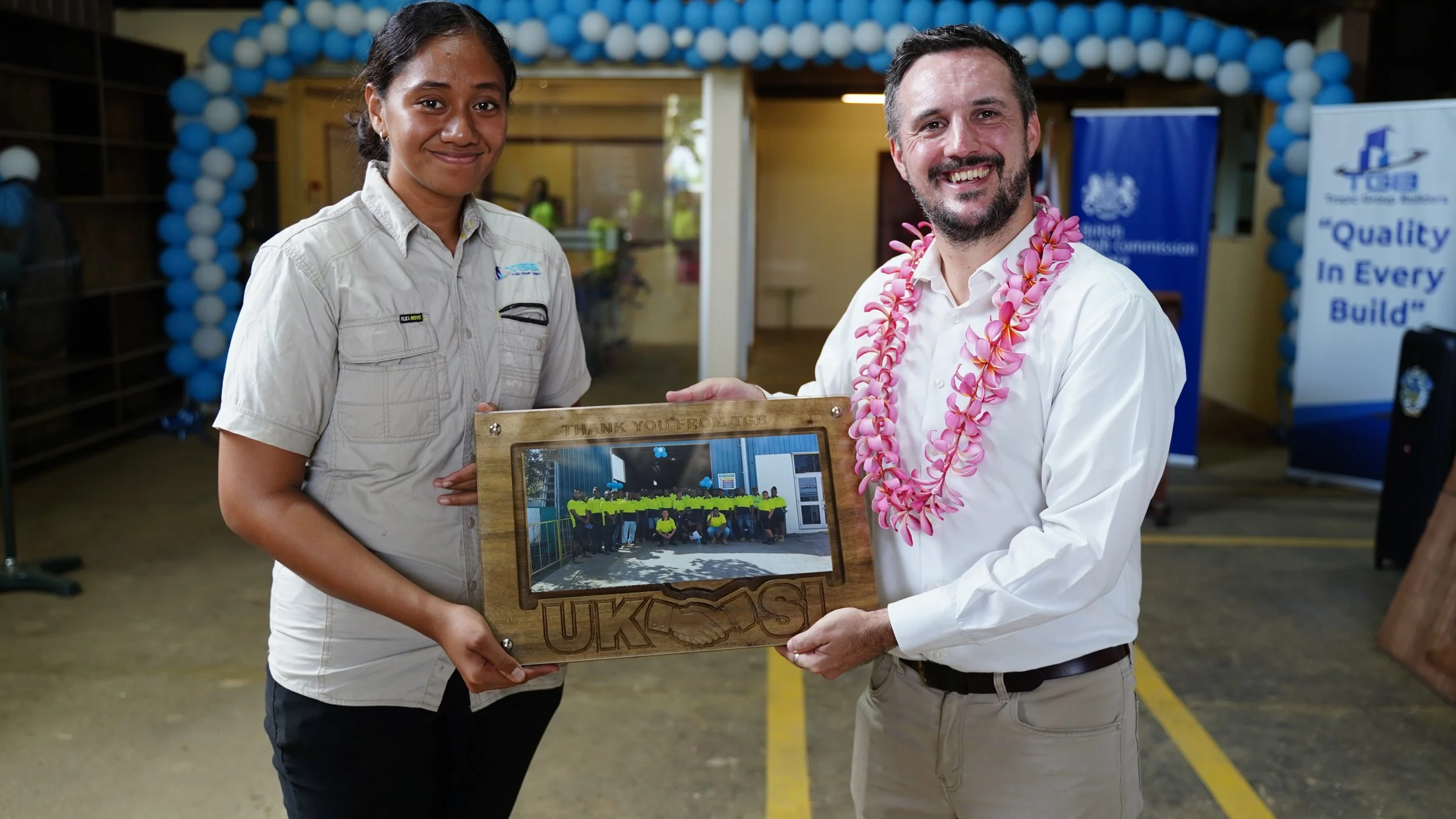
Vai with FCDO Pioneer Tom Coward when the CNC machine was launched
“It was exciting and scary,” she says. “Knowing my level of CAD skills, I didn’t think I would be able to do that sort of work.” But she did. And it was more than what she expected: harder, more technical, more rewarding.
The machine arrived from the United States and had to be adapted to the Solomon Islands’ local power supply. The design software was similar in logic to CAD but precise in new ways, because how you drew something directly affected how the machine would cut it.
There was no local community of practice to consult. Vai learned by doing: small frames first, then grooving, then more complex cuts, each one building the intuition the work required.
Her proudest moment came when she made her first solo cut, without any supervision. She designed the TGB office signage, fed the file to the machine, and watched it execute. “I saw my design come to life,” she says. The finished piece went up at the entrance to the TGB office, on display for everyone who walked in to see.
“This was an inspiring and mind-blowing opportunity that I truly appreciate being a part of. It has given me an in-depth perspective into how machinery and computers can enhance woodworking, giving me a broader idea of woodworking in the Solomon Islands and how these machines can start something great.”
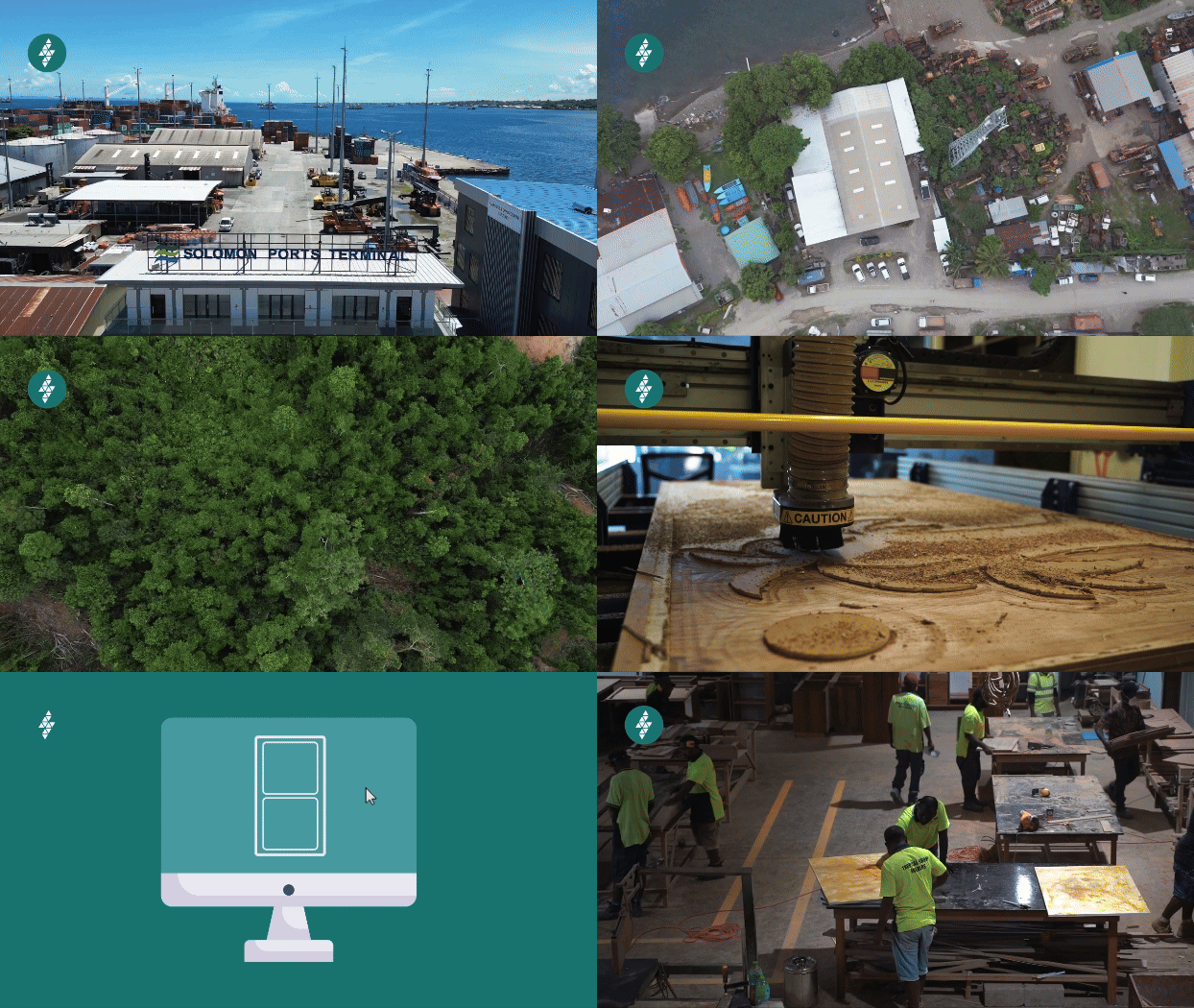
A clip from the pilot’s short film: '“Strengthening local industry in the Solomon Islands:
Working in a male-dominated field had its challenges. Opinions sometimes went unheard, and after the pilot ended, when Vai began training other TGB workers on the machine, getting the message across was slow going. But she frames the experience less as a barrier than as a spur. “It brings out the competitiveness you have in yourself,” she says. Not competition with colleagues but competition within herself: a drive to prove she could do the work well.
The Frontier Tech pilot planted something else too. COVID-19 highlighted the fragility of global supply chains, which has always been felt acutely by communities living on remote islands scattered across the vast Pacific Ocean. Anything local, like food, is very cheap, and anything imported, like a tap washer, is expensive.
One of the questions the FT Hub kept asking was how the machine could help people in the Solomon Islands. Vai found herself thinking seriously about it: mass production of utensils, reducing reliance on imports, the possibilities of local manufacturing. “It led to those ideas,” she says, “and it somehow shaped my studying focus.”
Closing the gap between practical and theory
She is now in New Zealand, in the second year of a four-year civil construction engineering degree at the Auckland University of Technology. The decision to go back to school was straightforward. She had been doing the work practically for years without fully understanding the theory behind it, and she wanted to close that gap. Leaving home was harder, but she adjusted.
Studying engineering has given her a clearer lens on the construction challenges she saw firsthand in the Solomon Islands. She is learning how to mitigate those risks, and she is already thinking about what she will do differently when she goes home. In New Zealand she is watching how technology is used: drones scoping sites, tools she has never seen deployed in the islands. She is making a mental list of what might transfer and what might not, comparing economies, weighing what is practical. Frontier technology can also be very expensive and therefore hard to obtain and maintain in the Solomon Islands. The barriers are real, but so is her plan.
Her advice for young women considering a similar path is direct. "Effort matters. It does not matter how slow you're going or how fast you're going. As long as you put in the effort, you'll get there." Fueled by her determination and ambition, she taught herself AutoCAD, operated a machine no one in her country had used before, and moved to another country to further her education. Whatever comes next, she will figure that out too.

The CNC machine unveiled alongside the Solomon Islands’ prime minister. Vai operates behind the glass.
If you’d like to dig in further…
🔘 Explore this pilot’s profile page
🔘 Explore the pilot’s film “Strengthening local industry in the Solomon Islands”
🔘 Read the exploration: On the Frontier of Localised Manufacturing
🔘 Read our evidence deep dive: Scaling Distributed Manufacturing in the Global South.