Violet’s story: navigating without a map
Part of a series of impact stories for International Women’s Day 2026: Invest in people, not tech.
Pilot: Drones for locusts
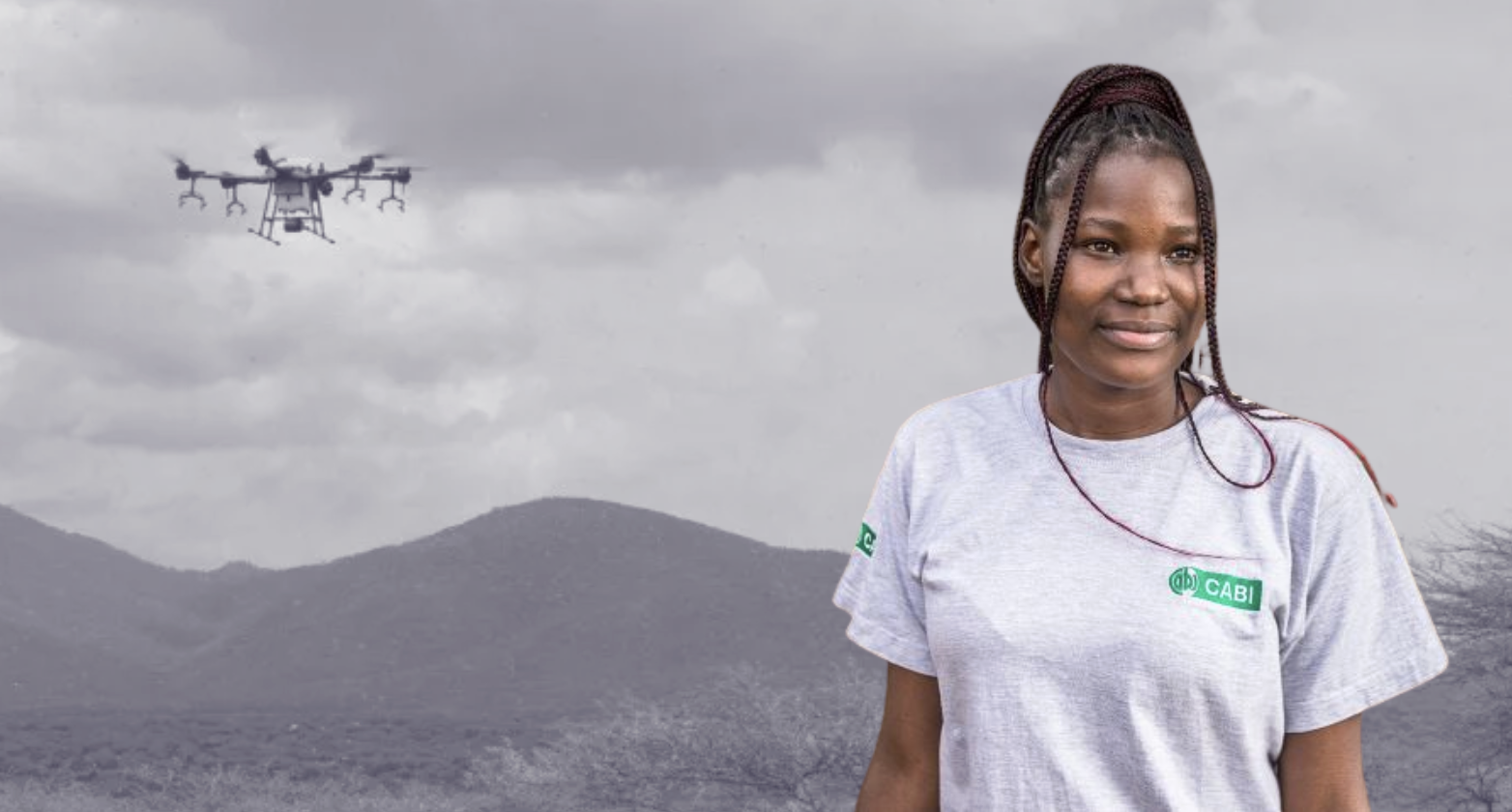
Violet Ochieng did not plan to become a drone pilot. Her degrees in environmental science and agricultural entomology gave her deep scientific grounding but no engineering background. Drones were not part of her picture. Then, in 2020, CABI recruited her to join a research project exploring whether drones could help combat East Africa’s worst desert locust crisis in 70 years. It changed the direction of her career.
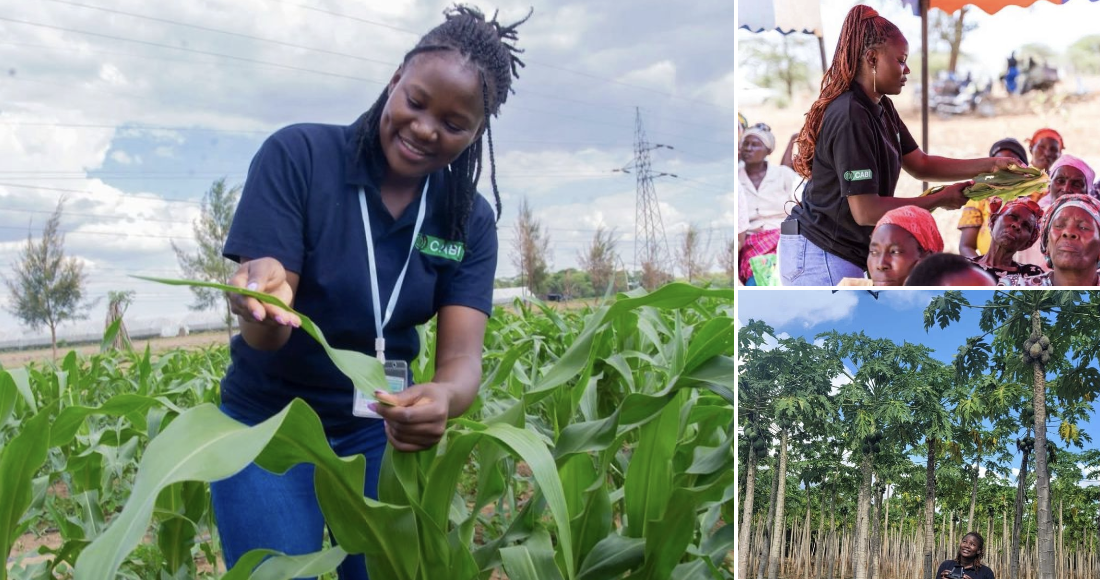
Today, Violet is one of fewer than ten women in Kenya using drones for agricultural science. She is a licensed drone pilot, CABI’s lead drone researcher, and Kenya’s country representative for precision agriculture. In a field where around 90% of licensed pilots are men, she has built her expertise largely by finding her own way. Because of this, she is determined that the next generation will not have to do the same.
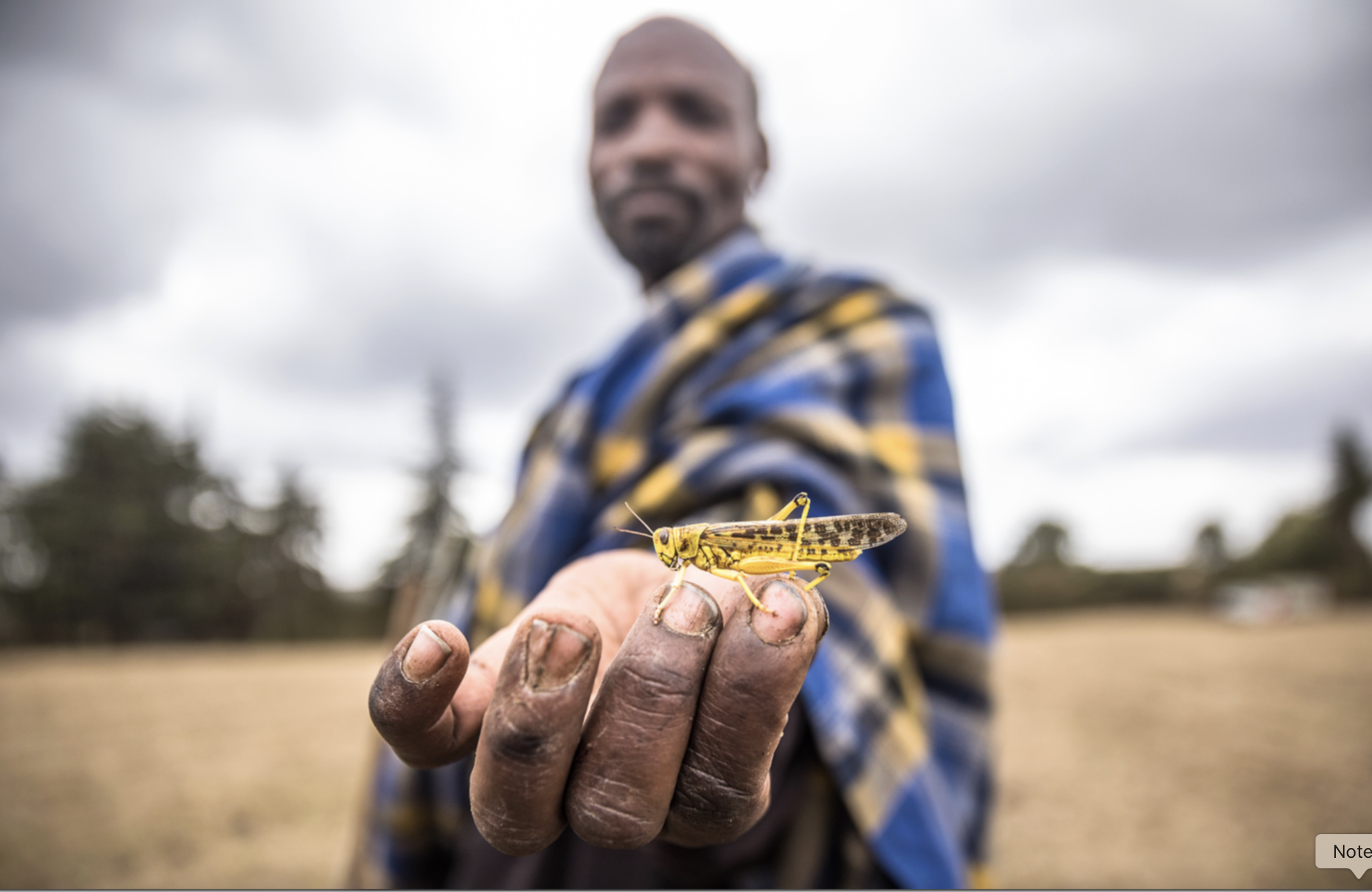
A villager holds a locust during the pilot tests
Finding her way in
When Violet joined the Frontier Tech Hub pilot as a master's researcher, she was the only woman in the field teams heading out to arid and semi-arid areas of Kenya. The other pilots were men from Astral Aerial, the drone company partnering with CABI on the project. Watching them operate, she made a quiet decision.
“I used to see the way they operated drones in the field, and I used to ask myself: if they can do it, I think I can also do it.”
She proved herself right. The pilot generated strong scientific findings on how wind affected spray effectiveness, how early-morning operations improved results, and what rigorous standard operating procedures for drone-based locust control should look like. When the pilot ended, CABI hired Violet as their drone technologist.
In 2023, Violet became a licensed drone pilot through Astral Aerial. CABI simultaneously secured authorisation from Kenya’s Civil Aviation Authority (KCAA), making it one of the first institutions in the country authorised to use drones for research purposes. There are approximately 400–500 licensed drone pilots in Kenya, and fewer than 10% are women.
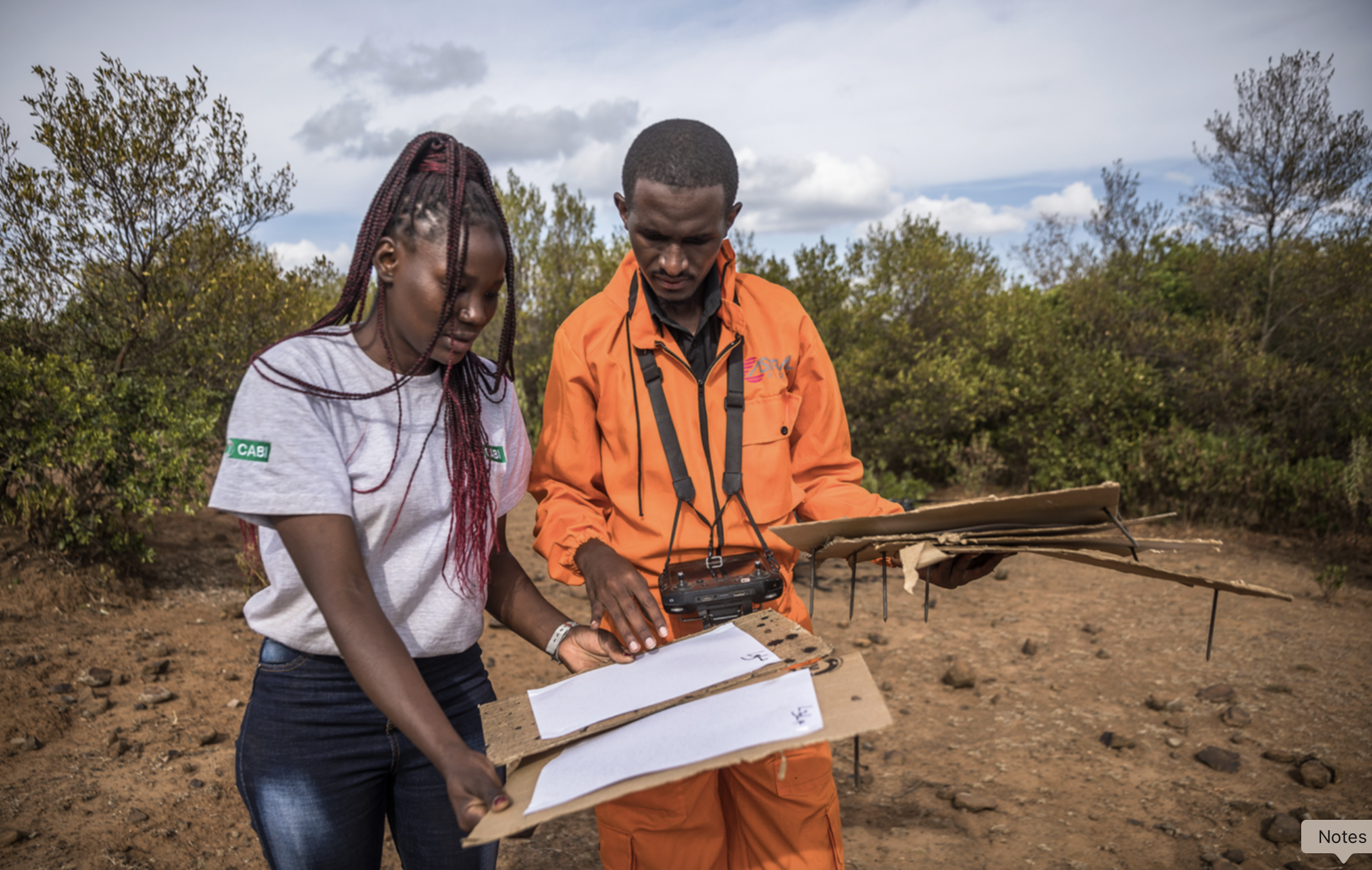
Violet analyses ink spots that show the efficiency of drone nozzles.
Navigating without a map
The technical demands of Violet’s work quickly exceeded what her academic background had prepared her for. Data analysis, machine learning applications, remote sensing interpretation were not skills she arrived with. And structured mentorship, she found, was simply not available.
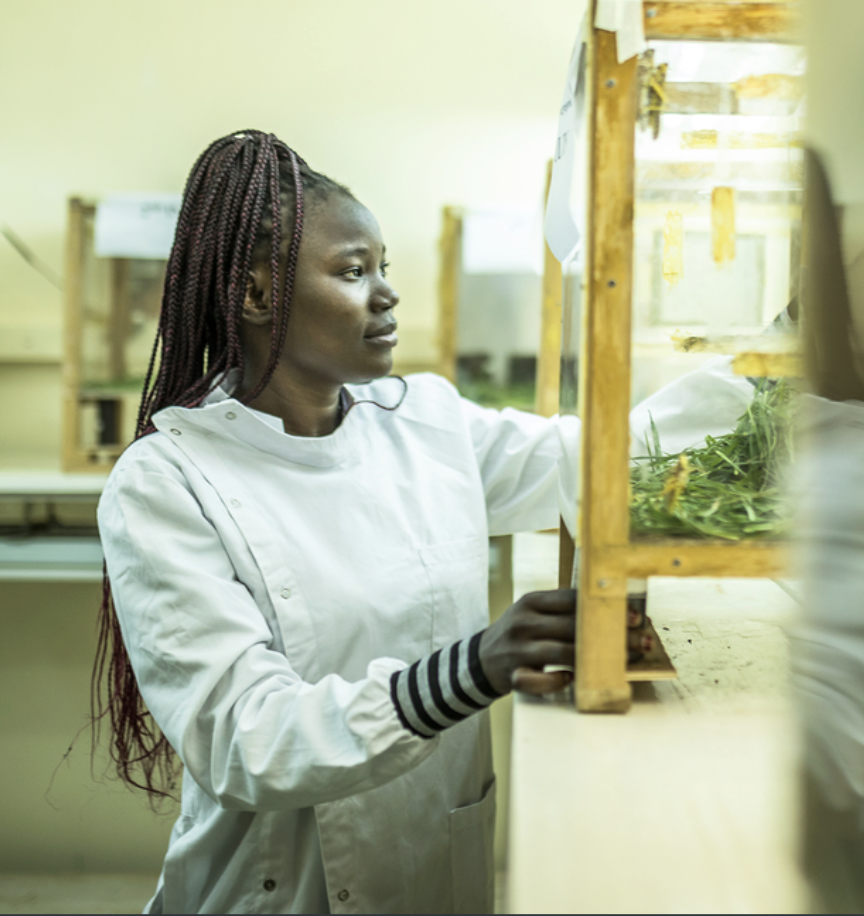
She turned to what she could access: YouTube tutorials, academic papers, and cold emails to researchers she found on LinkedIn. When she saw professors posting about their work with drones, she would reach out. They occasionally responded and agreed to speak with her, but there was never anything structured or sustained in the way of mentorship and guidance.
“What has been carrying me through is passion and where I want to see myself in the next few years. Sometimes I feel like giving up, but I’ve come so far, and people look up to me.”
The isolation has a practical cost. Without a mentor, there is no one to confirm whether an approach is right or to redirect a wrong one. Progress happens, but more slowly and with more uncertainty than it should.
Despite those conditions, Violet’s track record is substantial. Since the FT Hub pilot, CABI’s drone programme has grown to cover five counties across Kenya, with individual surveys mapping up to 1,000 acres.
The pilot study, Violet reflects, was the foundation for all of it, not because of the drones, but because of the credibility it created. That credibility has opened doors: follow-on funding, partnerships with academia, the private sector, and local and international organisations. The FT Hub investment catalysed outcomes that extended well beyond its original scope.
What she wants to leave behind
When Violet talks about her ambitions, the professional and the personal are inseparable. She is applying to PhD programs and scholarships and wants to bridge the gap between the engineers who build drone systems and the scientists who use them, and make that knowledge accessible online for free.
The thread that runs through all of Violet’s endeavours is mentorship. The challenges she navigated are ones she is actively working to spare others. “The challenges I went through, I will not accept. I want to create a safe space for women in tech and women in drones so that I can share my experiences. What went wrong for me, I don’t want to go wrong with them.” She is already mentoring young people, particularly school-age girls, who she believes benefit most from early exposure. “I’ve been receiving a lot of comments from young girls, from different schools, from young women, that they want to take this path, they want to become drone pilots. Just because they are seeing me as a woman operating a drone and doing this kind of research,” she says. “I can tell you that I’ve already changed their perspective on agriculture.”
The goals she has set for herself are ambitious: to become the person you think of when you think about drones in agriculture. To lift adoption from the current 5% of Kenyan farmers toward something transformative. To leave a legacy people will remember. “I want to be that leader who ensures that every farmer, even at a grassroots level, is able to get this kind of support from drone technology.”
Growing up, she didn’t see any of this coming. If the last five years are any indication, the next decade may surprise even her.
If you’d like to dig in further…
🔘 Explore this pilot’s profile page
🔘 Read Violet’s own reflection for IWD 2026
🔘 Explore the pilot’s Readymag story — “Drones Vs. Locust”