An article by the Cool by Design team, a pilot supported by the Frontier Tech Hub, on techniques that can shape shelter adapted to a hotter future.
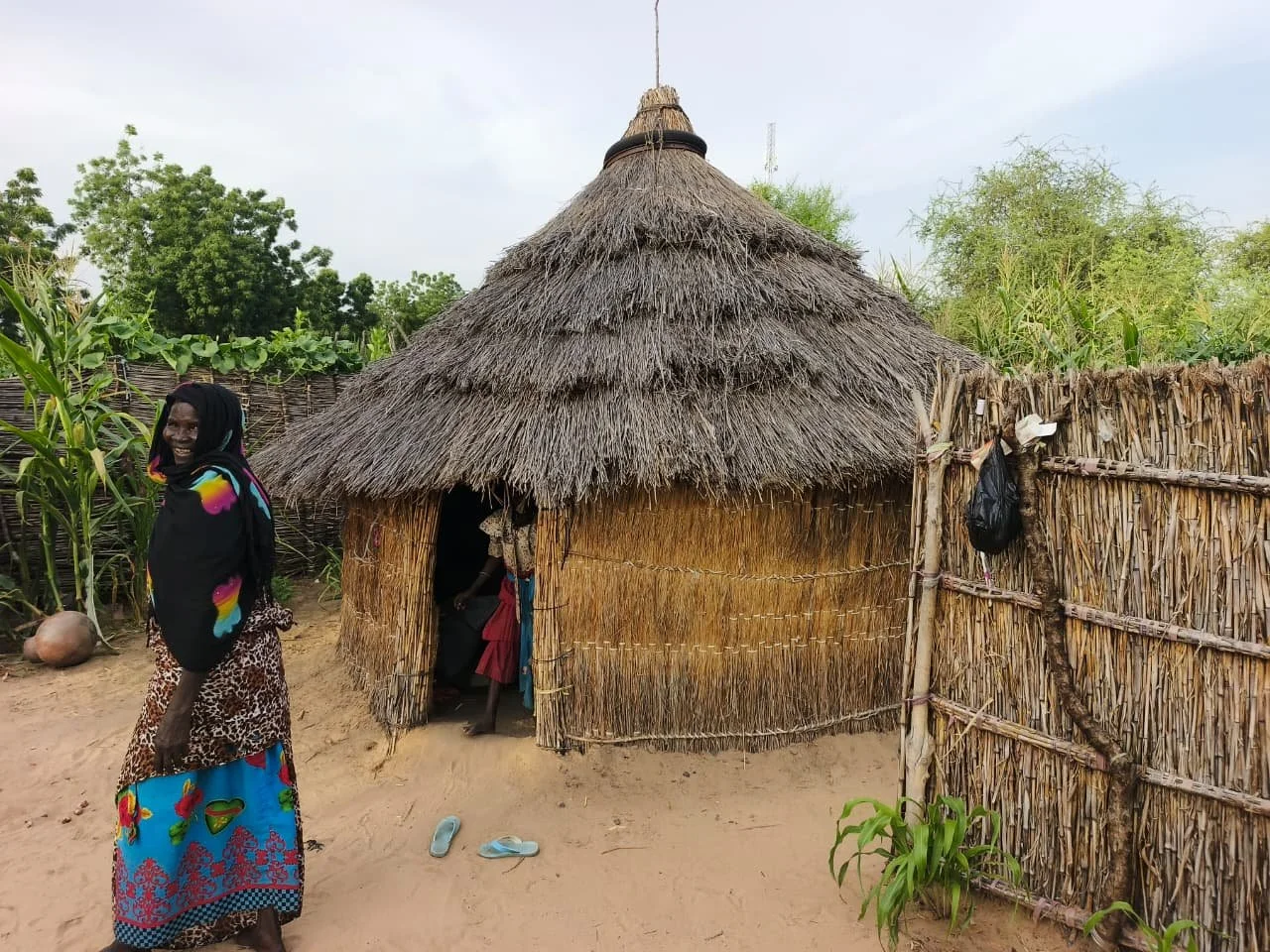
Today marks World Habitat Day, a moment to reflect on the places we call home and the right of everyone to live in safety, dignity and comfort. Forty years after the first World Habitat Day, that challenge is becoming more urgent. As climate change accelerates, millions of people face greater exposure to extreme heat, floods and other climate hazards, often while living in temporary or inadequate shelter.
In eastern Chad, where temperatures frequently exceed 40°C, Sudanese refugees are living on the frontline of both displacement and climate change. Shelters made from plastic sheeting, corrugated metal and other conventional humanitarian materials can become dangerously hot during the day, affecting health, wellbeing and quality of life.
As displacement becomes increasingly protracted, humanitarian agencies face a growing challenge: how do we support refugees' access to shelter that is not only safe and affordable, but also adapted to a hotter future?
Looking to the past for solutions
When people think about climate innovation, they often imagine cutting-edge technologies. But some of the most effective solutions to extreme heat may have been developed centuries ago.
Across the world's hot and arid regions, communities have long used passive cooling techniques to stay comfortable without electricity. In Chad, for example, many traditional homes use thick earthen walls, shaded outdoor spaces and natural ventilation to reduce indoor temperatures and remain comfortable in extreme heat, long before air conditioning existed
Through the Cool by Design pilot, supported by the Frontier Tech Hub and implemented with UN-Habitat and the Norwegian Refugee Council, in partnership with Chadian architects and engineers, we are exploring whether these approaches can help shape the next generation of humanitarian shelter. The action research will investigate which shelter designs and passive cooling solutions most effectively reduce temperatures inside homes, which approaches are acceptable and suited to people's needs and daily practices, what local materials and skills are available, and which solutions could be adapted or replicated at scale in other displacement settings.
Rather than importing expensive technologies, the pilot combines traditional knowledge, local materials and climate-responsive design to create homes that remain cooler, more comfortable and more resilient in extreme heat.
A habitat laboratory in eastern Chad
At the heart of the project is a Habitat Laboratory: not a conventional laboratory, but a space where communities, artisans, engineers, architects and humanitarian practitioners can experiment and learn together. The laboratory starts from the recognition that communities are not passive recipients of shelter assistance. Our initial fieldwork showed that communities are already adapting. Refugee families plant trees, cereals and vegetables around shelters to create shade and cooler microclimates and cope with everyday living conditions, drawing on practical knowledge gained over years of displacement. Some protect tarpaulin shelters with millet stalks to reduce exposure to intense heat, while others plaster adobe walls to protect them from rain. Cool by Design aims to understand, test and strengthen these locally developed responses rather than start from scratch. The project aims to learn from these experiences and combine them with technical expertise to co-design solutions that reflect both local realities and climatic challenges.
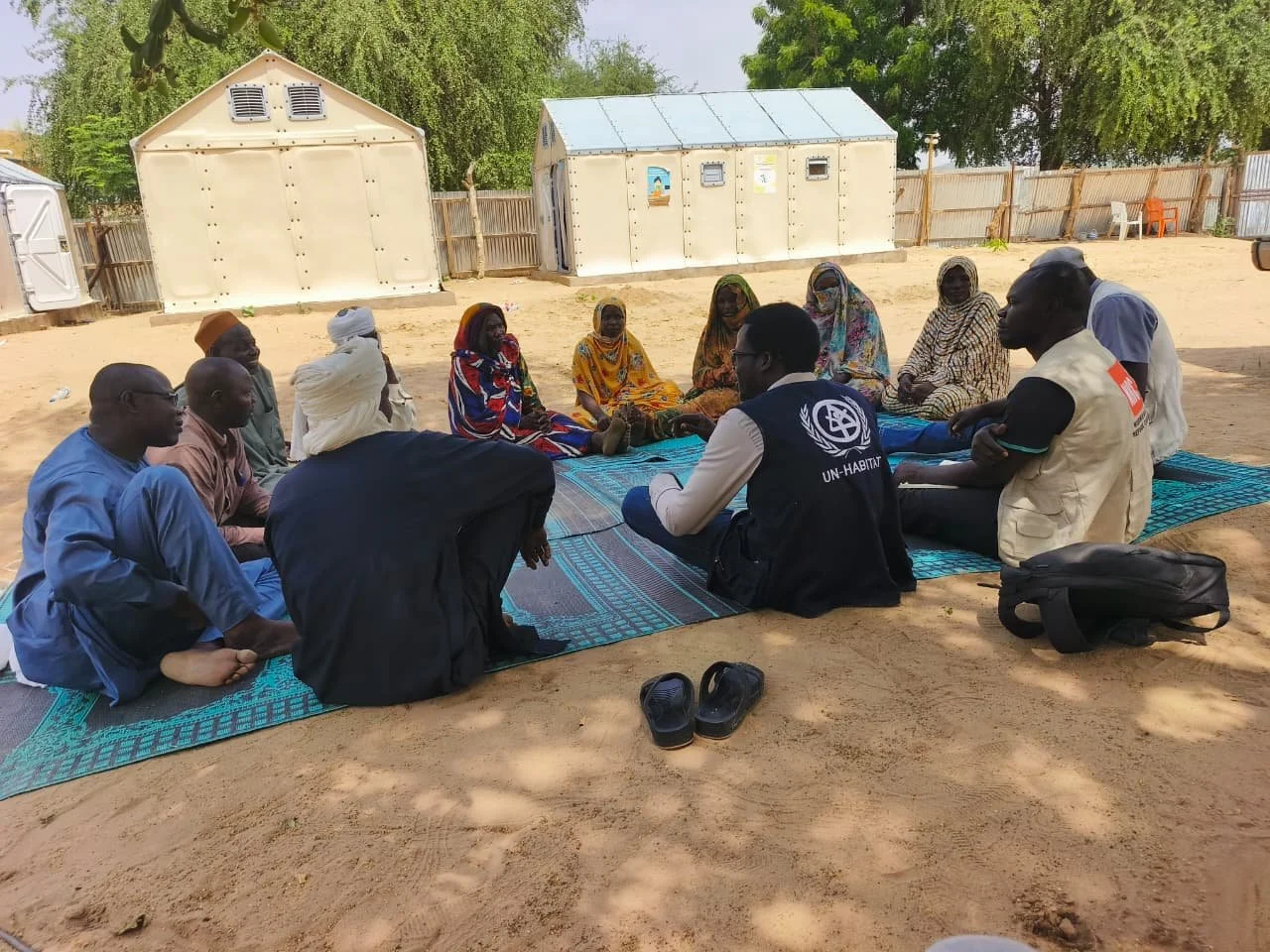
Working alongside Sudanese refugees and host communities in Arkoum in eastern Chad, the project will test different construction methods, materials and design features under real-world conditions. The aim is not to identify a single perfect shelter, but to understand which combinations of materials, layouts and cooling features are most effective at reducing indoor heat, most acceptable to households, most feasible to build with locally available resources, and most suitable for adaptation in other displacement contexts
Focus groups also showed that the challenge is not only about construction materials. Low shelter heights trap heat, windows can be too small or poorly positioned for airflow, roof overhangs may not adequately protect walls, and shelter orientation may overlook wind circulation and the path of the sun. Small design choices can make a major difference to comfort and durability.
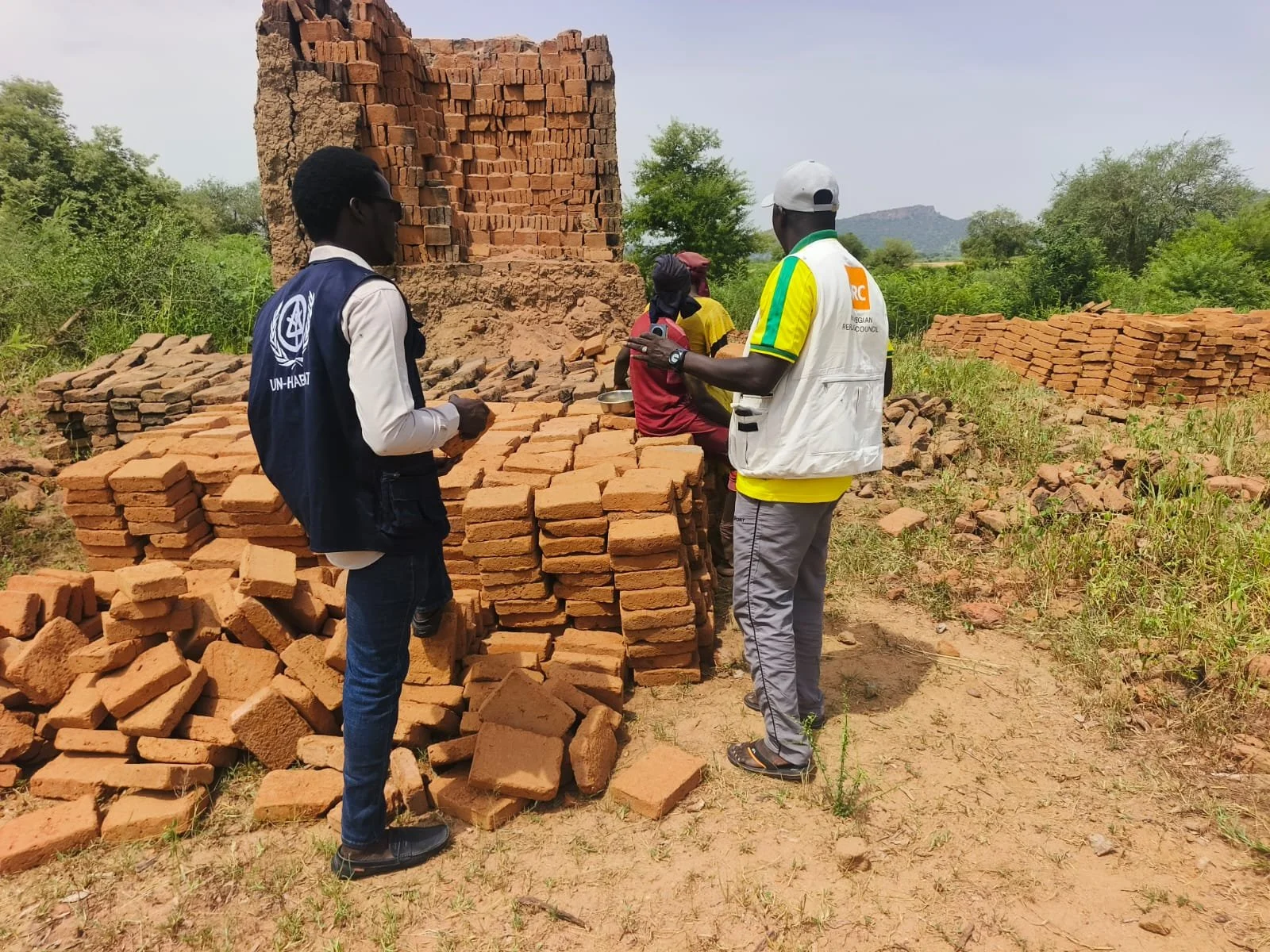
We also observed a gradual move beyond emergency shelter. Although tarpaulins remain widespread, families are increasingly using adobe bricks, straw and other locally available materials to create more durable homes. Suitable clay is available locally, and adobe bricks cost around 50 FCFA each compared with around 75 FCFA for fired bricks. Because adobe is dried in the sun, it also avoids the fuel-intensive firing associated with fired clay bricks.
The local construction economy offers another opportunity. Brick-making sites around Arkoum bring together refugees and host communities, with strong participation by women. Building cooler shelters could therefore support skills transfer, livelihoods and social cohesion, while strengthening local supply chains.
Why it matters
Many climate adaptation solutions depend on infrastructure, electricity or significant financial investment. Yet the communities most exposed to climate risks are often those with the least access to these resources. That is why we are interested in whether adaptation can be built from the ground up.
Earth-based construction, passive cooling and climate-responsive design could improve living conditions while reducing dependence on energy-intensive cooling systems. They can also strengthen local skills, supply chains and construction markets.
Importantly, resilience is about more than individual shelters. How settlements are planned also matters. The orientation of homes, the availability of shade, vegetation and public space all influence how people experience heat. At the Arkoum site, existing and newly planted trees will be preserved to support shade and microclimate regulation, while the sandy soil and gentle slope offer natural drainage advantages. Good design needs to consider heat and flooding together.
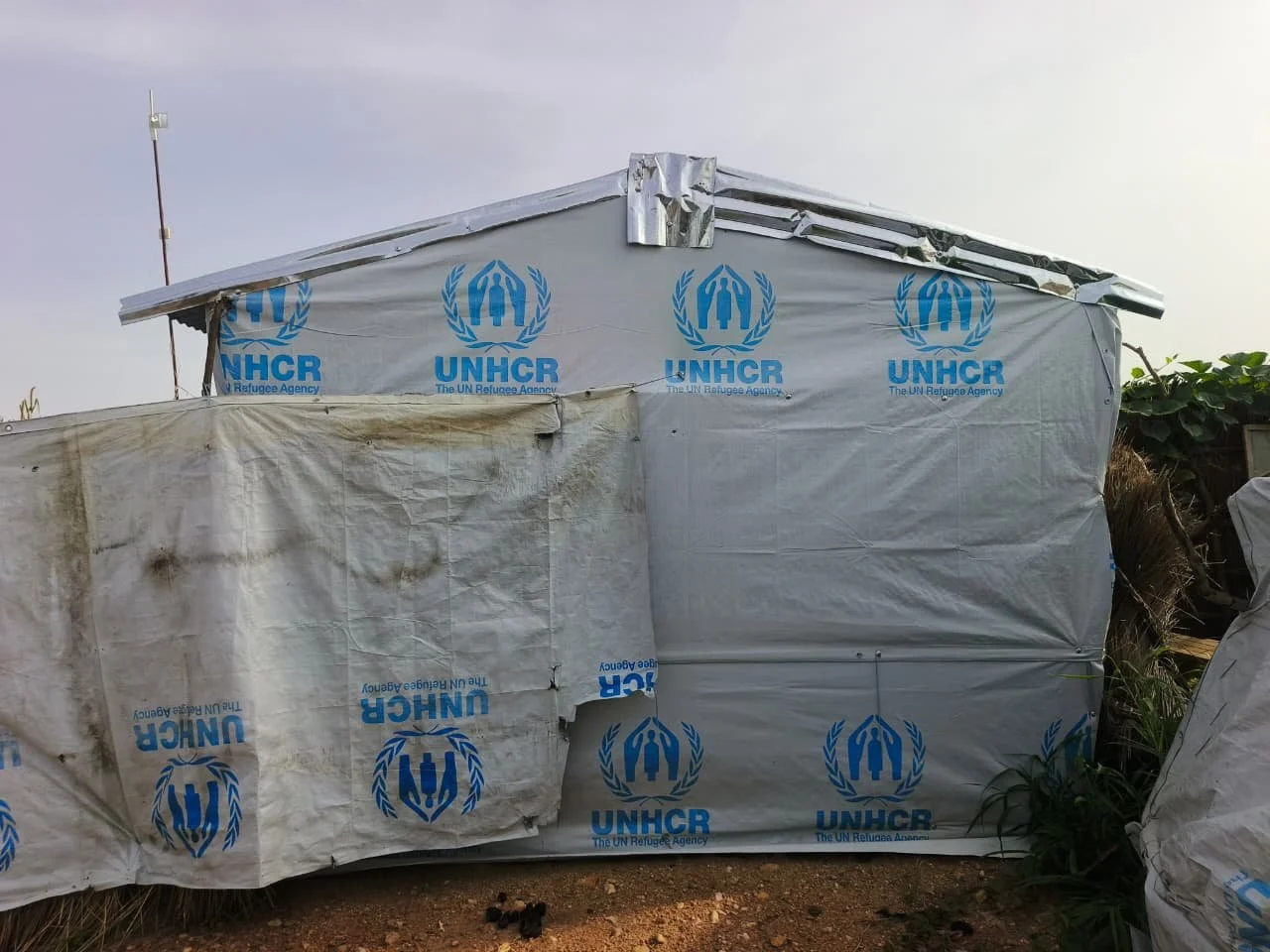
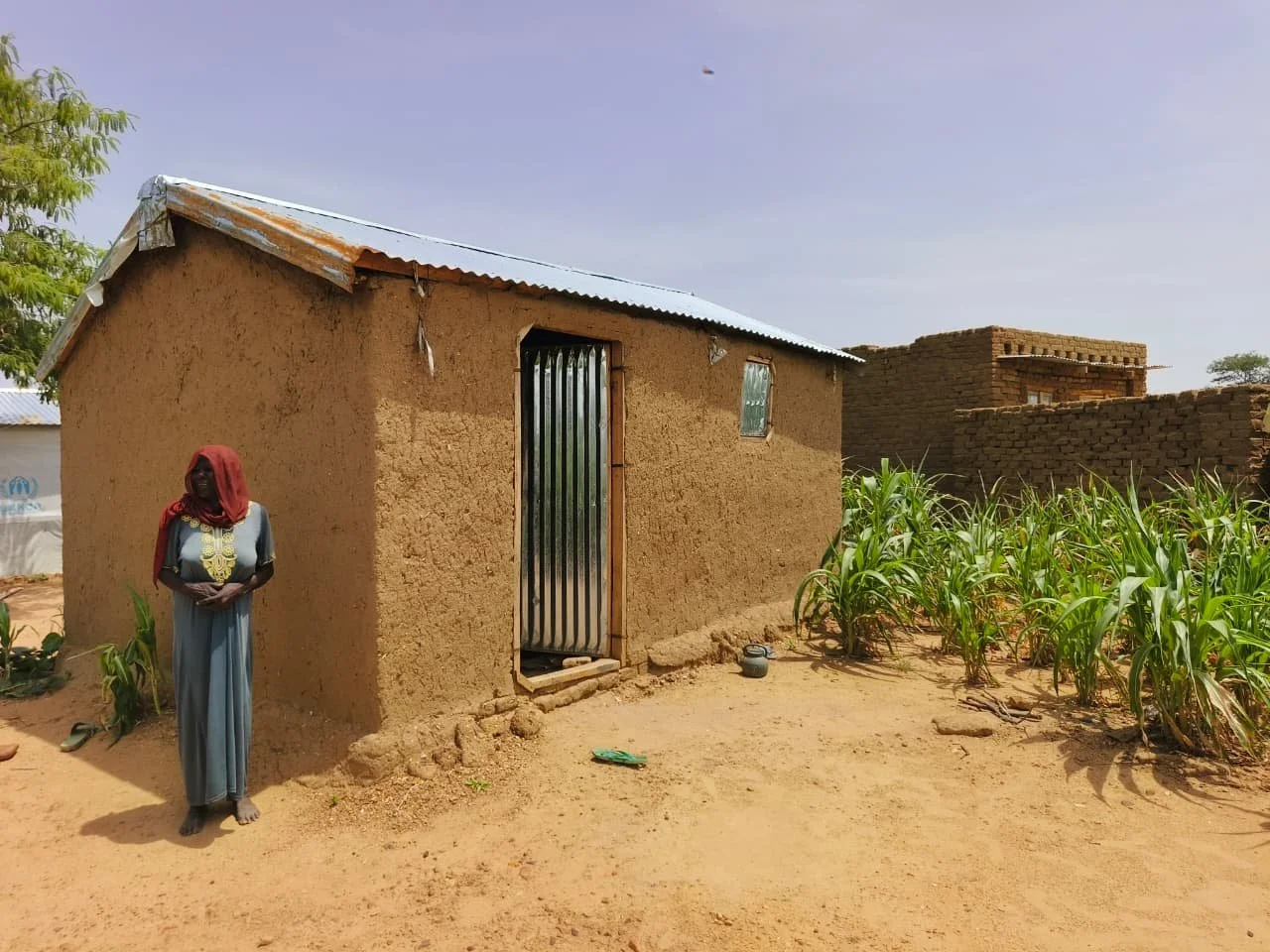
Although tarpaulins remain widespread, families are increasingly using adobe bricks, straw and other locally available materials to create more durable homes.
Building resilience through design
The pilot is still in its early stages, but its ambition extends beyond eastern Chad.
If successful, its lessons could inform a new generation of climate-smart shelter approaches for displacement settings across the Sahel and beyond. They could also demonstrate how local knowledge and traditional building techniques can play a vital role in climate adaptation.
Over the coming months the Habitat Laboratory will test different combinations of materials, ventilation strategies, shading, settlement layouts and passive cooling techniques to generate practical evidence on what works, for whom, and under what conditions. We will work alongside refugees, host communities, artisans and engineers to test ideas, learn from failures and build on local knowledge. In doing so, we hope to better understand not only how to create cooler shelters, but how to design settlements that are healthier, safer and more resilient in a warming world. The process is as important as the result: innovation will emerge not only from technical expertise, but from the lived experience and ingenuity of communities that have spent years adapting to extreme conditions. By testing ideas together, learning from failures and building on existing practices, we hope to identify solutions that can be strengthened locally and adapted elsewhere.
At a time when humanitarian needs are growing and temperatures continue to rise, resilience will require both innovation and humility: innovation to test new ideas, and humility to recognise that some of the solutions we need may already exist.
Sometimes, the future of climate adaptation begins by rediscovering the wisdom of the past.