An interview with Felix Wood, a Frontier Tech Pioneer
Pilot: Justice in Her Pocket

When a woman in Tanzania goes to the police, she will often be told that the problem she’s facing, whether it is around inheritance or gender-based violence, is a domestic issue. Therefore, it’s not something for them to intervene in. That response is legally wrong, but unless she knows that, it’s the last she’ll hear on the matter.
"That's exactly the sort of thing we're getting," says Felix Wood, Head of Anti-Corruption and Serious Organised Crime at the British High Commission in Tanzania. His day job covers anti-corruption, human trafficking and violence against women and girls, but it's a career that began somewhere else entirely.
"My background over the last twenty-odd years is much more in the gender space. Early and forced marriage, FGM. This is a really exciting opportunity to leverage my current job and do something that's much more directly about giving access to justice to particularly excluded and vulnerable women."
Two problems, one sitting inside the other
Ask Felix to describe the problem he's trying to solve, and he splits it in two.
"There's the big problem and then there's the little problem, which is part of the big problem," he says. "The big problem is the exclusion of women from society, from the development story, from the social contract, and that's cemented by their inability to access justice in the right way. Lots of the justice system, both civil and criminal, is not working for women in Tanzania. And that's particularly acute for women who are poorer, or living in more remote areas, or in areas where the social norms are more violently patriarchal."
Some of this comes down to a justice system that doesn't function especially well for anyone. Tanzania is currently in the middle of criminal justice reform, and Felix points out that even lawyers find the system hard to navigate. Layered on top of that is a society where men dominate both the institutions and the informal power structures around them, meaning women are less likely to have had the education that would let them understand their rights in the first place, let alone act on them.
The smaller, more solvable problem is about information. Technology has made it easier to get people detailed answers to legal questions, whether through an app or a general search engine. But that assumes digital literacy and access to a smartphone, and the women Felix is trying to reach are the least likely to have one.
"So actually, what's happening is technology is not driving inclusion, it's driving exclusion," he says. With that in mind, Felix's focus as a Pioneer is simplicity, not sophistication.
Design for the furthest first
He traces the thinking back to a book he read early in his career, Small Is Beautiful, about intermediate technology in development. "It's all about not thinking about the most sophisticated technology, but starting off by saying: if we're focusing on people, what is the most suitable technology for those people to use? Back in the 70’s they were talking about ploughs instead of tractors. I think we should have the same mindset when we're looking at technology now. Not what's the most all-singing, all-dancing thing it can do, but if people need to use it, what's the best technology for them?"
In practice, that means basic mobile phones rather than smartphones, since ownership among women in Tanzania is far higher for the former. It may also mean exploring options which use voice, not text, so the service can work in local dialects for women with limited literacy.
There's a safety logic behind the low-tech choice too. A smartphone is a valuable, coveted object, and in households where a woman's access to information is something her family actively wants to control, that makes it a target. A basic phone is easier to keep (and use privately).
"We're thinking through women who might be in particularly coercive situations, where the people around them, families, husbands, would feel threatened by them accessing legal information, and would physically prevent them," Felix explains. "So there's a big do-no-harm principle in our approach, because we need to think through: if this information is in the hands of women, and that's discovered, is that putting them in more harm?"
A partner organisation has already been testing an early, smartphone-based version of the idea called Dada Wakili, and the pattern of questions coming in gives a sense of what's actually needed on the ground: inheritance rights, what the law says about domestic violence, and how to navigate the gap between customary practice and formal law. Beyond information, the hope is that it will point women toward something practical, such as the paralegal or police station nearest them with a dedicated gender desk.
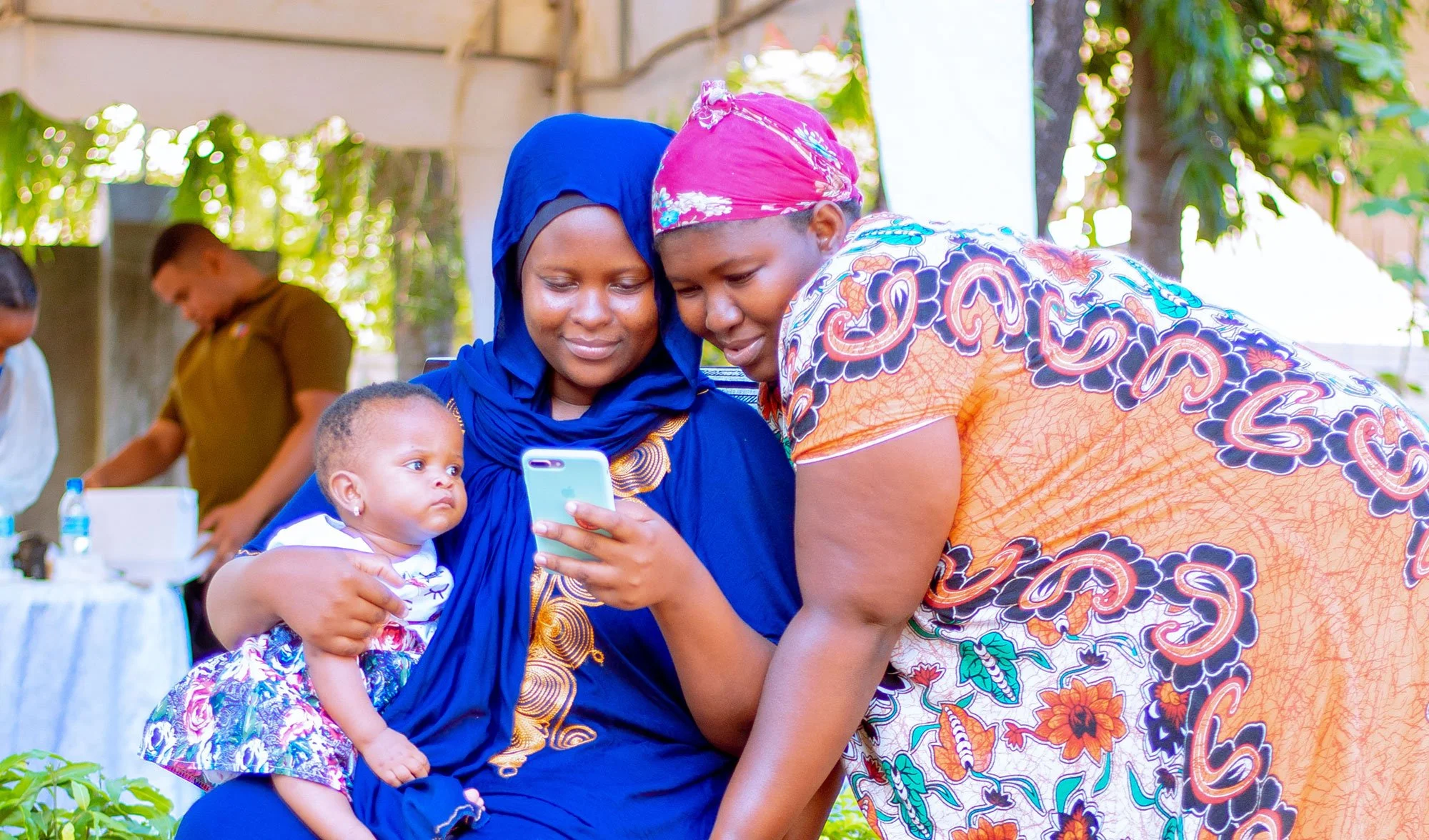
“Dada Wakili” means Sister Lawyer in Swahili, developed by Smart Justice. They became the implementing partner Felix now works with on his pilot.
Getting it right without doing harm
Given the subject matter, Felix is cautious about how far to let AI do the talking. "We're choosing not to use a large language model approach, because the risk of AI hallucinations on case law is too high. So we're basing the analysis on back-ended human analysis, which is AI augmented but not AI itself."
He's equally wary of the exclusion risk baked into any tech-based intervention. Drawing on earlier research into technology's effect on political voice, he's seen the same pattern repeat: it increases participation for some people while pushing others further out. Guarding against that, he says, means looking at how similar do-no-harm principles have been designed into other advice-based technology, particularly in sexual and reproductive health, and testing directly with the women the service is meant to serve.
"I'm coming at this from the perspective of a British male working for government, and that is not the profile of the person who's going to be using this," he says. "We can't come into this as experts imposing solutions, because we just don't know what people's lived experiences are, and the dangers they're facing day to day."
What success actually looks like
The technology itself, likely SMS-based, comes with a cost problem still to be solved: whether a telecoms partner might absorb it, or whether a viable business model exists at all. Felix is candid that this pilot might not settle the question. But he sees the underlying challenge as bigger than justice alone. "That central question, how do you get information into the hands of people at scale who don't have smartphones, that's endlessly applicable. Market information for farmers, health information, education. If we work that out, we'd expect interest from others who might want to replicate it."
When asked to imagine five years out, Felix doesn't reach for a headline number of women reached. He goes somewhere more nuanced. Because the service won't collect identifying data, for the same harm-reduction reasons already built into its design, any success will show up as patterns rather than case files: which regions are asking about inheritance, which about violence, and how long it takes between one type of enquiry and the next, which itself says something about where the system is failing people.
"My dream would be that people are accessing it and are much more able to realise their rights," he says. "But a step down from the rainbows and unicorns version is that the government in Tanzania, and other countries, when they're reforming their justice approach, have a really solid set of data that's driven directly by the people that system is supposed to be serving. Not the head of police being asked where improvements need to be made. It's the people who are otherwise completely excluded from that conversation, and have no voice in it, now having their voice represented, to some extent, because we know them."
The little problem and the big problem, in other words, are meant to stay connected. Solve enough of the first, and it becomes a lever on the second.