A blog by Lil Patuck in conversation with Sara Wahedi, Technology Specialist at the Oxford Institute of Technology and Justice, reflecting on our Access to Justice Learning Brief.
Earlier this year, we produced a learning brief examining how AI and other frontier technologies might safely improve access to justice for survivors of gender-based violence and conflict-related sexual violence in low-resource and post-conflict settings. Its central finding was cautiously split: AI tools show real promise when used by justice practitioners, but putting them directly in survivors' hands raises serious safety and ethical questions that the field hasn't yet resolved.
We wanted to test our learnings, so we spoke with the Oxford Institute of Technology and Justice. Last year, the Institute was launched in partnership with Oxford's Blavatnik School of Government to harness AI to expand access to justice for those who need it most. The Institute is working with Microsoft’s AI for Good Lab to pioneer a suite of innovative AI-powered tools that expand access to justice and connect women, children, and journalists to vetted, pro bono lawyers. Its other projects include promoting the rule of law by training judges and next generation lawyers for the AI era, ensuring fair trials in AI-assisted courts and the creation of AI tools in line with ethical standards and safeguards. The Institute also develops legal and policy recommendations on how to reduce the harms associated with technology, such as cyberattacks and deepfakes.

Explore the Oxford Institute of Technology and Justice
As Sara Wahedi, OITJ’s Technology Specialist, put it: "Technology is not a silver bullet. But it can be a powerful tool to help close the justice gap that persists for women and girls."
The gap isn't primarily a technology gap
Our report documents deep structural barriers facing survivors, such as weak referral systems, limited shelters, poor connectivity, stigma and low digital literacy. Sara shared that the Institute’s starting point was the same: “Our work begins from a position of understanding the realities of the communities we serve before any technology enters the picture.”
The Institute’s founders, Professors Amal Clooney and Philippa Webb KC captured the scale in TIME at the beginning of this year: "In Malawi, one in three women is a victim of violence. Almost one in ten girls is forced into marriage before turning 15. But fewer than 800 lawyers serve the population of 22 million."
The status quo in Malawi is low-tech or no-tech. But the gap facing first responders (teachers, healthcare workers, police, shelter staff) is not primarily a technology gap. It is an information, training, and access gap. AI-powered tools can help survivors access legal information, enable first responders to provide better support, and connect survivors with vetted lawyers. It’s about creating efficiencies within existing systems, not replacing them.
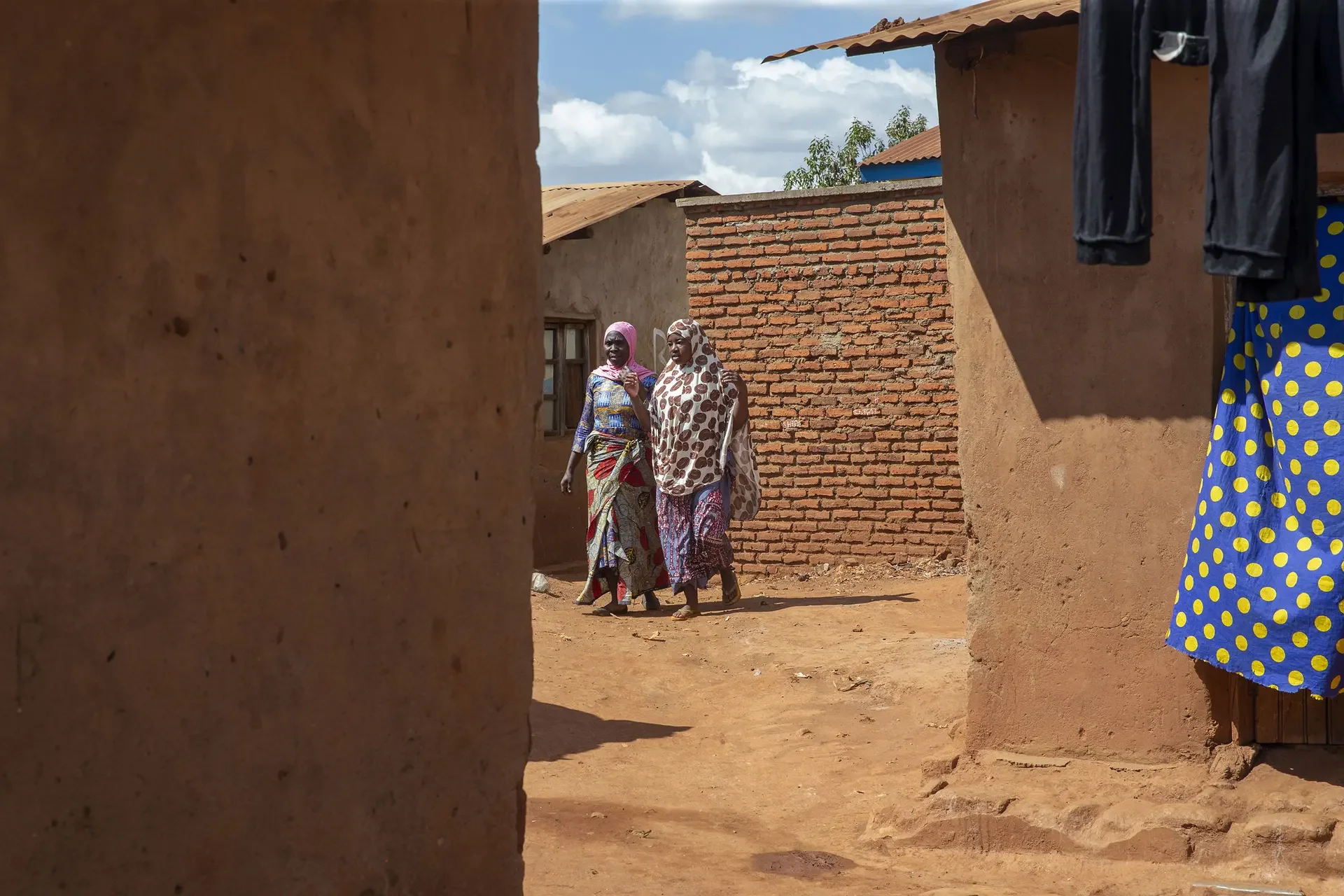
Zafer Goder—Anadolu/Getty Images (from TIME Magazine)
Practitioners first, survivors close behind
The most promising AI deployments in justice settings focus on practitioners as their primary users. The Institute, Women Lawyers Association of Malawi (WLA) and Microsoft are developing an AI-powered WhatsApp chatbot to help women and girls understand their rights. It also matches them with free, qualified lawyers – on any device, in their own language. To date, they have co-created the tool with over 500 first responders and community members.
The Institute and WLA are mindful of the safety risks women and girls may face when seeking help online, for example, if an abuser sees a message on a shared phone. And they also recognise that Malawi is a low-resource digital environment where many women and girls don’t have access to a smartphone. This is why they are initially creating the WhatsApp chatbot for first responders. At the same time, they are exploring additional ways to reach women and girls directly. These include placing tablets in spaces that survivors can access such as shelters or with trusted chiefs or community leaders. And they are considering developing a USSD version of the chatbot that works on all mobile phones and offline.
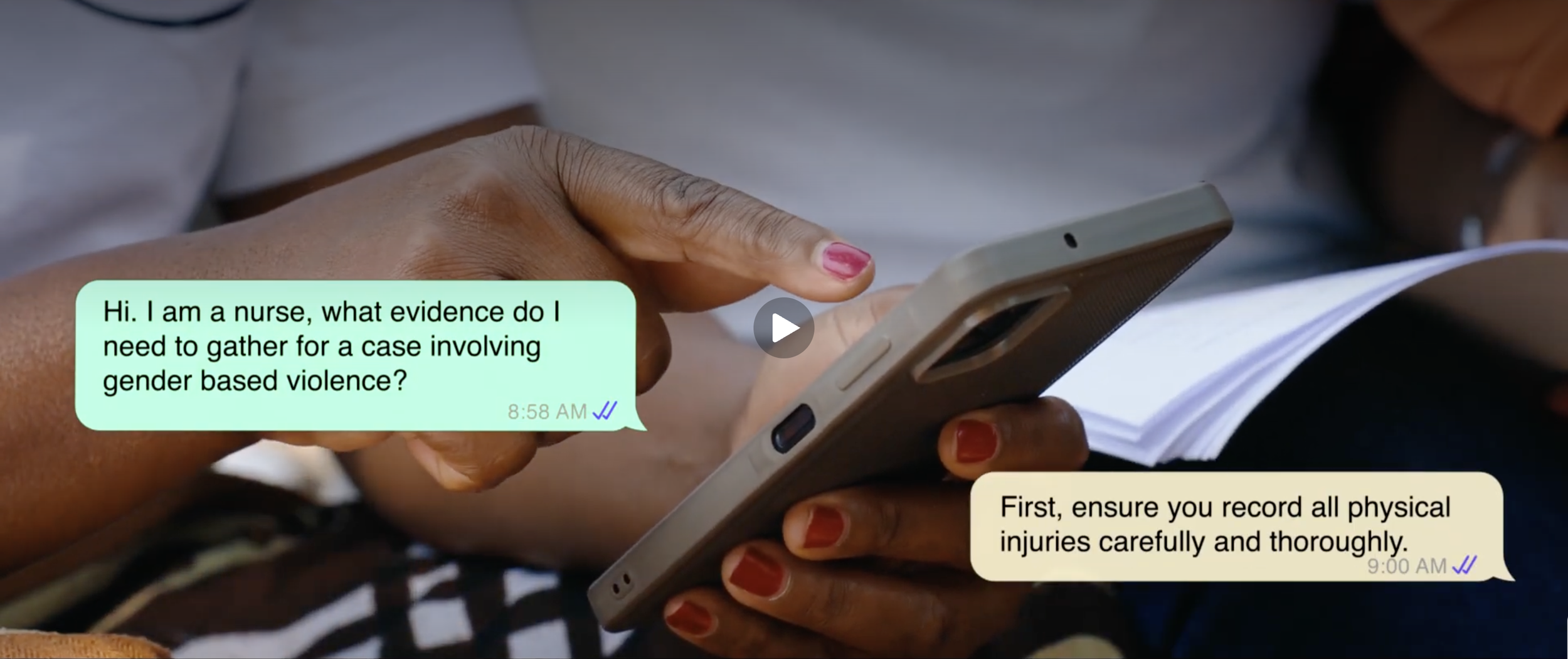
The Institute is developing an AI-powered WhatsApp chatbot with the WLA and Microsoft.
Co-creation sessions in Malawi have confirmed that while many professionals have smartphones and can speak English this is not true for all first responders, particularly community groups who are often the first line of defence for survivors. The same is true for the majority of survivors. Language accessibility is therefore critical. Microsoft has committed to building the world’s first native Chichewa large language model. As Chichewa is Malawi’s most widely spoken language (spoken by 18 million people as their first language), integrating it into the tool means that they can reach many more women and girls. It will also unlock AI potential in Malawi – the Institute are not just building a tool, they are seeking to transform an entire country’s access to new technologies.
Pluralism, co-creation and simultaneous realities
"Co-creation is not a nice to have, it is an essential part of the process."
The Institute’s team has conducted co-creation sessions with over 500 first responders and community members in Malawi, sessions will continue throughout 2026/27. The tools are being built by and with the communities they serve, including WLA, which has worked in their communities for over a decade.
“One of the most important reflections from our recent co-creation sessions in Malawi was that formal legal processes are not always the justice mechanism survivors reach for or trust. Community structures, local mediation, and relationships with trusted figures often carry more weight. We treat this as a design requirement rather than a limitation. When a first responder can give a girl or young woman an accurate account of her rights, that information travels with her into the community processes she is already part of, and can change the terms of a mediation without any escalation to a court. The tool is built to treat that as a legitimate outcome, not a failure to reach the formal system.” — Sara Wahedi
This is the kind of pluralism AI tools need to account for but rarely do, particularly when they're developed in Western contexts and trained on national and international law.
Piloting is part of filling the evidence gaps
"Piloting is not a preliminary step before the real work begins. It is where the most important learning happens."
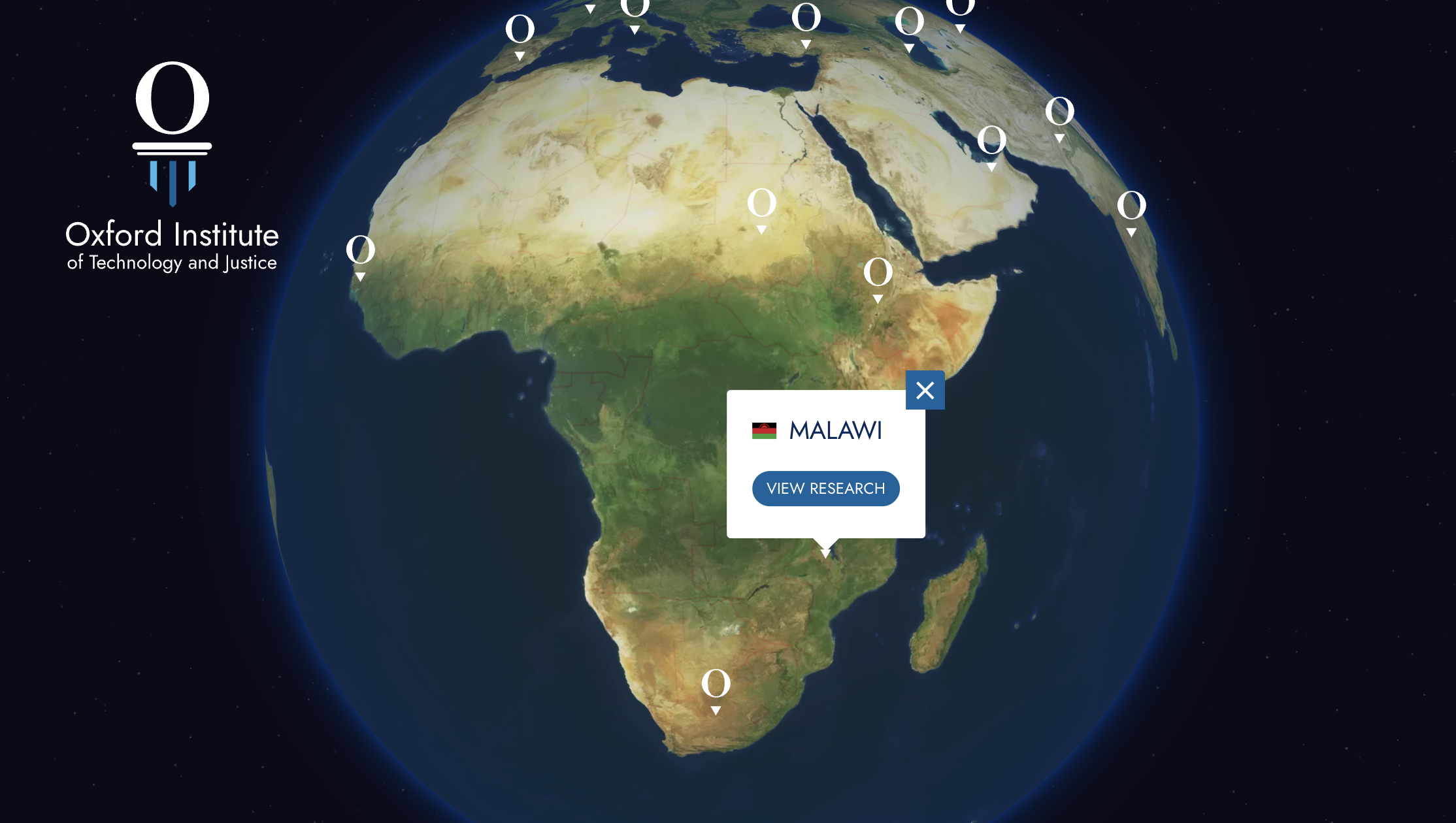
The AI Atlas, which features an FT Pilot within their Malawi portfolio
The collaboration in Malawi to expand access to justice for women and girls is premised on the reality that no single actor holds all of the knowledge needed to build a safe and sustainable tool. What this requires from funders is willingness to resource the full cycle through co-creation, design, testing, iteration and deployment.
It also requires funding the structural basics: devices, connectivity, affordable data, digitised legal resources. Funders and governments need to commit to resourcing vulnerable communities' access to technology itself because even the best-designed AI tool can't overcome these kinds of structural barriers.
The Institute identified two pressing gaps. First, whether improved legal access at the triage stage (the point where a survivor first seeks support, legal information or a referral to legal or other support services) translates into better outcomes further down the line. That causal chain is poorly understood, and without it, tools like theirs are hard to evaluate properly. The second is how survivors in low-resource settings experience AI-mediated processes, even when those processes are intermediary-facing. Both are areas where funder investment would be well placed.
There is also a case for funding further upstream. Frontline organisations need devices, connectivity and access to primary law and judgements, in machine-readable form. In many of the jurisdictions where this work matters most, statutes, procedural codes and judgments are not digitised. No amount of model capability compensates for that absence.
The same is true of the people already doing this work. In most of these jurisdictions, lawyers, paralegals and community organisations are building their own tools with no funding and no engineering support. They hold the contextual knowledge that external teams spend years trying to acquire. Supporting them directly is among the highest-leverage investments available, and among the scarcest.
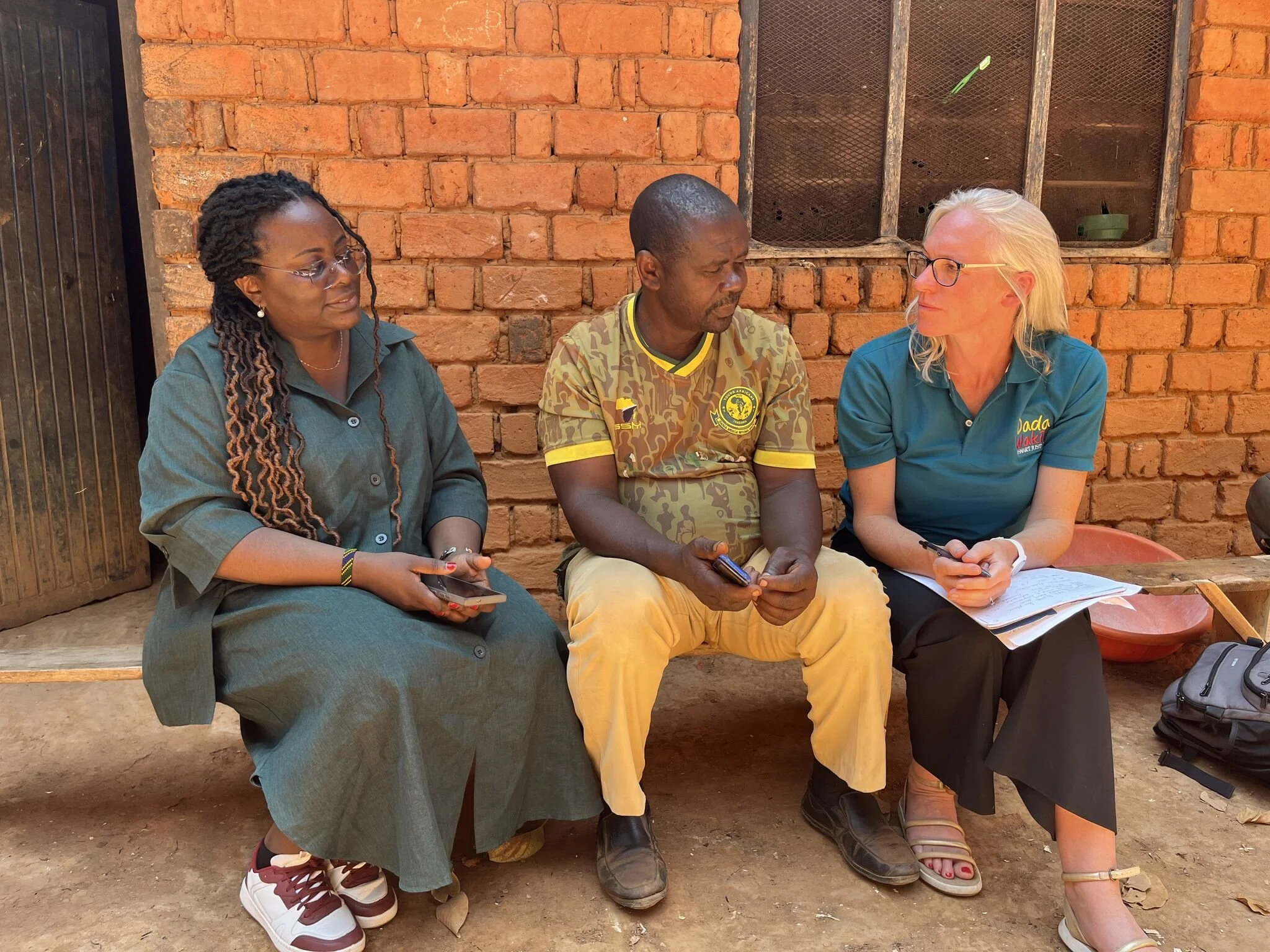
FT Pilot Justice in Her Pocket recently visited village leaders in Tanzania to share their legal access app Dada Wakili, which they plan to make available offline. Credit: Dr Sarah Stephens.
Where this leaves us
The exchange sharpened something our report gestured toward but hadn't stated plainly enough. The most important work in this space is to build smart tools alongside the conditions to make them useful: the trust, infrastructure, referral pathways, evidence base, and local ownership that determine whether technology helps or just adds complexity.
The Institute’s Malawi programme is one of the most serious attempts to get those conditions right that we've seen. They build for practitioners first, while anticipating survivors close behind. They uphold continuous co-creation while holding both the formal and informal justice systems in view at the same time.
Using tech to improve access to justice is a nascent space gathering momentum. Our own portfolio is growing, having tested technologies such as augmented and virtual reality and AI so far. The Institute’s reflections here will continue to serve this critical frontier as we move forward with care.
Explore Frontier Tech pilots improving access to justice



If you’d like to dig in further…
🔘 Find out more about The Oxford Institute of Technology and Justice
🔘 Explore the AI Justice Atlas
🔘 Download our report on using tech to enable access to justice