Justice in the fields
An article by Lil Patuck, a member of the Frontier Tech Hub, on the links between our justice portfolio from East Africa to Colombia.
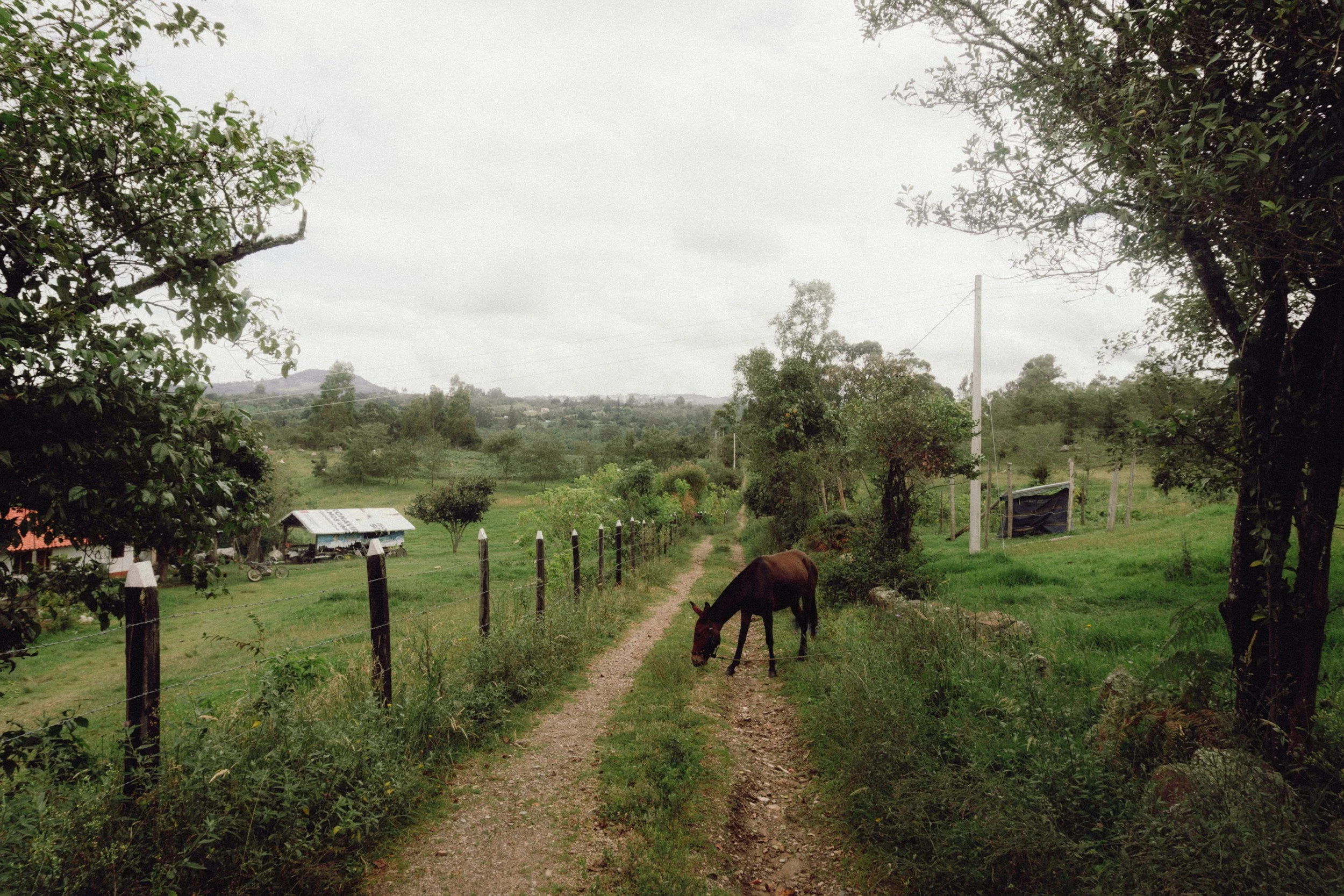
On 27 March 2025, we sat Colombian land experts around two problem trees and asked what was missing.
One said the National Land Agency's paper archive, roughly 11 kilometres of it, needed digitising urgently because its absence was holding up the work of many other institutions. A participant from the Land Restitution Unit wrote that people often don't know where to go to look up information at all. Several made the same point about Colombia's Open Data laws: the right to access public land information exists on paper and not in practice.
We heard a similar line nearly a year later. Amal Clooney and Philippa Webb KC wrote in TIME that "in much of the world, women's rights exist only on paper." They were writing about legal aid for women in Malawi, while the Colombian workshop was about cadastres and title deeds, but they both described a very similar problem.
A land title is a legal right, and most of Colombia's backlog is rural
Colombia has around 16 million properties. Between 4,000 and 8,000 are formalised or adjudicated each year. More than half of the cadastre, the state's record of who holds which land, is out of date, and the gap is widest in the countryside. According to the FAO, 68% of rural properties are under five hectares and only half of the land is formally titled.
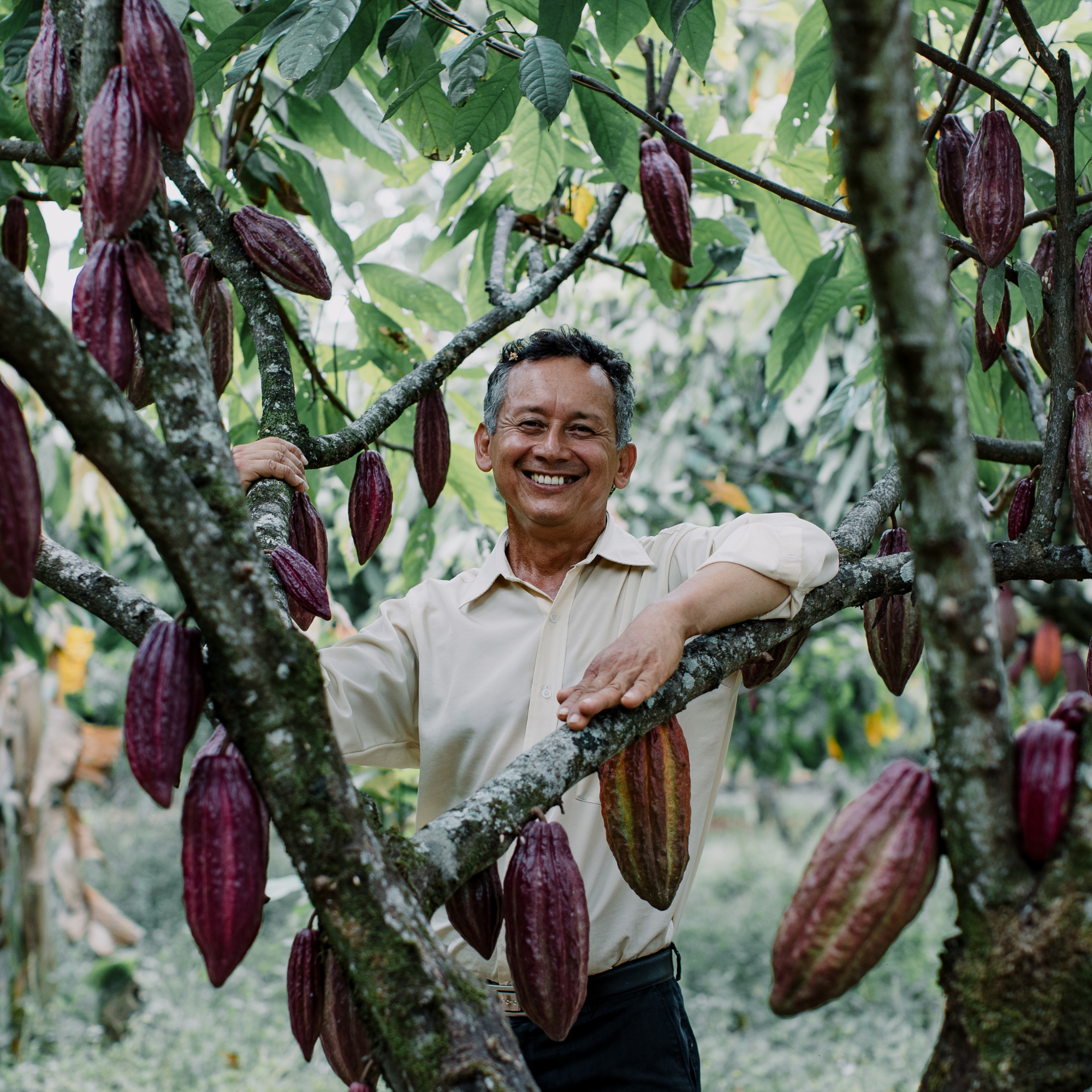
A cocoa farmer we work with on our FOLIA pilot.
Without a recognised title, a farming family struggles to get a loan, can't easily prove where its cocoa or cattle came from, and is exposed when someone with better lawyers turns up claiming the same plot. Our land report traces the downstream effects: land grabbing, deforestation, illegal mining, and armed groups competing for territorial control.
Measuring demand with the people closest to the problem
Working with the British Embassy in Bogotá, we identified a set of Colombian challenges where frontier technology might help, including conflict over land tenure and smallholder farmers' access to markets. We commissioned local experts to define the problem with the people who live with it.
Two reports came out of this.
Advising Frontier Tech Hub on Land Tenure Rights for Smallholder Farmers in Colombia, by Dr Liliana Duica-Amaya, Sergio Rodríguez and Samuel Primis, mapped the land and tech ecosystem and tested its findings in the workshop above, with participants from IGAC, the National Land Agency, DANE, DNP, the Land Restitution Unit, national parks, ANDI and private legaltech firms. It settled on two priority problems: cadastral data that is constantly out of date, and land use information that never feeds into formalisation.
Smallholder Farmers' Access to Local and International Markets in Colombia, by César Corredor, interviewed specialists from Fedegan, Cenipalma, the Ministry of Agriculture and others, mapped the value chain, and identified where technology could help small producers reach buyers.
Linking land to our justice portfolio
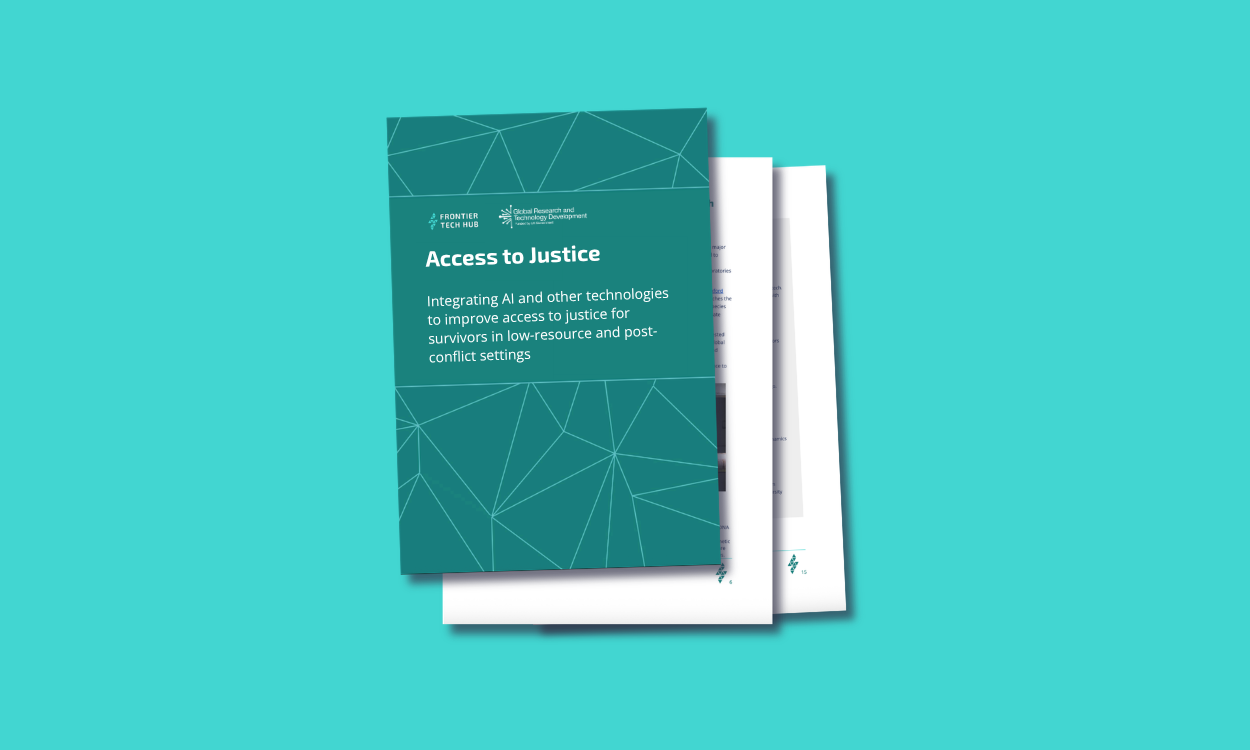
We recently published a learning brief exploring how tech can widen access to justice, and documented conversations with experts in the space such as Sara Wahedi, Technology Specialist at the Oxford Institute of Technology and Justice, and Felix Wood, Head of Anti-Corruption and Serious Organised Crime at the British High Commission in Tanzania.
The brief featured Dada Wakili, a WhatsApp chatbot trained on Tanzanian law that answers questions about inheritance, land, property and violence against women and children. It has since become part of our own portfolio through Justice in Her Pocket. The questions women send it centre on inheritance rights, domestic violence law, and navigating the gap between customary practice and formal law. In its evaluation, participants "reported improved understanding of legal rights and greater confidence in determining next steps in inheritance-related disputes."
The brief also defined justice broadly, to include information, documentation and reporting, inside or outside the formal courts. By that definition, a widow trying to prove her late husband's plot is now hers is asking a justice question. So is a farmer whose boundary appears in a municipal register and nowhere in the national one.
Three patterns we’ve spotted
You can't search law that was never digitised
When we asked Sara Wahedi what funders overlook, she pointed upstream:
"In many of the jurisdictions where this work matters most, statutes, procedural codes and judgments are not digitised. No amount of model capability compensates for that absence."
Colombia shows what that looks like at national scale. Alongside the 11-kilometre archive, workshop participants described municipal land plans that exist only in analogue form and Open Data platforms built around the needs of institutions, with no APIs and interfaces too technical for ordinary users. Where public channels fail, the report notes, valuable data ends up being pirated between organisations instead.
Justice often happens outside the state's records
Sara's sharpest reflection from Malawi was about where survivors actually go for help:
"Formal legal processes are not always the justice mechanism survivors reach for or trust. Community structures, local mediation, and relationships with trusted figures often carry more weight. We treat this as a design requirement rather than a limitation."
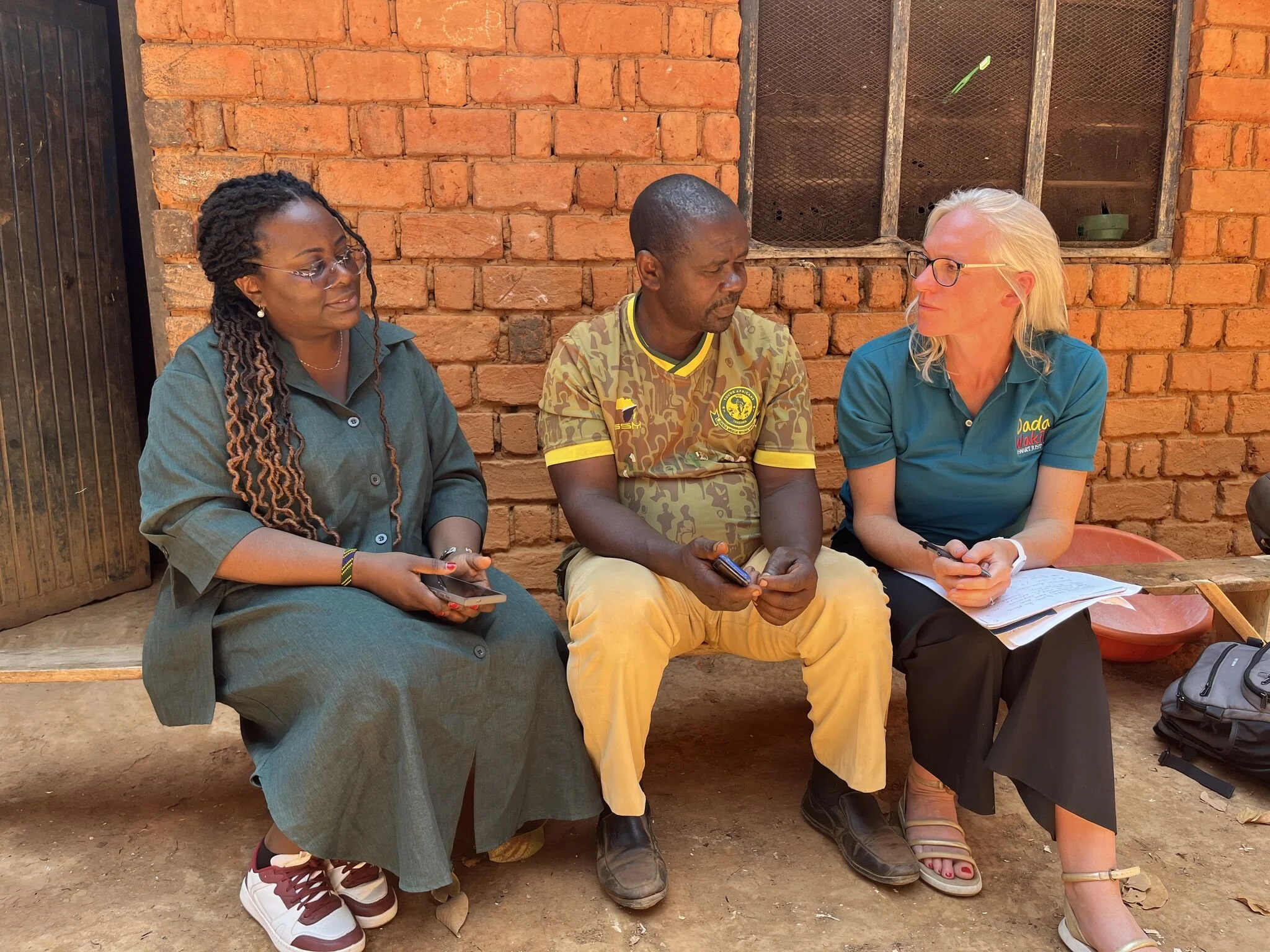
Tanzania shows the same thing. Many of the questions Dada Wakili receives are about navigating the gap between customary practice and formal law, and the Justice in Her Pocket team has been visiting village leaders to share the app, which they plan to make available offline.
In rural Colombia, Juntas de Acción Comunal, local community councils, keep property records that neighbours recognise and the state doesn't. These records aren't digitised, and the institutions completing the cadastre don't know they exist. The national cadastre doesn't account for the informal tenure arrangements that make up most rural landholdings. Any tool built for formalisation faces the same design choice the Malawi and Tanzania teams faced: serve the formal system, the one people trust, or find a way to connect them.
The strongest tools sit with professionals, and many are built locally
Our justice brief found AI was most promising in the hands of practitioners. Malawi's Legal Aid Bureau handles over 25,000 active cases with fewer than 50 lawyers, so anything that speeds up their work reaches survivors quickly. Even where a tool talks to women directly, the aim is to hand them on to a person: Justice in Her Pocket hopes to point women to the nearest paralegal or police station with a dedicated gender desk.
Colombia's legaltech sector follows the same pattern. Gestión Predial Simple's VESTA platform analyses a property's title and registry history in 30 minutes, against four to ten hours by traditional methods. The same company has built a tool that analyses land restitution judgments, the rulings that return land to people displaced by the conflict. Legalítica has processed more than 40,000 title certificate analyses.
These are local firms. Sara made the case for backing exactly this kind of builder:
"In most of these jurisdictions, lawyers, paralegals and community organisations are building their own tools with no funding and no engineering support. They hold the contextual knowledge that external teams spend years trying to acquire. Supporting them directly is among the highest-leverage investments available, and among the scarcest."
The Colombian workshop described the alternative. Government agencies routinely outsource innovation to temporary contractors, and the knowledge leaves when the contract ends.
For smallholders, proof of the plot is the gate to the market
César Corredor's report starts from the farm gate. Seventy per cent of Colombia's agricultural production units are under five hectares. Only 1.7% have internet access. Roughly 9% of producers reach the credit system, and 8% get technical assistance. Any tool for these farmers has to start where Felix's pilot did, with the phones and connections people actually have.
The land workshop suggested markets can do some of the work courts can't. Where buyers demand proof that a product didn't come from deforested land, formalising the land becomes worth the effort for the farmer.

We've tested that idea in Colombia's cocoa sector. The government has invested heavily in cacao as a legal alternative to coca, and cacao bean exports grew by more than 400% between 2011 and 2024. But the EU Deforestation Regulation now requires anyone trading cocoa into the EU to show it didn't come from land deforested after 31 December 2020, and the certifications that provide that evidence are out of reach for many smallholders. Our FOLIA pilot, led by Alfonso Escolar with Earth Big Data, built a mobile app for farmers to record their farm locations and boundaries, then matched those against satellite imagery to give buyers a deforestation risk report for each farm. A whole sprint went on the technical challenge of getting accurate farm boundaries in the first place.
Our climate adaptation work found the same pattern in Vietnam. In the Central Highlands, Hillridge found the regulation was putting markets worth up to 30% more income out of reach for coffee smallholders, because importers need geolocation data for each plot. By building traceability around Central Farms, the aggregators who already know where their coffee comes from cleared 92% of 533 farms for compliance.
In both countries, proof of where a crop was grown turned out to be worth money. In Colombia, that proof leans on a cadastre that is more than half out of date, and on boundaries farmers often have to draw for themselves. Market pressure won't settle a boundary dispute, but it can give a family a reason to start the paperwork.
We've been increasingly exploring how technology can help survivors reach legal support, but Colombia's farmers raise a different question: what does access to justice look like when the case is a boundary line, and the evidence sits in an archive nobody can search?