A blog by Nick Moore, Pillar Lead, about our new AI tools platform.
Try it yourself at oasis.frontiertechhub.org
When I started working on the Oxygen and Vaccine Data CoLabs five years ago, I had a background in innovation and rapid response programming. Healthcare was completely new to me, and as I began navigating the sector, I kept hearing about one acronym. It was standard for everyone else but me: DHIS2.
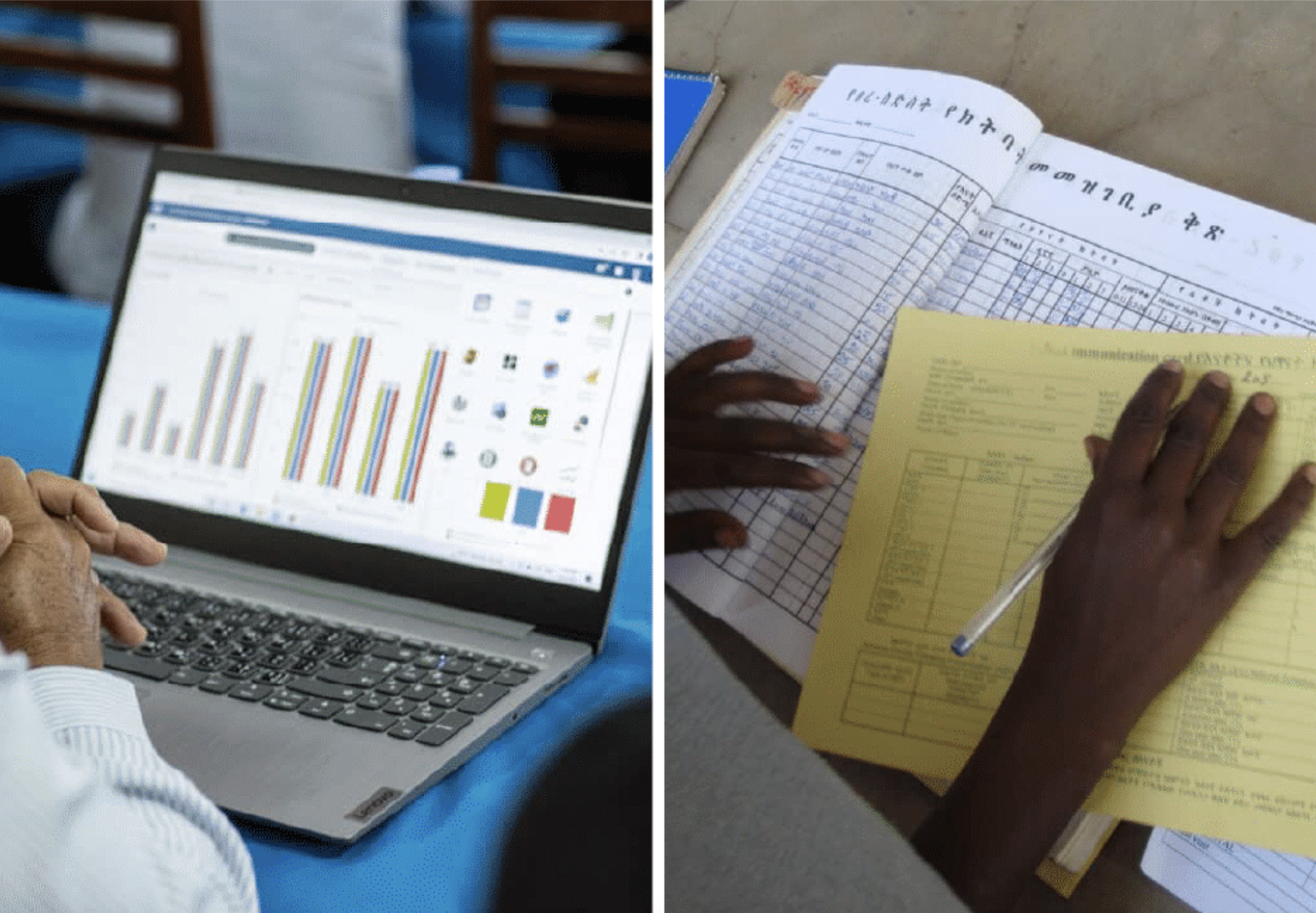
If you've not worked in global health, you've also probably not heard of it. It's an open-source health information platform, led by the University of Oslo, that quietly runs the health data much of the world relies on.
The scale of the tool is now pretty impressive; DHIS2 is used in more than 90 low- and middle-income countries, covering over 3.2 billion people. In Rwanda, where it has been the backbone of national health reporting since 2012, data completeness rose from 88% to over 95% and timeliness from 60% to over 90%.
One story from COVID-19 sticks in my mind. Developers in Sri Lanka built a port-of-entry tracking system on top of the platform to manage travellers arriving in the country. The team shared it with the global DHIS2 community, and the team back at the University of Oslo turned it into a generic COVID-19 surveillance package that countries around the world, including Norway, could adapt. A tool built to solve a local problem in Colombo ended up being used in the country that hosts the platform itself. It’s a rare example of (often mythologised) ‘Global South’ to Global North’ technology transfer.
The story captures what is impressive about DHIS2’s open architecture and community: genuinely global innovation and a norm that when you build something useful, you share it. Local adaptation feeds the global platform, and the global platform makes the next local adaptation cheaper.
Unfortunately, though, one of the reasons that DHIS2 is so interesting to me is the fact that it doesn’t feel like the norm in the sector.
Avoiding pitfalls of the past
In 2008, at the height of the mobile health boom, more than 80 mHealth applications were being piloted in Uganda. None reached national scale, and none shared data with each other. By 2010, the country had over 50 concurrent eHealth projects, funded by nearly as many donors, running on at least a dozen separate electronic record systems. Community health workers were expected to feed data into registries that couldn't talk to one another, on behalf of funders who weren't talking to one another either.
The response, in 2012, was for the Government of Uganda to issue a moratorium halting all eHealth pilots until unified standards could be established. A government effectively banned innovation because the innovators couldn't coordinate. Botswana did similar, consolidating 37 separate record systems down to nine, and a World Bank review at the time found hundreds of siloed mHealth pilots globally with limited uptake.
It was a structural failure: no shared infrastructure, no incentive to publish what didn't work for others to learn from, and funding cycles that rewarded launching something new over improving something that existed.
Building something more open
I think we’re in danger of doing similar again, with AI. Across the sector, we’re independently building AI chatbots, drafting AI guidance, and commissioning landscape assessments, duplicating efforts for limited gain. And, those that aren’t building independently, without their own specific budgets or with limited expertise, are being left behind. It’s also those left behind who could have the most impact with the new tools.
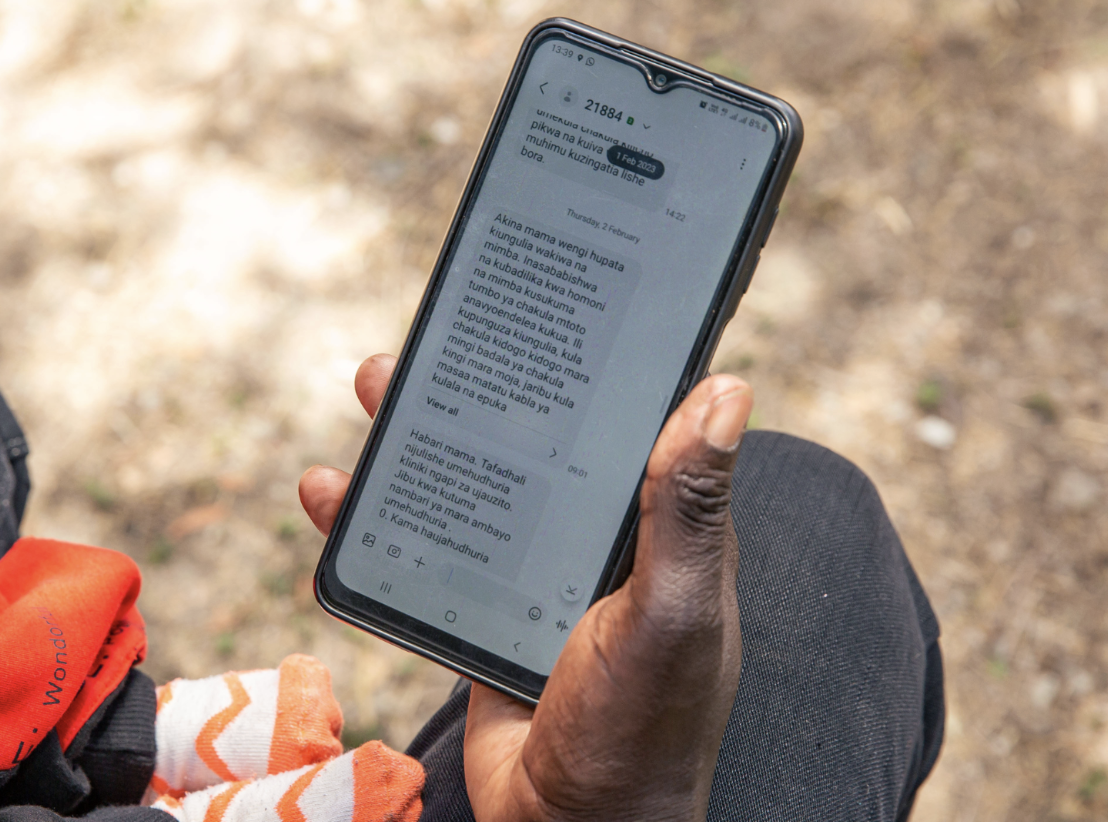
There are some real bright spots though, In Kenya, Jacaranda Health took Meta's open-weight Llama models and built UlizaLlama, a Swahili language model that powers personalised maternal health advice for mothers using its SMS service. Rather than guarding it, they released the model openly with a developer toolkit, so other African organisations can adapt it to their own domains. In a similar vein, last week at AI for Good, Current AI launched their AI Potluck, an open-source project to build a full AI stack entirely from open-source components.
We know human nature is to default to previous ways of working. So, we are actively choosing to follow the kind of openness that DHIS2 proved is possible (and more impactful).
Introducing OASIS
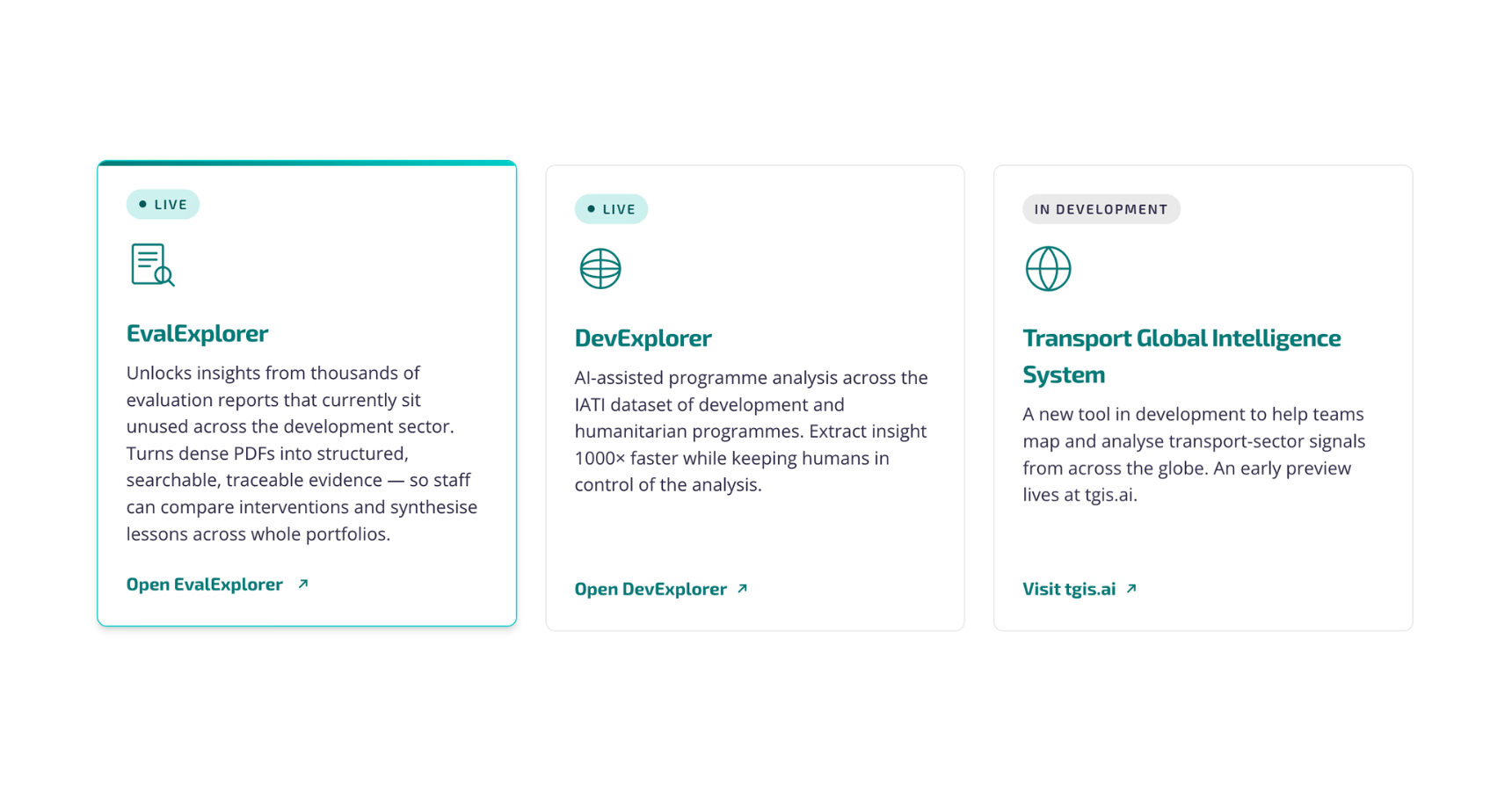
OASIS is the platform we're building at the Frontier Tech Hub. The idea is simple: a shared, open home for AI in development, where practitioners can find, discuss and build on each other's work rather than starting from scratch. It’s also a place to learn from each other.
We also see it as a response to the refreshed Principles for Digital Development, which put it plainly: sharing, reusing and improving existing initiatives pools our collective resources and avoids costly duplication. Principles the sector has endorsed for a decade and mostly honoured at the edges.
When I was new to health, I kept hearing about DHIS2 because it had earned its ubiquity: thousands of people, over two decades, building on a shared foundation. My hope is that someone starting out in development in 2030 gets to have the same experience with AI: that they hear the story about a handful of shared, open, field-tested tools, and wonder: “How did anything ever get done without them?”
That future won't happen by default, though, and if you'd like to help shape it, come and have a look at what we're building at oasis.frontiertechhub.org.
If you’d like to dig in further…
👥 Join our open community to work on AI tools and adoption in the open