Meet the FIRST Fund's second cohort
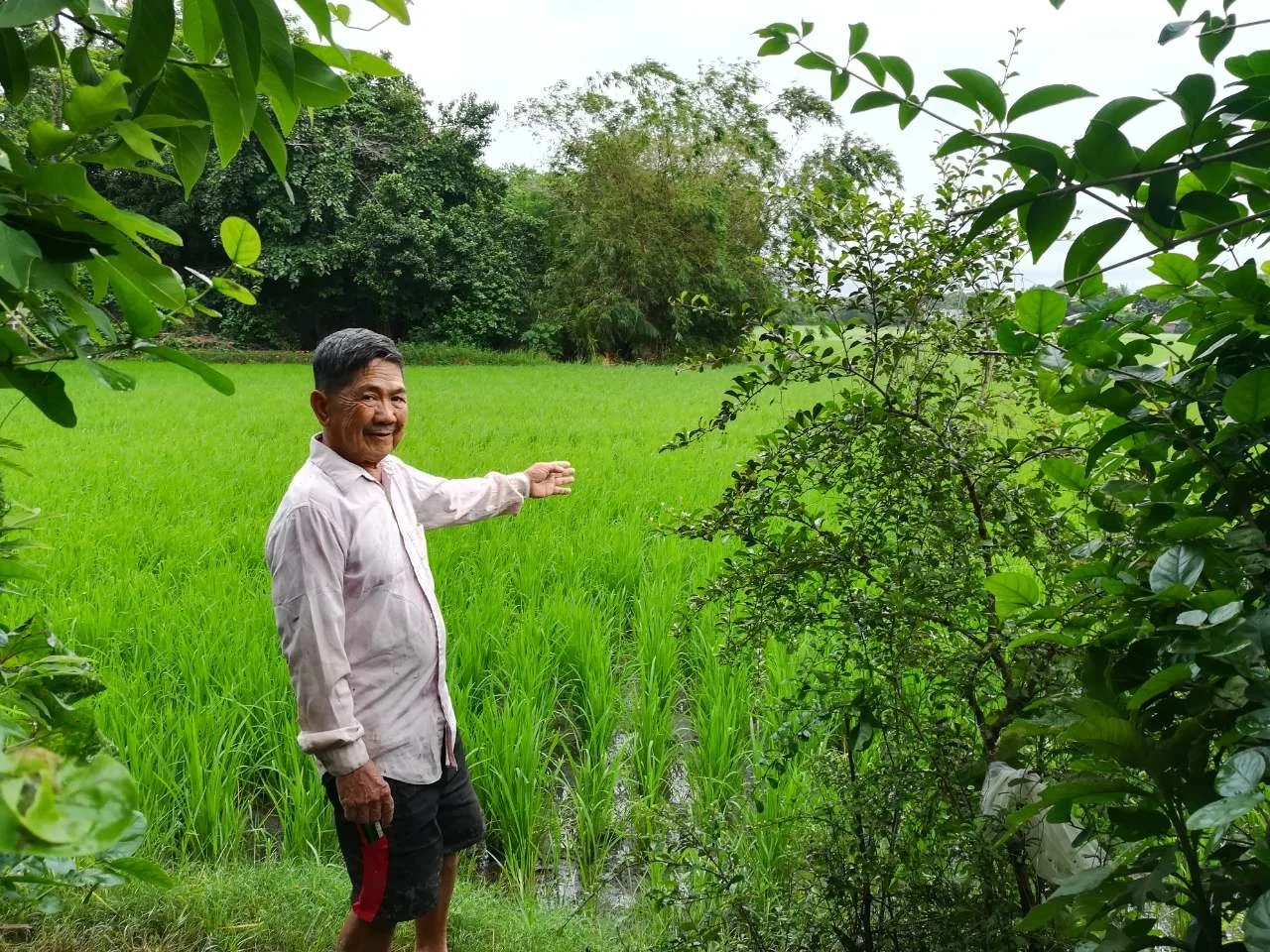
A rice farmer points to his paddy fields, Iloilo, Philippines.
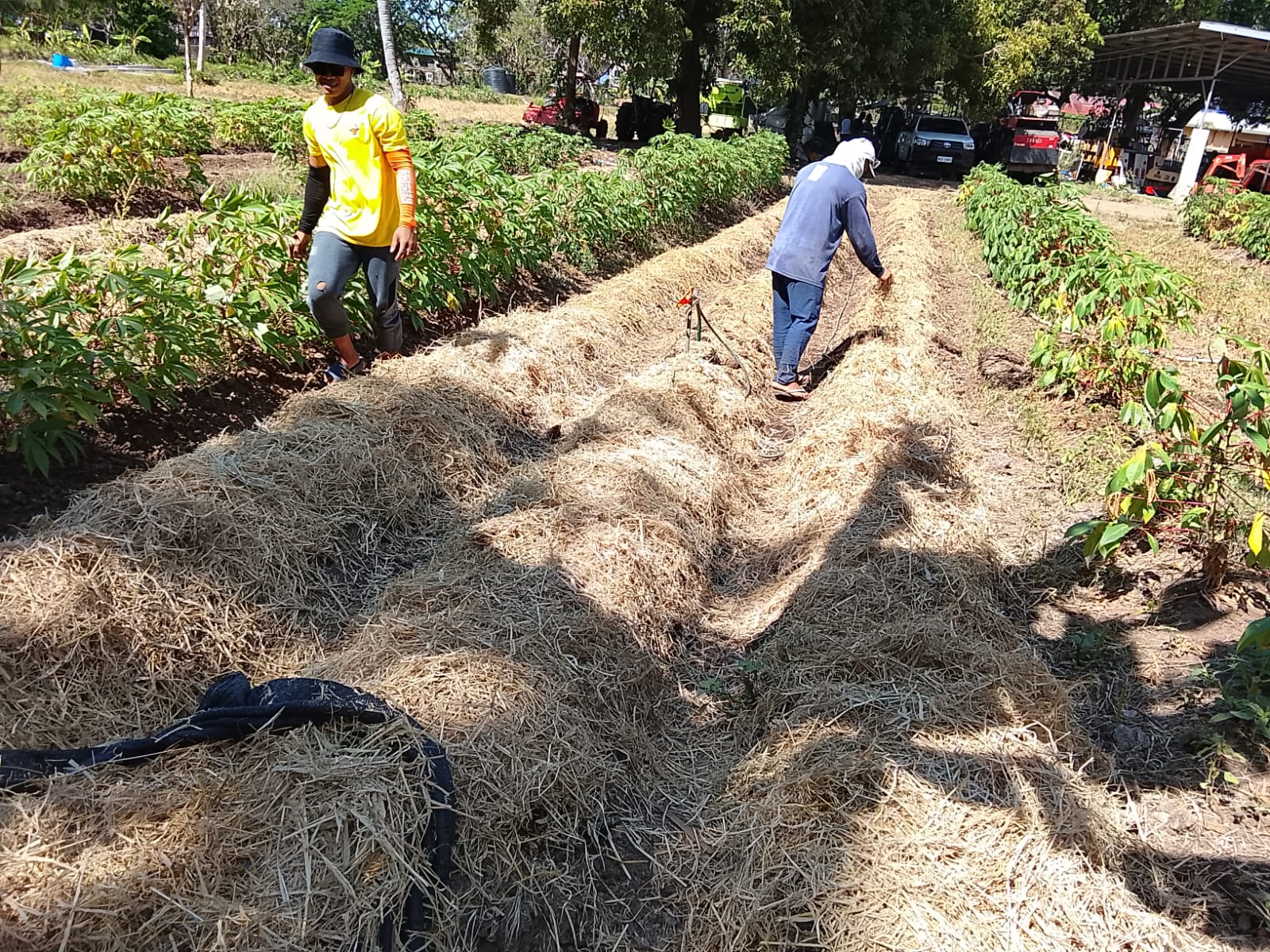
Composting worms die above 35°C. In Laguna, south of Manila, afternoons regularly reach 35 to 38°C, and with Super El Niño, some areas might reach danger levels of 42 to 51°C. One hot day can wipe out months of fertiliser production. That’s why vermicomposting, which uses worms to turn the millions of tonnes of straw left over from the rice harvest into organic fertiliser, has been hard to scale. One of the FIRST Fund’s (Facility for Investment Readiness and Scalable Technology) new ventures is changing that with sensors that monitor the compost beds around the clock and switch on cooling water sprays when it gets too hot.
It is a small, but typical problem. Climate shocks rarely break a food system all at once; they slowly break its weakest links from production to retail.
Last week in Manila, Baroness Hayman of Ullock, Parliamentary Under-Secretary of State at the Department for Environment, Food and Rural Affairs (DEFRA), announced four new ventures in the second cohort of the FIRST Fund for Adaptation Finance, each targeting one of those links.
Climate shocks and food security
Climate change is making food security a more urgent problem. In a September speech, the Minister for International Development, Kirsty McNeill, named food security as one of five securities she will focus on and highlighted how climate has made it a global shared risk.
It's especially stark in Southeast Asia. The region grows roughly a quarter of the world's rice and takes some of the hardest hits: the Philippines, Vietnam, Thailand and Myanmar all ranked among the ten countries most affected by extreme weather between 1999 and 2018. Most of that risk lands on smallholder farmers who grow around 80% of the region's food. And when these farmers take a hit, it doesn't stay on the farm.
Think of a food supply chain as five links, from the farm or the boat to the shop shelf. When a shock hits, any one of them can break, and it usually snaps where someone can't afford to absorb the loss or pay to protect themselves. That's why for the FIRST Fund, adaptation starts with financial resilience. If it doesn't make financial sense for a farmer, a cooperative or a trader to adapt, they won't.
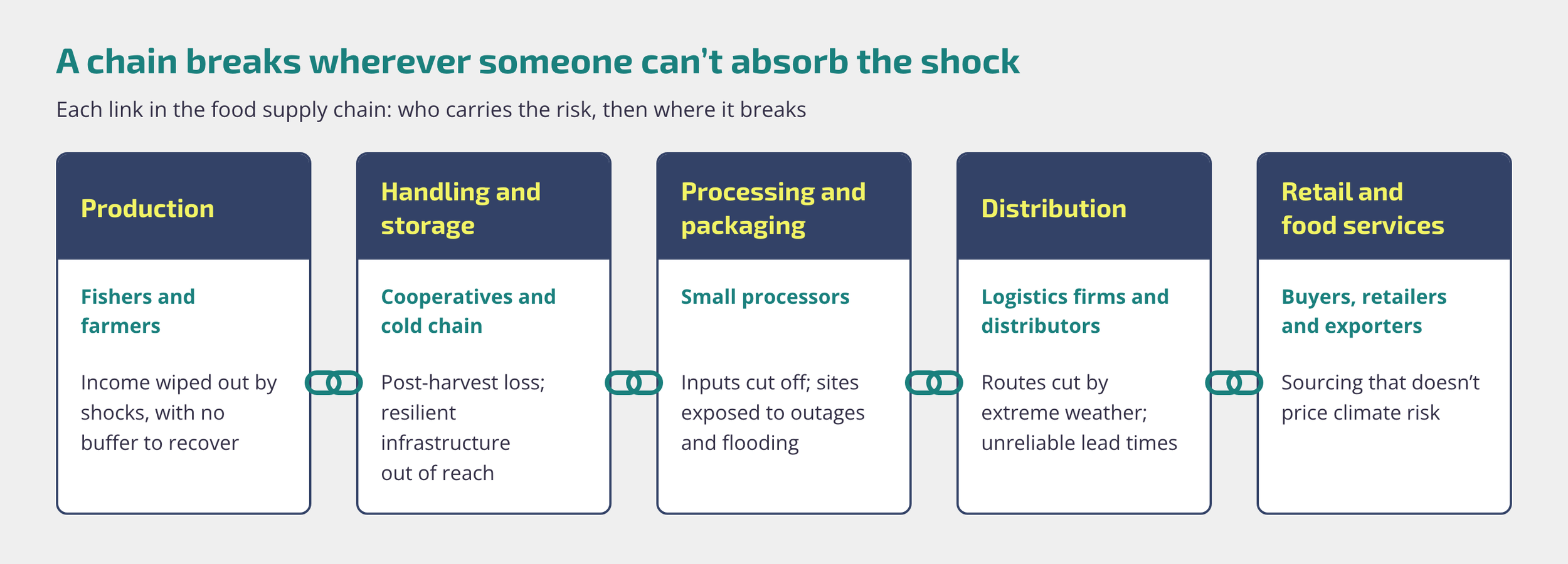
Our first cohort tested parametric insurance in Vietnam and the Philippines, and Hillridge, Rare and Mayani proved their solutions can work for farmers and fishers. But small-scale food producers are both the most exposed to climate risk and the least able to pay for protection. So the second cohort follows the money along the supply chain, testing who else can pay for climate risk and how to price it fairly.
Plenty of promising ideas, too few investable ones
Good ideas exist, but ideas that are ready for investment are scarce. Getting from a promising pilot to real investment depends on what works in the real world. Will someone pay for it, and will it make a return? Who puts in the next round of money, and how do we get them involved early? And does it actually help people cope with climate shocks, so one bad season doesn't wipe them out?
These practical questions are what the Hub was set up to help ventures answer. Funded by the FCDO, we’ve spent ten years testing emerging technologies in real-world conditions, running more than 108 pilots across 45 countries, and the ventures we’ve supported have raised £26.4 million in follow-on funding. The FIRST Fund brings that experience to climate adaptation in Southeast Asia's food systems, bridging the first step from idea to investment.
The four ventures in this cohort are each on that investability journey, solving breakpoints across the food supply chain. Each gets a catalytic grant and dedicated 1:1 innovation coaching to focus on the riskiest assumptions and run practical testing to prove what works and what the investment opportunity is.
Rice Finance from Seed to Sale
Mayani · Iloilo, PH
Can bundling credit, climate-resilient inputs, crop insurance and a guaranteed buyer give smallholder rice farmers the security to change how they farm?
Iloilo is the Philippines’ largest rice-growing province by harvested area, yet its yields are among the lowest in the country: 3.4 tonnes per hectare, against a national average of 4.2. Most farmers work one to two hectares and earn around PHP 32,000 per hectare a year. Without affordable credit or a secure buyer, farming differently is a risk they can’t take. Mayani’s network reaches more than 100,000 organised smallholders. In Pototan, working with the Iloilo Provincial Government and the Municipal Government of Pototan, it will run the whole chain for the first time. Farmers register on Mayani’s Farmers & Fisherfolk Companion app. They get seed and inputs through a low-interest, government-backed loan bundled with crop insurance, then sell their harvest to the Pototan Rice Processing Complex at a floor price. The loan is repaid from the sale at the mill, not from the farmer’s own cash. The pilot aims to reach 250 to 400 farmers and raise income to PHP 43,000 per hectare.
Straw to Soil
Straw Innovations · Laguna, PH
Can low-cost sensors keep vermicomposting alive through tropical heat, and turn rice straw and farm waste into affordable organic fertiliser?
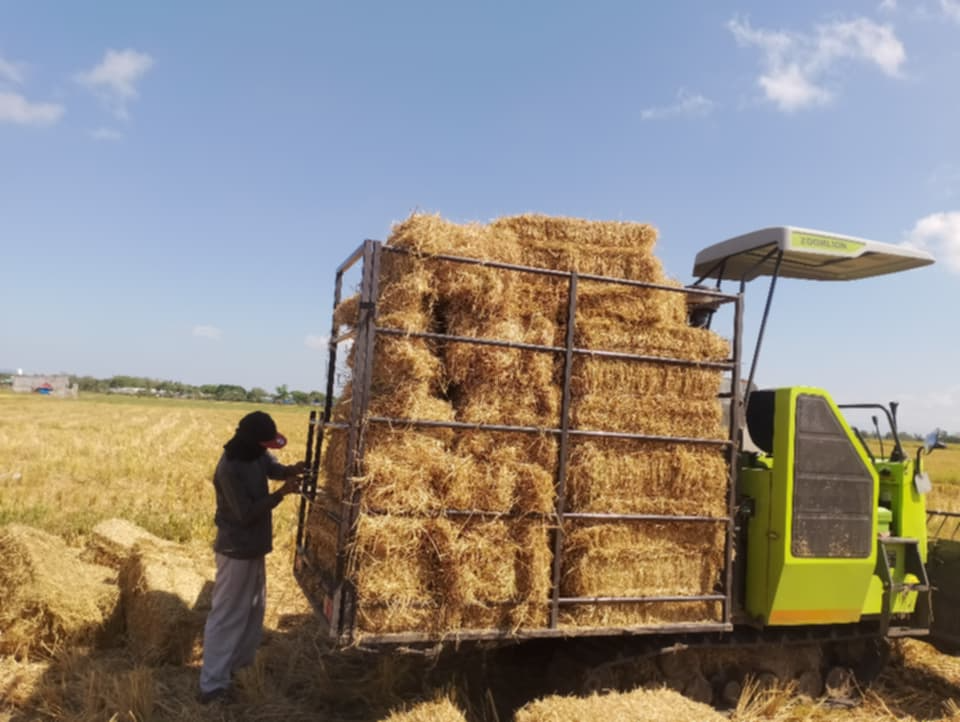
Straw Innovations spun out of research at the International Rice Research Institute. Its Straw Traktor collects rice straw in a single pass at harvest, and in the 2026 dry season it harvested 1,000 hectares with 26 machines. The straw goes to dairy farms as feed and bedding and to mushroom growers as substrate. The leftovers from both, manure and spent straw, come back on trucks that would otherwise return empty. The pilot feeds them to composting worms at the company’s 600 m² hub, with sensors tracking temperature, moisture and pH. When a bed nears 35°C, the system triggers misting to cool it before the worms are harmed. Straw Innovations plans to sell vermicompost at around ₱10/kg, against ₱30 or more for chemical fertiliser, and says it improves the soil’s water retention. A four-to-six-month production cycle will test the compost against Philippine National Standards and gather feedback from 10 to 15 farmer buyers.
Shells for Shrimp Health
Vietnam Food (VNF) · Ca Mau, VN
Can shrimp farmers trade the shells their shrimp shed for pond inputs that cut crop losses and chemical use?
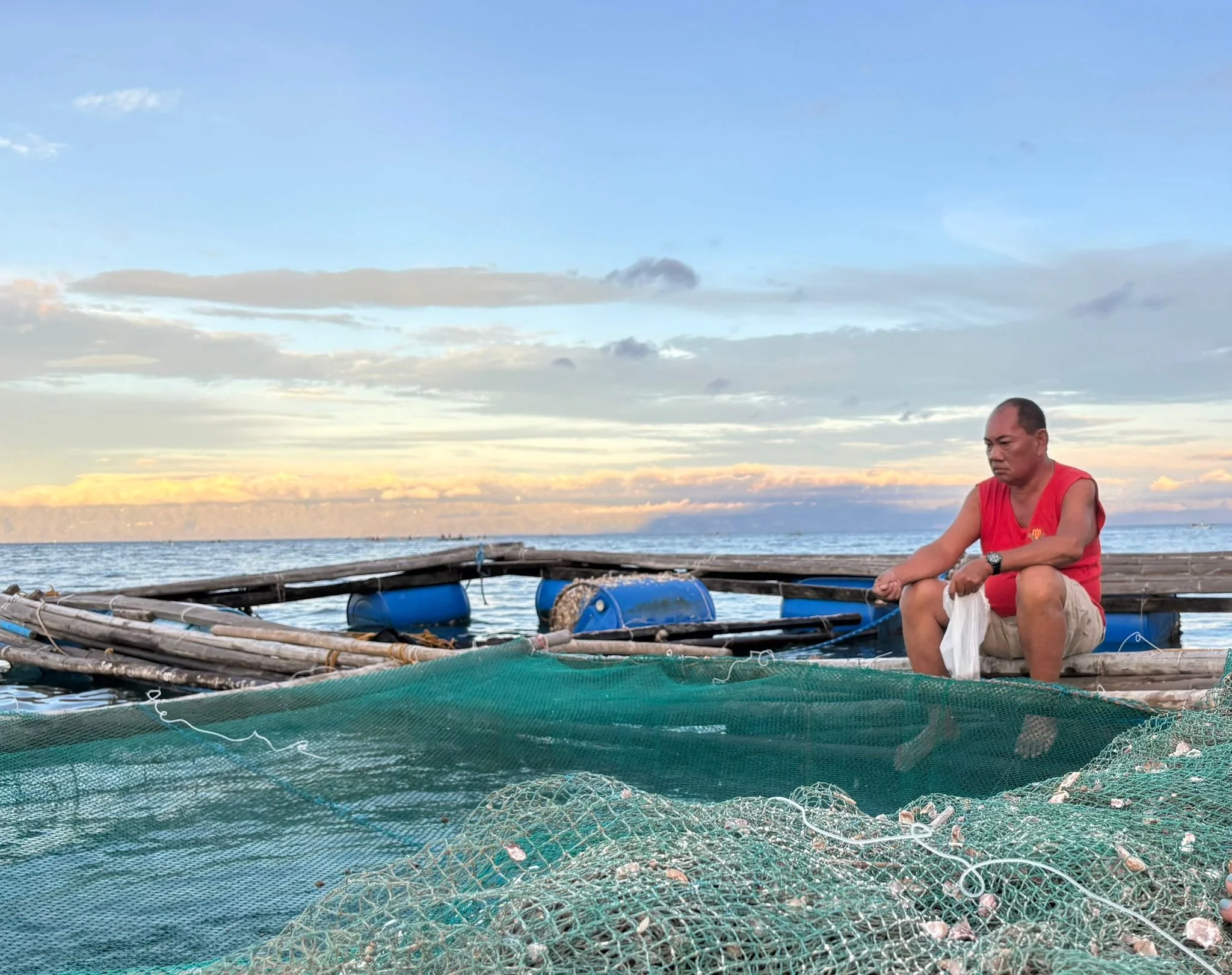
VNF says fewer than 40% of shrimp crops in Vietnam succeed, mostly because of disease and poor water quality, and heat and salinity swings make both worse. Shrimp shed their shells several times as they grow, and VNF estimates around 90% of them are thrown away. The company already turns shells from seafood factories into probiotics, chitosan and feed additives. The pilot aims to work with 150 farmers through three to five cooperatives. Farmers bag and log their shells, and a shared cooperative dryer gets them dry enough to process. VNF then collects the shells and processes them at its factory. They exchange them for VNF products, for example 1 kg of probiotic for every 5 kg of shells. A previous pilot showed farmers will collect shells through a cooperative and accept products instead of cash, but drying and transport held volumes back . Field trials against a control group will track survival, yield, chemical spending and profit.
Climate-Protected Food Finance
IBISA and IIX · Indonesia
Can climate protection built into a lender’s portfolio keep credit flowing to farmers, fishers and food businesses after a shock?
When a drought or flood hits, borrowers need more working capital just as lenders pull back from the affected districts. IBISA, a climate insurtech, and Impact Investment Exchange (IIX), an impact investment firm, want to put the protection with the lender, starting with microfinance institutions. IBISA sets a trigger from around 40 years of satellite weather data. IIX structures who holds the protection and who pays for it. When the threshold is passed, the lender would be able to absorb losses and keep lending, with relief for borrowers built in. It answers our first cohort’s finding from another direction: if farmers won’t buy insurance on its own, protect the loan they already have. Between now and February 2027, the partners will pick a first lender and portfolio, design the trigger and build the business case.
Which breakpoint would you support first?
By March 2027, these pilots will show where along the chain adaptation pays for itself and where it still needs patient money. Funders in our Funders Circle will help shape what we test next.
If you’d like to dig in further…
🔘 Learn more about the FIRST Fund
🔘 Read FIRST’s portfolio learnings on parametric insurance
🔘 Making Climate Risk Investable: a short film following FIRST’s first cohort