A blog by Miguel Moctezuma, Daniele Rugo, and Brad Evans sharing eight ethical lessons from the frontier of forensic technology.
Pilot: FOUND: Testing technologies to locate clandestine graves
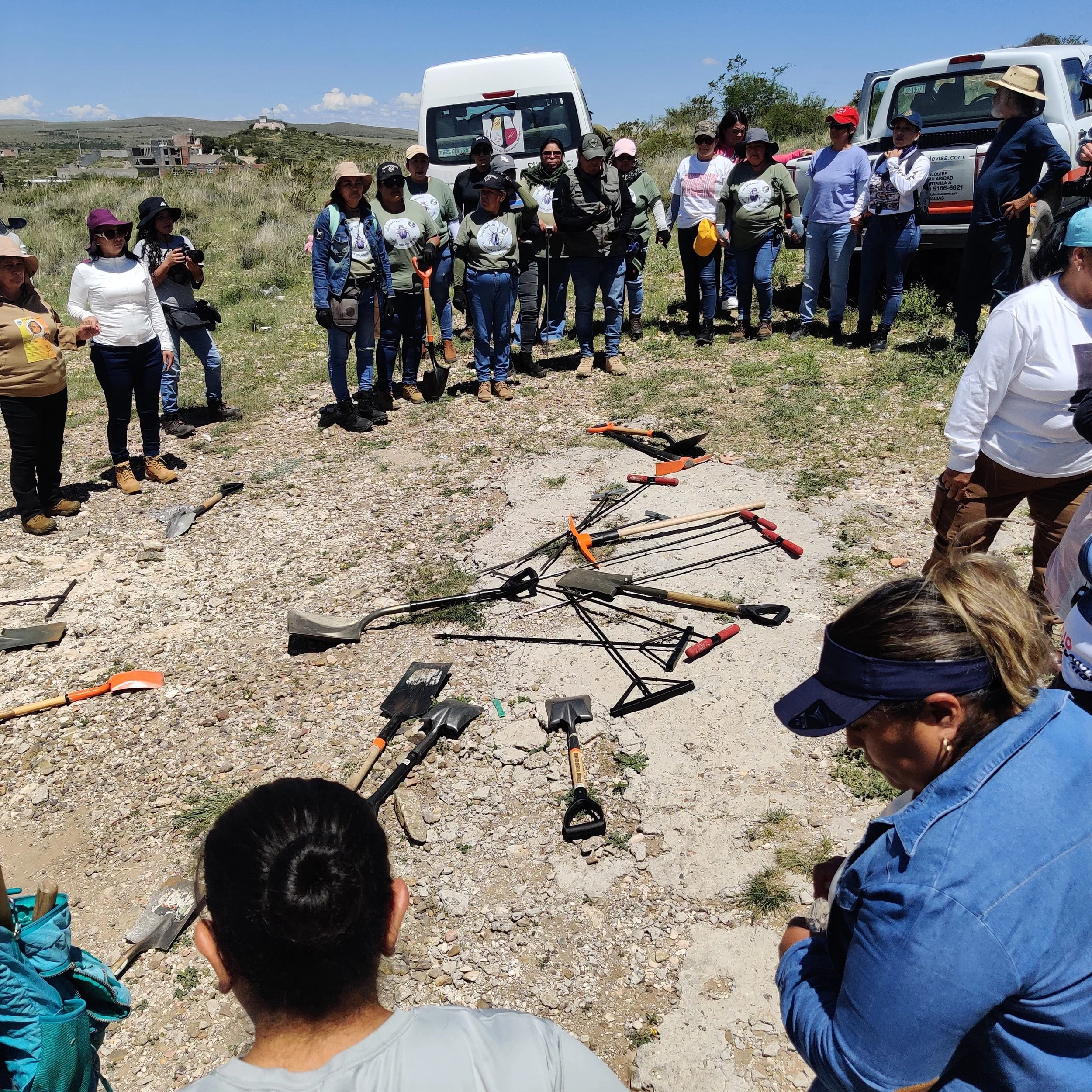
The circle before the search
What does ethical action look like when humanitarian crises intersect with rapidly advancing technologies?
This question matters because we now live in a world where artificial intelligence, remote sensing, drones, machine learning, and predictive analytics are becoming part of humanitarian and forensic practice. These technologies promise new forms of knowledge and new capacities for intervention. Yet they also raise profound ethical concerns about power, visibility, representation, and responsibility.
To explore these issues, we will focus on one of the most severe humanitarian crises of our time: the crisis of disappearance in Mexico.
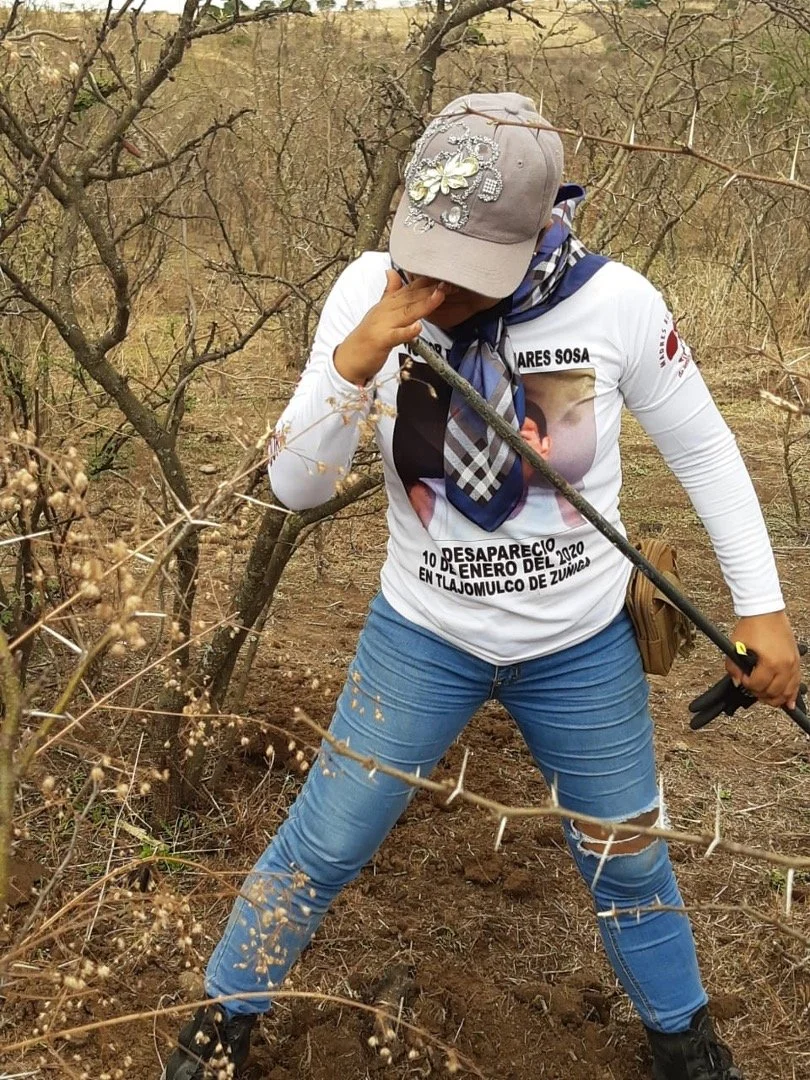
Mexico currently has more than 130,000 officially registered disappeared persons. This is not simply a collection of isolated crimes. It is a long-term social condition shaped by criminal violence, institutional fragmentation, weak investigative systems, and persistent impunity.
The consequences extend far beyond the missing individual. Every disappearance creates a network of people who continue searching, including parents, siblings, children, neighbours, activists, and community organisations. Families become investigators, archivists, forensic observers, and witnesses. They search for years, often decades, under conditions of uncertainty and danger.
At the same time, disappearance has generated what might be called a disappearance industry. Alongside genuine humanitarian efforts, there are actors who exploit families’ desperation through false information, fraudulent services, and the monetisation of hope.
More subtly, even well-intentioned institutions can unintentionally benefit from the crisis through research funding, professional advancement, or advocacy agendas that extract value from suffering without fundamentally changing the conditions that produce it.
The ethical challenge, therefore, is not simply how to find the disappeared. It is how to do so without reproducing forms of exploitation, exclusion, or erasure.
This challenge becomes even more complex as new technologies enter the search process. Projects such as FOUND have experimented with remote sensing, drones, geophysical surveys, machine learning, and forensic science to improve the detection of clandestine graves. These tools can identify patterns invisible to the naked eye. They can reveal disturbances in soil, changes in vegetation, and environmental anomalies associated with burial sites.
Technology does not arrive in a neutral space
Mexico is what we might describe, borrowing from Zygmunt Bauman, as a technological frontierland: a place where advanced technological systems meet weak institutional oversight, contested authority, and persistent violence.
In such environments, technologies can both reveal and conceal. They can increase visibility while simultaneously creating new forms of distance between decision-makers and affected communities.
This brings us to the central argument of our contribution here:
“Ethics should not be understood as an external constraint imposed on technology. Rather, ethics must be understood as a relational practice that emerges through the search itself.”
Mindful of this, we want to briefly outline eight ethical lessons that emerge from this perspective.
The first lesson is that remote distancing does not work at a human level.
Digital humanitarianism often promises efficiency through data, algorithms, and remote observation. Yet families of the disappeared do not build trust through technological sophistication. They build trust through presence, consistency, and long-term commitment.
Trust is not created by a platform. It is created when people show up repeatedly and honour their commitments. In contexts marked by corruption and impunity, human relationships remain the foundation of legitimacy.
The second lesson is that searching requires inhabiting multiple temporalities.
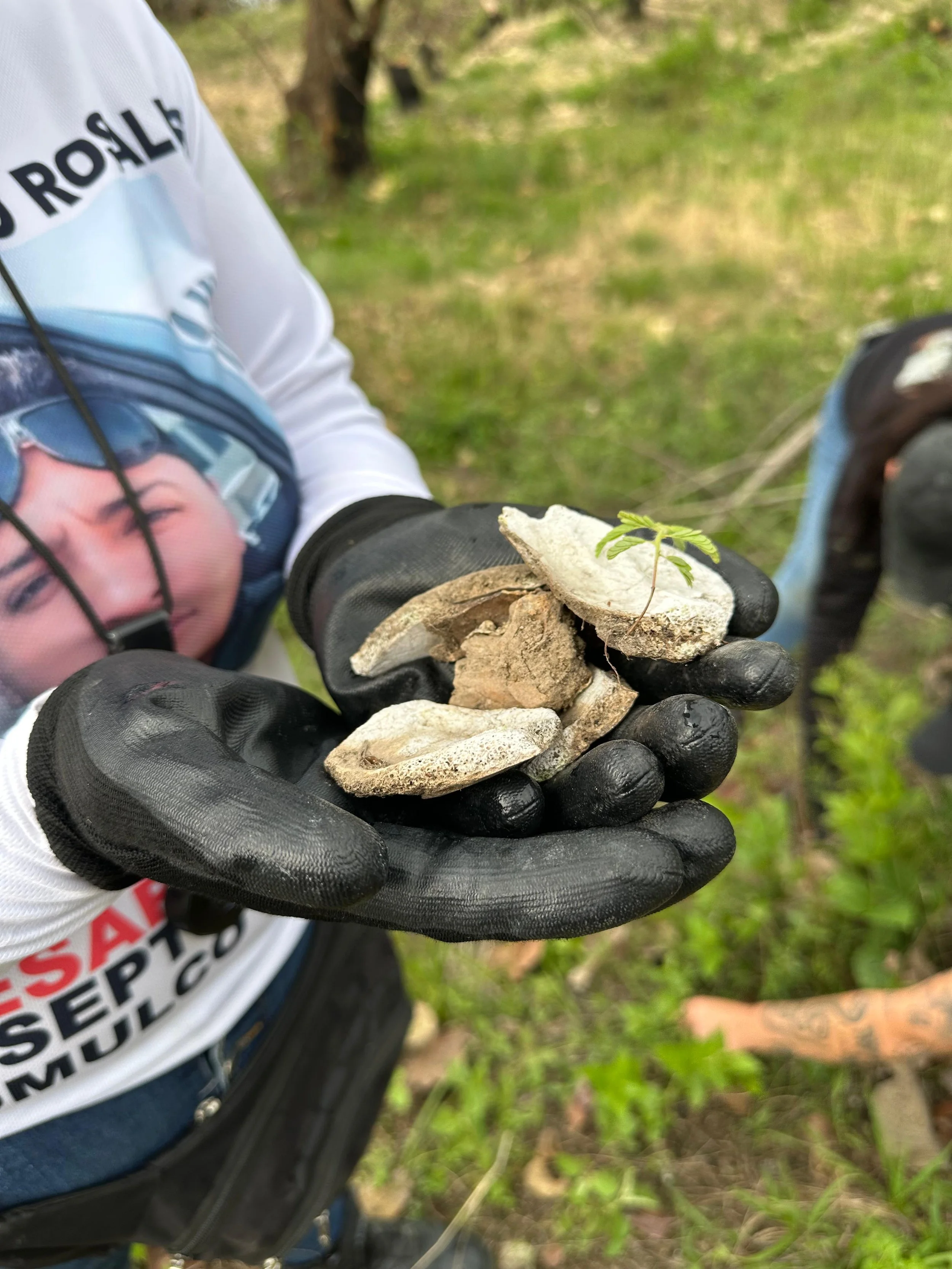
Mothers analysing nature for signs
Technological systems often privilege speed. Algorithms generate rapid outputs, and predictive models seek immediate answers.
Search collectives work differently. Families learn landscapes over years. They notice seasonal changes in vegetation, soil conditions, animal behaviour, and environmental disturbances. Knowledge emerges through repetition and return.
Ethically responsible technologies must therefore accommodate slowness rather than attempting to eliminate it. Not all valuable knowledge can be compressed into real-time data streams.
The third lesson concerns the challenge of simulated atrocity.
To improve grave detection methods, FOUND established experimental burial sites using pig carcasses under controlled conditions. Such simulations provide important forensic knowledge because pigs share significant biological similarities with humans.
Yet they also raise ethical questions: What does it mean to represent human victims through animal bodies? How do we ensure that scientific experimentation remains connected to humanitarian goals?
The answer lies in transparency, consultation, and meaningful involvement of families. Scientific legitimacy alone is not sufficient. Ethical legitimacy must also be earned.
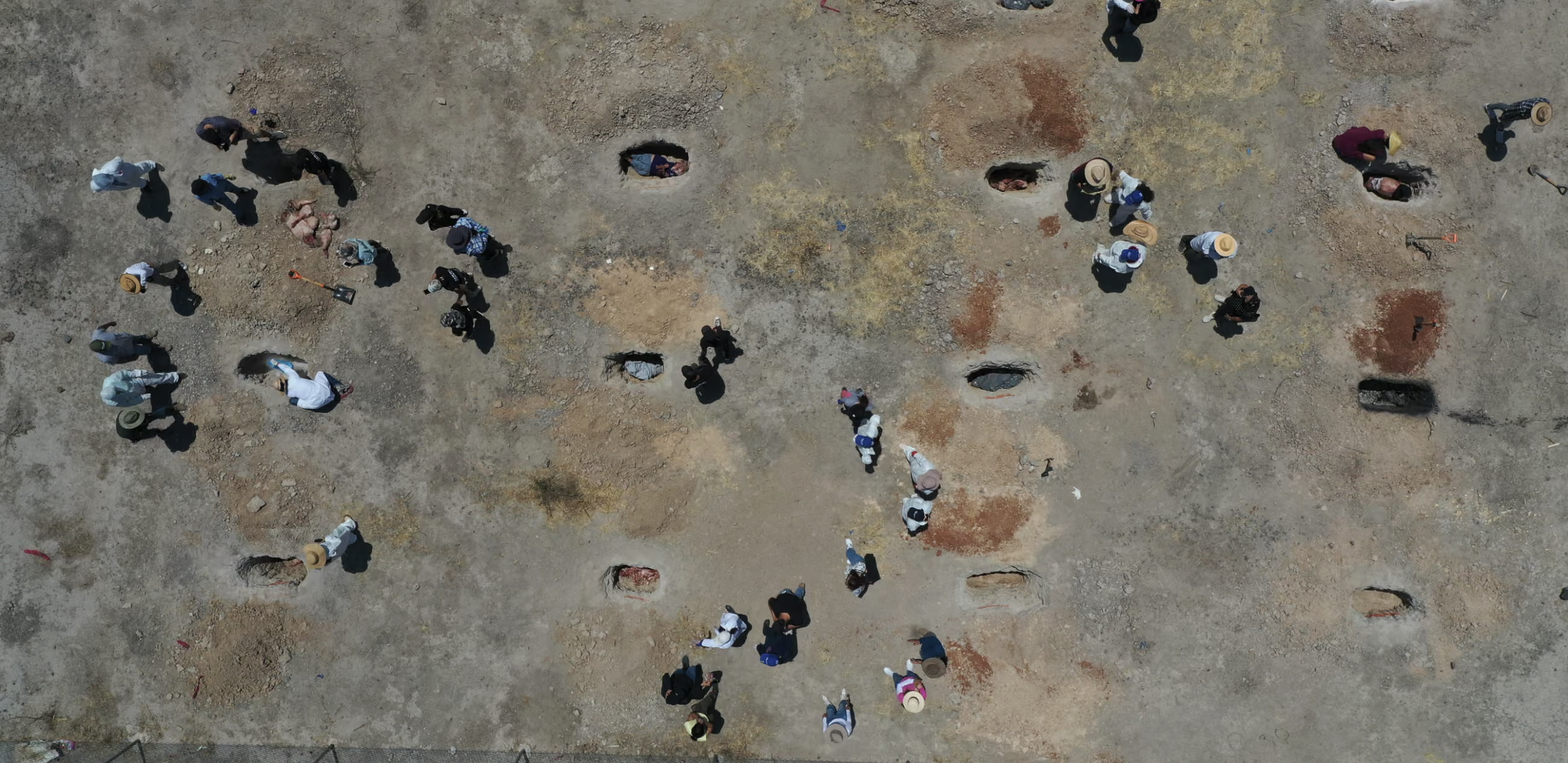
Test sites in Jalisco
The fourth lesson is that there is always a human cost.
Families searching for the disappeared often live within what scholars describe as trauma time. Their lives are structured by uncertainty, grief, and repeated exposure to violence.
Those who accompany them - humanitarian workers, researchers, forensic specialists - cannot remain entirely detached from this reality.
No technology can remove the emotional burden of disappearance. Ethical engagement requires acknowledging that solidarity carries risks, responsibilities, and emotional consequences.
The fifth lesson is perhaps the most important: Local knowledge must always supersede technical knowledge.
Families have developed sophisticated methods for interpreting landscapes. They identify subtle changes in vegetation, soil composition, and environmental patterns. Through years of searching, they have created forms of forensic expertise grounded in direct experience.
Technological systems should not replace this knowledge. Instead, technologies should be calibrated against it. The role of drones, machine learning, or geophysical surveys is not to override local expertise but to strengthen and extend it.
The sixth lesson concerns transparency and the management of suspicion.
Search operations take place in environments where secrecy is sometimes necessary for safety. Yet excessive opacity can undermine trust and accountability.
Ethical practice therefore requires a balance. Sensitive information may need protection, but methods, intentions, and institutional responsibilities must remain transparent.
In societies shaped by histories of corruption, transparency is not optional. It is a condition of credibility.
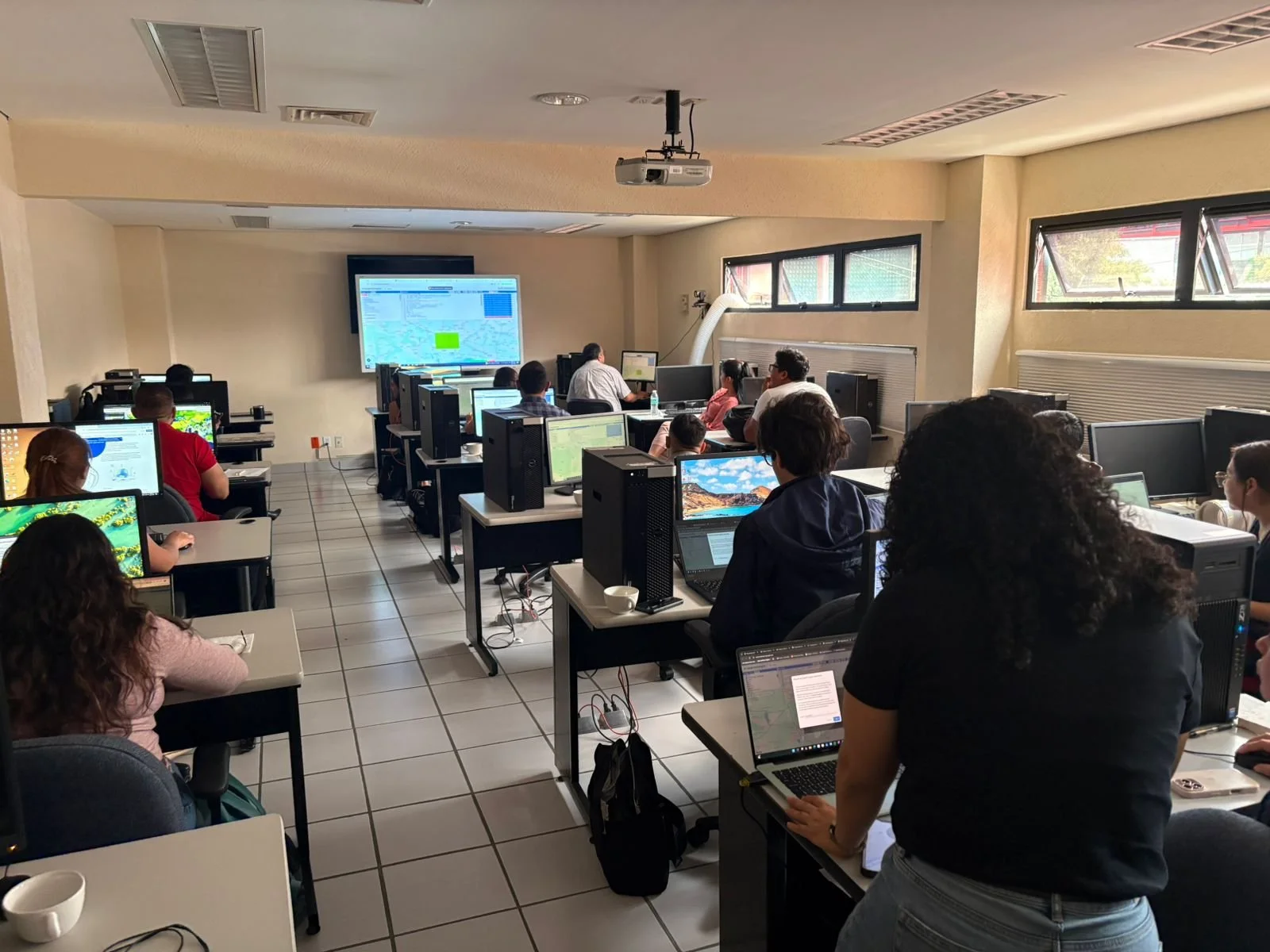
Technical training being delivered
The seventh lesson is the importance of situated personhood.
Families often speak about the disappeared in the present tense. They say, "He is a father" or "She is a student."
This practice resists bureaucratic disappearance. Institutions tend to reduce people to files, numbers, and categories. Families insist on preserving relationships, identities, and histories.
The ethical significance of this practice is profound. It reminds us that the disappeared are not datasets or case numbers. They remain part of social worlds that continue despite their absence.

“Made of his clothing”
Finally, the eighth lesson concerns the dangers of the digital archive.
Digital systems promise preservation and accessibility. Yet they can also produce new forms of erasure. As Jacques Derrida argued, archives do not simply store information. They shape what can be remembered and what can be forgotten.
In contemporary digital environments, people risk becoming collections of metadata, biometric records, geolocational traces, and algorithmic profiles. The danger is that the person disappears beneath the data meant to document them.
To avoid this, ethical archiving must prioritise consent, context, participation, and family involvement. Preservation without ethical governance can itself become a form of violence.
Where does this leave us?
The future of humanitarian action will increasingly involve sophisticated technologies. Artificial intelligence, remote sensing, predictive analytics, and digital archives will continue to shape how we search for the disappeared and investigate violence.
But technology alone cannot solve the ethical problems of disappearance. The Mexican experience teaches us that the central challenge is not technological capability. It is the relationship between knowledge, power, and responsibility.
Families of the disappeared are not passive recipients of expertise. They are producers of knowledge, creators of forensic methods, and custodians of memory.
An ethics for the disappeared must therefore begin from their experience. It must recognise that trust is more important than efficiency, that local knowledge matters more than technological novelty, that personhood exceeds administrative classification, and that truth emerges through relationships rather than machines.
Ultimately, the question is not whether technology should be used in humanitarian search efforts. The question is whether technology can be made accountable to the people whose lives and losses it seeks to address.
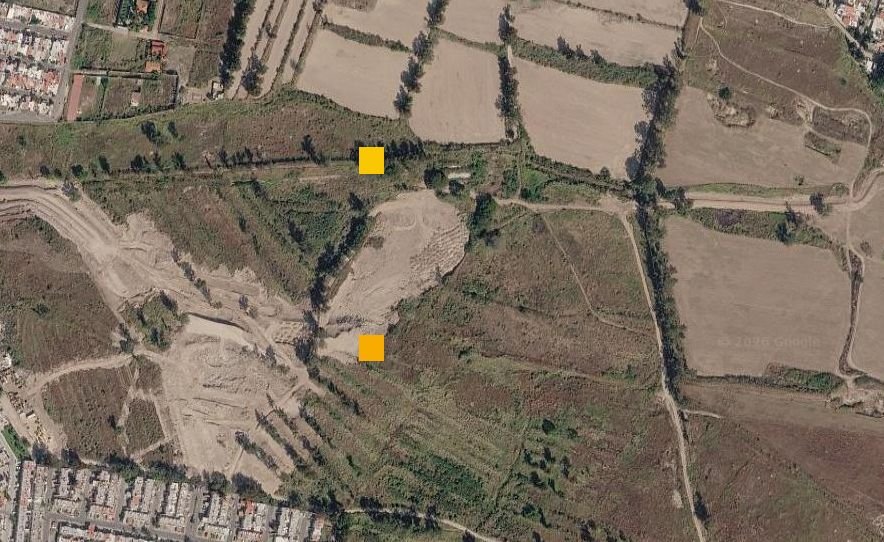
Two graves in Jalisco using nitrogen index