One hill down, a forest of hills to go
An impact story from a Frontier Tech Hub alumni
Story captured by Amy Nye
Pilot: Safeguarding land-based climate investments with blockchain
Land tenure, a brief history
Across many developing economies, climate finance and carbon markets increasingly depend on clear, verifiable land rights. Yet on the ground, governing systems are often complicated and not designed with carbon credits in mind. Land rights are often described as a bundle of sticks, with each stick representing a distinct element of ownership that can be dealt out separately to determine how that land (including the minerals below it, the plants that grow on it, and the air space above it) is used. In Ghana, two of those sticks are land tenure and tree tenure. These systems operate entirely separately, a legacy of land fragmentation stretching back to the country’s independence in 1957.
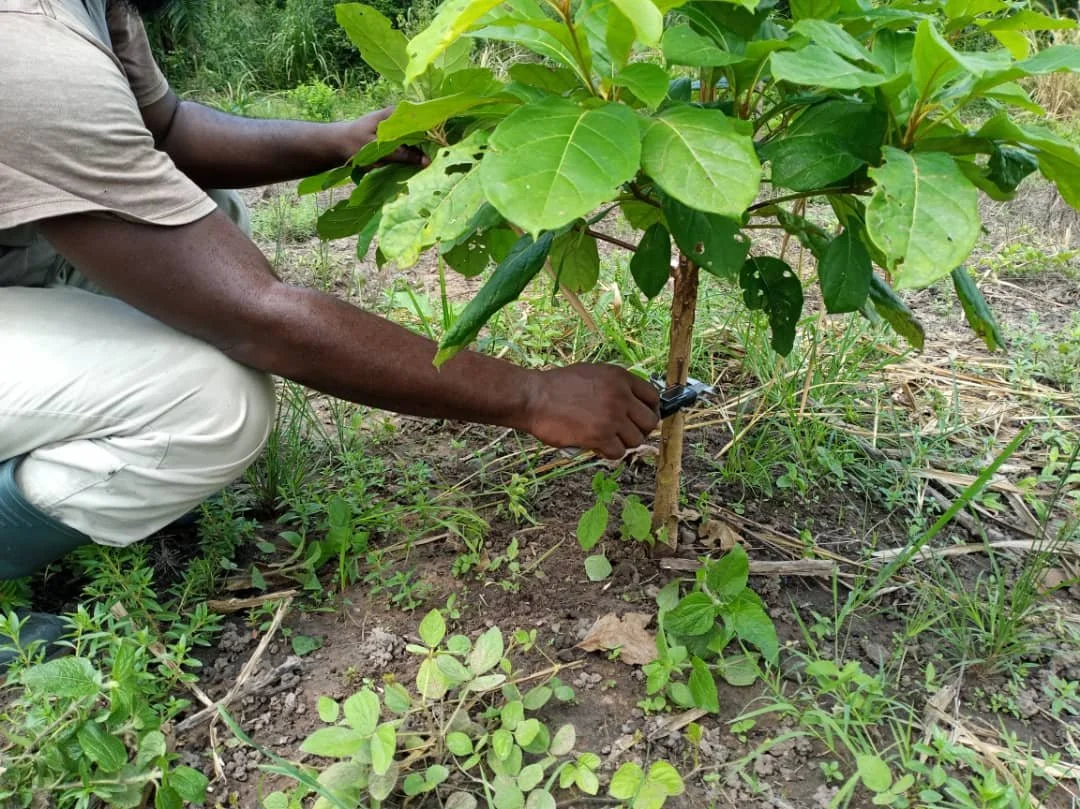
Under Ghana's constitution, whoever plants and nurtures a tree owns that tree, even without owning the land beneath it.
This system worked before independence, when traditional authorities controlled their land directly. After colonialism, and later when the government of Ghana administration took over, the traditional authorities lost a significant source of income. What followed was decades of informal arrangements: traditional authorities invited settler farmers onto their remaining land, and they let them cultivate and plant trees on it. The settlers gained ownership of the trees while rarely paying ground rent. Many of them settled into families that have now farmed the same land for generations. As Ghana's population grew from around 6 million to over 30 million, competition over land intensified.
Traditional authorities, protective of what little they had left, increasingly discouraged new tree planting altogether, deepening the tension that carbon finance depends on resolving. Benefit-sharing arrangements, like the one Kofi's team eventually built, ease that pressure by giving traditional authorities a share of carbon credit revenue alongside the farmers who plant the trees. As Kofi put it, "it's almost like redressing the balance from the colonial times. It restores a system of earning income and provides for the community through this mechanism."
In Ghana, farmers were planting trees on land whose ownership was itself contested. In the hopes of bringing some clarity to Ghana's tangled land tenure system, Kofi's organisation, Oko Forests, partnered with the Frontier Tech Hub to explore the question, "Can digital land rights measurement, reporting, and verification help farmers access global carbon markets?"
The journey from their pilot
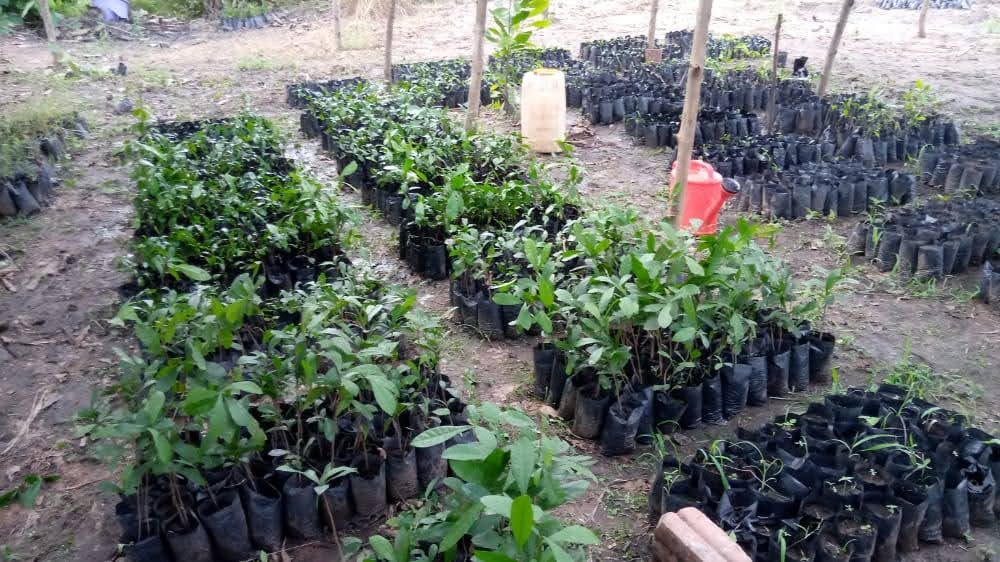
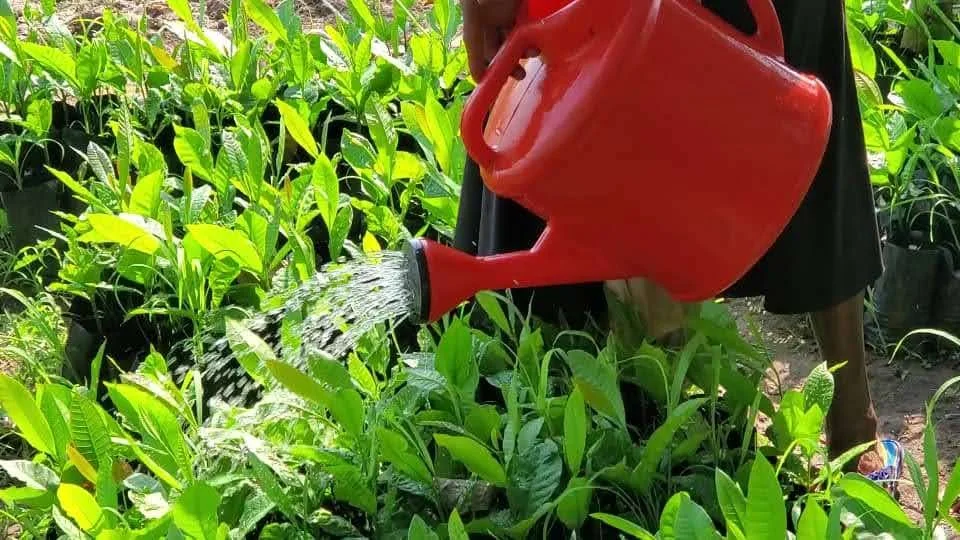
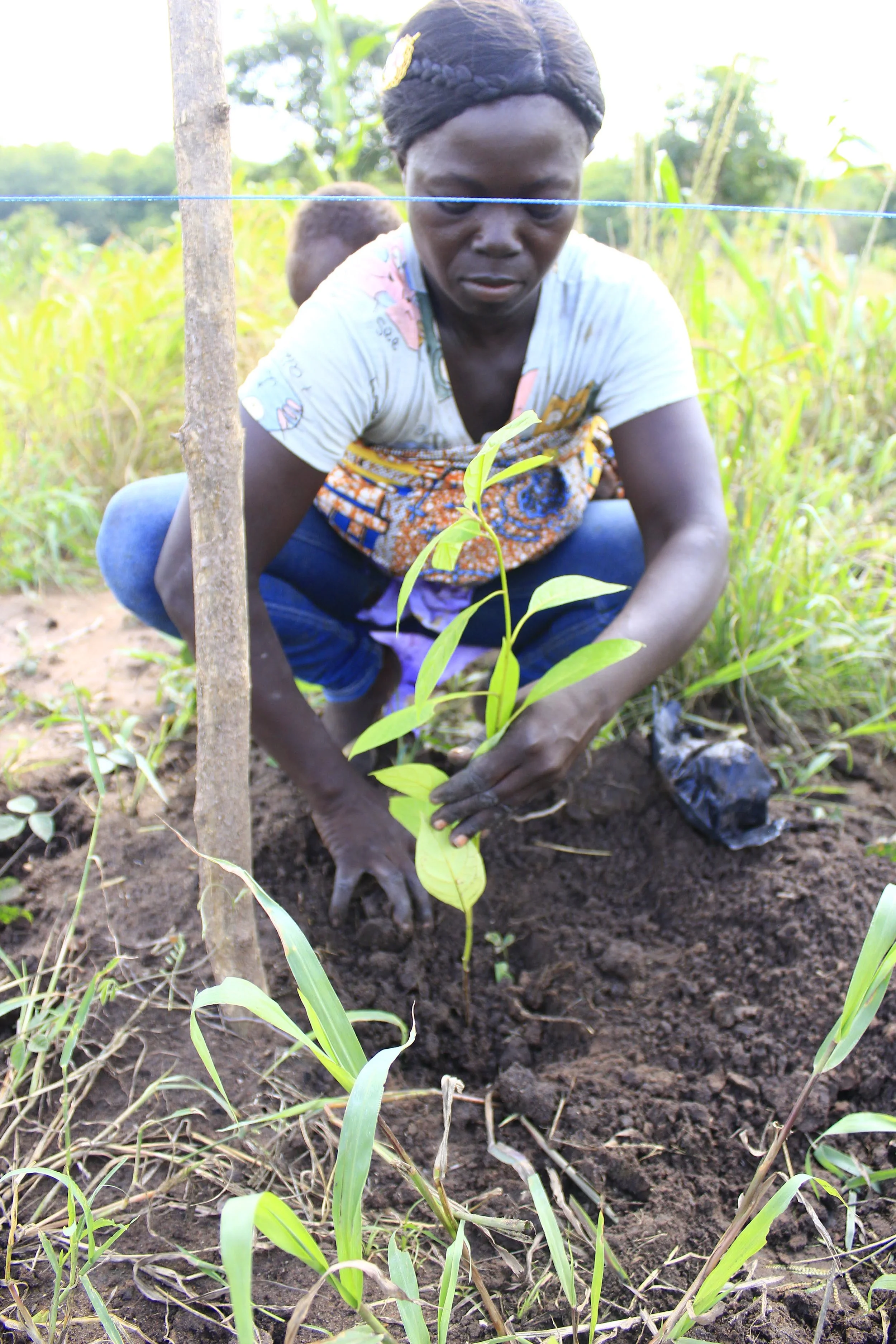
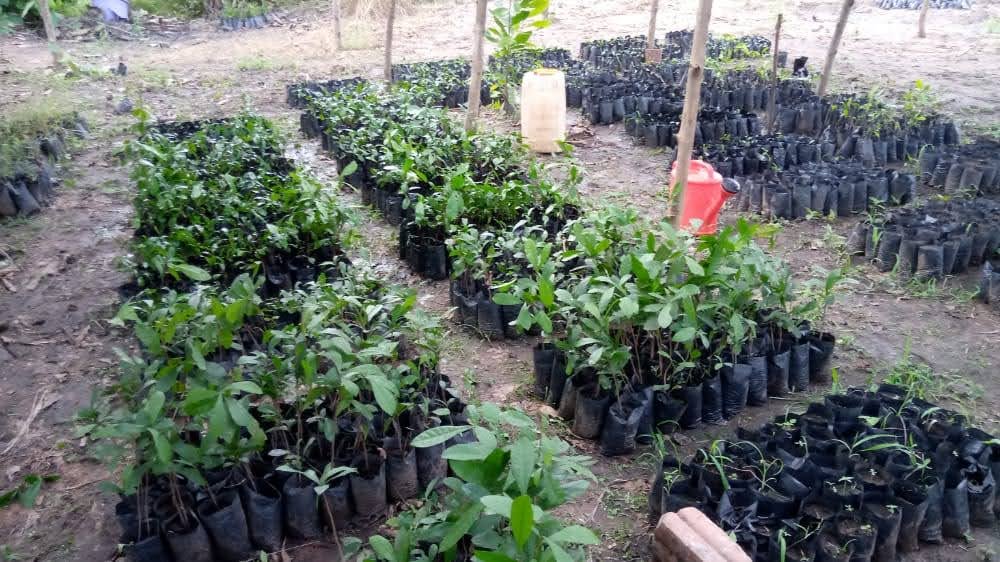
Before the FT Hub pilot in 2022, Oko Forests was chipping away at becoming carbon credit certified to help in the transformation of the land tenure landscape in Ghana. As part of this process, they began experimenting with agroforestry and land tenure on its own 85-acre plot in Ghana's Ashanti region, planting 70,000 trees and testing different tenure arrangements with smallholder farmers. At that point, Oko Forests had been working in this field since 2016, but it had never tested its ideas beyond its own land.
Surveying the ground
During the pilot with the FT Hub, Oko Forests built a relationship with the geomatics department at Kwame Nkrumah University of Science and Technology (KNUST), a leading science and technology university. Its students mapped project land at cost price, trading their labour for practical field experience most courses on surveying in Ghana can't offer. Field visits brought the team face to face with traditional authorities for the first time, and with it, the realities of putting their theories into practice.
“FT Funding showed us how we need to position ourselves in terms of partnerships and deepening those partnerships, and having a better understanding of the field we’re in. It’s going to be a very long journey to solve this problem. We thought we saw the finish line, but it goes way, way further. We’re on top of one hill, but now we can see there are a lot of other hills across the forest landscape.”
This clarity also forced Oko Forests to take a huge step back in their original plan for the pilot. They initially came into the pilot with another partner, BenBen, who had designed an app to track and manage land agreements using blockchain. The idea was that during this pilot, they would launch and test this app on the ground. However, after the gap in partnerships became clear, Oko Forests quickly and strategically pivoted to essentially de-tech the pilot, focusing on the social infrastructure that was required.
Finding their way
It took about a year after the pilot ended for that realisation to turn into progress. Oko Forests deepened a relationship with COLANDEF, Ghana's leading land rights NGO, a partnership that started towards the end of the FT Hub engagement. Oko Forests had realised that they needed to establish formal agreements with traditional authorities, and COLANDEF was going to be the partner that could bridge that gap.
COLANDEF brought an understanding of institutional memory and local negotiation dynamics that Oko Forests lacked independently. When they spoke to chiefs in terms the community trusted, doors opened quickly. Within a week, traditional authorities had signed three MOUs, offering Oko Forests more land than the team could manage. Those agreements also established a benefit-sharing model that gives Oko Forests the right to certify community land for carbon credits, while channelling a share of that revenue back to traditional authorities and the farmers who plant the trees.
From there, Oko Forests grew in two directions at once. In the Ashanti region, a partnership with Nsuta Community Bank now reaches around 1,000 smallholder farmers across roughly 5,000 acres, unlocking agricultural finance and helping farmers diversify into agroforestry to de-risk their lending. In Ghana's Savannah region, the organisation secured an 8,000-hectare land holding divested by a British agricultural investment company, where it now partners with a Ghanaian agricultural finance platform to run large-scale, mechanised organic commercial agriculture alongside its own tree planting.
What remains unseen
Relationship infrastructure
The FT Hub pilot's contribution was a web of institutional relationships. The connection to the university geomatics department continues to support Oko Forests' land mapping work. Meetings held with the regional head of Ghana's Lands Commission during the pilot built an understanding that still underpins how the team navigates the country's dual land governance system. And the relationship with COLANDEF, which began during the FT Hub pilot, became the partnership that ultimately unlocked the MOUs.
Permission to experiment
The pilot gave Oko Forests space to test tenure arrangements on its own land before scaling up, and to be honest about what wasn't working. The pilot shifted how they thought about sequencing, enabling them to understand the length of the journey on which they had embarked; reaching their destination would require building institutional muscle (funding, partnerships, and field presence) before layering on technology.
In fact, this pilot never even made it to the stage of testing the tech they had in mind. They initially started the Frontier Tech Hub as a partnership with BenBen, a partner who designed an app to manage land agreements. However, as they quickly learned through their initial community outreach, they were not ready to move to the technology yet. Even the signed MOU isn’t enough; for now, it’s a piece of paper until community trust gives it meaning and weight. Once that trust is formed, then they’ll return to the technology to scale up the registering of thousands of farmers.
The unique FT Hub difference
What wouldn't have happened otherwise
What the FT Hub gave Oko Forests was room to find out what the real problem was before committing to solve it. The pilot's research funding let the team pressure-test land tenure arrangements on its own ground first, rather than discovering the pitfalls after scaling to thousands of farmers. That early, lower-stakes testing ground turned out to matter more than any single tool. It also bought Oko Forests time it wouldn't otherwise have had, time to sit with the geomatics department and meet repeatedly with the regional head of the Lands Commission. Neither relationship delivered an immediate result during the pilot itself, but both are still active today, underpinning how the team maps land and navigates Ghana's dual system of land governance.
Perhaps most importantly, the pilot created space to be honest about what wasn't working. Oko Forests emerged with the realisation of the true length and depth of the journey, which shaped a slower, more deliberate partnership-led approach to everything that followed, rather than a rush to scale on an incomplete foundation.
Without that research funding, Oko Forests may never have grasped the true scale of Ghana's land tenure challenge before scaling up and risked repeating the very conflicts that have undermined tree planting in Ghana for decades.
The forest of hills ahead
What happens next depends, in part, as it so often does, on funding. Oko Forests is in the process of trying to establish long-term funding that would be transformative for the carbon credits and land and tree tenure landscape in Ghana. Long-running, colonial-era land tenure conflicts are not the sort of thing you can fix over the course of a 1-year pilot. There is no tech that will exclusively address the challenges. It requires longstanding trust-filled relationships, with on-the-ground presence; all things that Oko Forests plans on building, once they secure the means to do so.
Over the next five years, the team wants to convert its current cohort of 1,000 smallholder farmers to full, diversified agroforestry systems, and to bring the drone- and AI-powered monitoring tools being planned on its large-scale commercial project down to smallholder scale.
Oko Forests is going about things slowly, but deliberately. They know that for their context, they can’t jump straight to testing and scaling tech. They are prioritising sustainable change, which can only be built on a solid foundation of the institutional trust and partnerships they are in the process of building.
If you’d like to dig in further…
🔘 Explore this pilot’s profile page