Welcome to the Global
Partnerships Summit 👋
We’re so glad to see you’ve stopped by our stand. Here are a few tips to help you get the most out of the Summit.
What If Your Biggest Idea Only Costs £50k?

Tuesday 19th | 11am | Spotlight room A, Speakers corner
Lea Simpson’s keynote talk will share insights from a decade of de-risking radical tech solutions with small experiments (and budgets). She will take you from a riverbank in Senegal to a clandestine grave in Mexico. To a courtroom in The Hague. From a field of locusts in Kenya to the inside of a government building in London. And it isn’t a case for technology, but for a different way of working.
Learn about the Oxygen CoLab
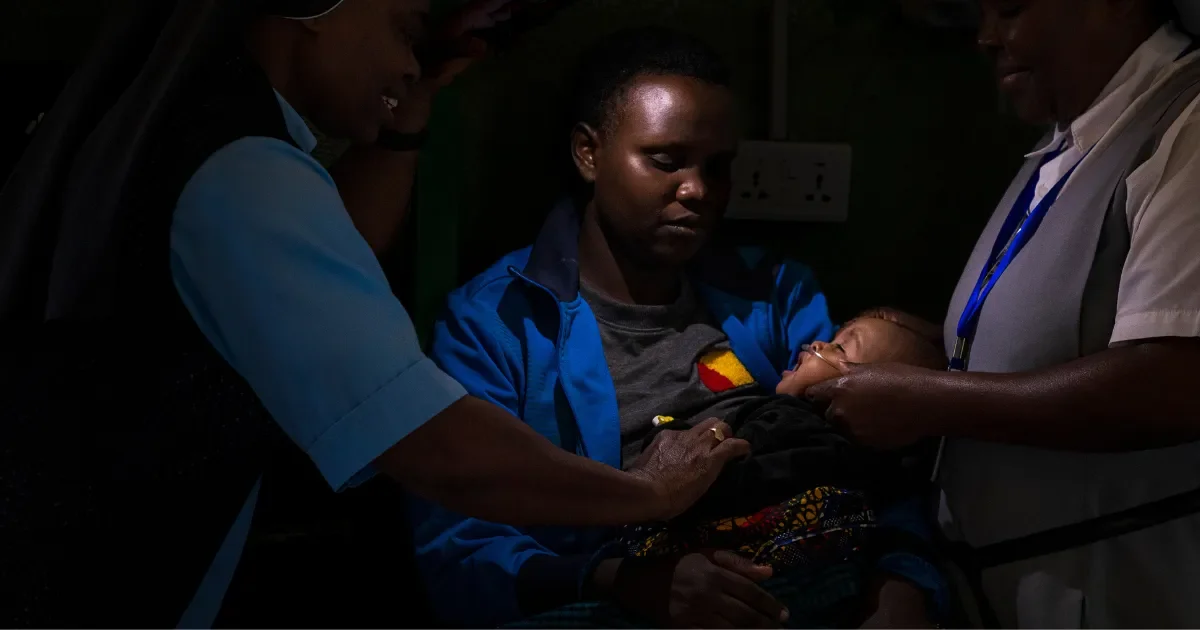
In the Tech Village, keep your eye out for our partner organisation, the Oxygen CoLab. After testing routes to make medical oxygen available during the pandemic on the Frontier Tech Hub, the CoLab spun out into a broader mission: to help build thriving, self-reliant oxygen markets that work for patients and medical centers in low-resource settings.
Take a Field Trip to the Future

This Summit is only the start of what’s possible. Discover more about how we could work together to harness frontier technologies to solve global challenges.
If you’re not sure where to start, we’re running an exclusive, online workshop to explore International Development in the Age of AI. Have you reserved your ticket to the future yet?
Safe water needs to be reliable, not free.
10 years ago, a third of rural hand pumps in Africa were broken. In the Tanzanian village of Endanachan, collecting water took up around 3 hours a day. This responsibility was often the responsibility of the youngest girls.
Since eWater piloted IoT-enabled Smart Taps, the journey takes only 10 minutes, freeing up children to go to school. Payments cost families less than $5 a year, a business model which enables real-time monitoring and rapid repairs from nearby mechanics.
Today, 1,302 Smart Taps supply clean water to 350,000 people across Tanzania, Gambia and Kenya.
Technologies to locate those we are missing
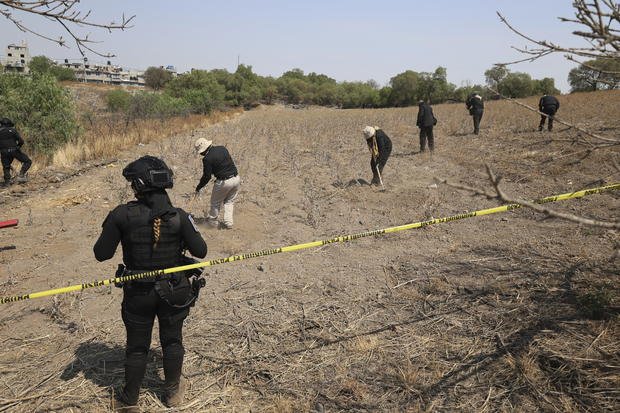
Over 130,000 persons are reported as disappeared in Mexico. Madres Buscadoras, searching mothers, have built an intricate collective body of knowledge to interpret nature’s signals and find clandestine graves themselves.
FOUND combines the searching mothers’ grassroots knowledge with cutting-edge technological tools, strengthening the search and building institutional capacity to improve how governments respond to disappearances.
The technology has already been used to find the remains of 27 people, and the team has signed an official agreement with the National Search Commission to expand their search across Mexico.
Drones don't fly themselves
East Africa's worst desert locust crisis in 70 years sparked a pilot to more effectively kill swarms, with the potential to protect the food security of 3 million people.
Violet Ochieng joined as a Master’s researcher in environmental science and agricultural entomology, but today, she is a licensed drone pilot in a field where around 90% of her peers are men. She is also Kenya’s country representative for precision agriculture.
The pilot she joined as a student has since grown into a programme covering five counties, mapping up to 1,000 acres. And Violet is now mentoring the next generation of women who, she says, won't have to find their own way the way she did.
Information integrity is under threat, but AI can help us get ahead
Disinformation campaigns are now fast, automated, cheap and increasingly difficult to track. Organisations at the frontline of these threats have the potential to counter them, but often lack access to the data, tools, or space for experimentation needed to do so.
We provided funding and AI expertise to three frontline teams across Eastern Europe to test three new tools: a chatbot to teach teenagers to detect disinformation, a daily economic truth dashboard to counter Russian narratives and a user-friendly tool to help journalists and policymakers detect disinformation networks.
Sparking East Africa's electric vehicle revolution
Technology can’t scale without a viable business model, and sometimes that’s where the most impactful innovation exists.
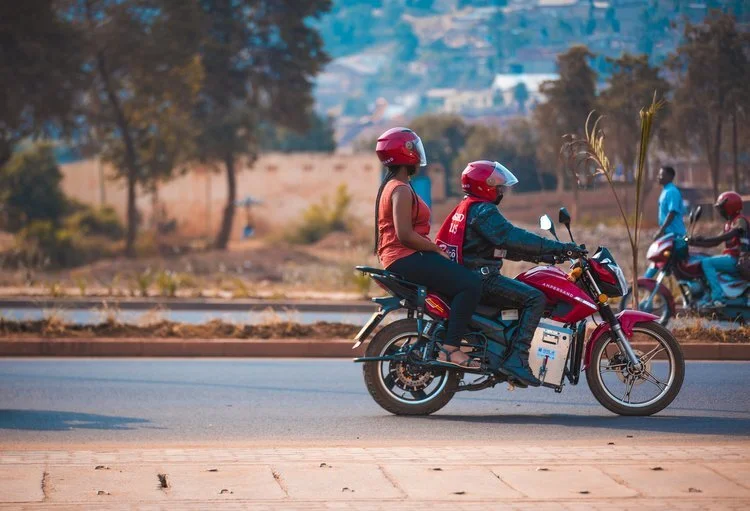
In 2018, Ampersand set out to test and de-risk a battery-swapping network with us, to support Kigali’s 30,000 moto-taxi drivers who were generating slim profits and steady carbon emissions.
Drivers in the e-mobility pilot increased their revenue by 78%, and Ampersand secured a $3.5m record-breaking VC investment for e-mobility in Africa. Today, they have expanded into Kenya, influenced a shift in Rwandan government policy on electric vehicles, and aim to electrify all motorcycle taxis in East Africa by 2030.
Proving a clean supply chain shouldn't be a luxury
Colombia has spent years promoting cocoa farming as a legal alternative to coca, supporting 52,000 rural families to transition away from illicit crops.
But when Europe introduced rules requiring exporters to prove their supply chains are deforestation-free, smallholder farmers found themselves excluded from the market. Certification schemes were too expensive.
FOLIA combines satellite imagery with farm boundaries drawn by farmers on their phones to generate verified deforestation reports. Tested across 55 farms in 2023, they were accurate to 80–99%.
A DNA lab that fits in a backpack and a parrot that needs to go home
Every year, Colombian authorities confiscate thousands of trafficked animals. Without knowing their exact species, releasing them safely is impossible. Put a yellow-crowned parrot back in the wrong part of the country, and you risk the bird's life and the ecosystem it enters.
But the MinION is a UK-developed portable DNA sequencer that can identify trafficked species in the field. It reduces sequencing costs from $14 to $0.46 and cuts turnaround time from weeks to just 48 hours. Could this become a routine, sustainable service for Colombia's regional environmental authorities?
Climate insurance exists, but last-mile payments are still a problem
Small-scale fishers in the Philippines now have access to a world-first parametric insurance product: protection that automatically triggers when a climate event occurs. But two recent typhoons affected pilot communities without triggering payouts.
This is one of three pilots in the Frontier Tech Hub's climate adaptation portfolio. Each is testing a different route to making climate finance reach the people who need it, and translating real adaptation impact into something capital markets or governments can understand and fund at scale.
Tracking off-grid delivery to the last mile
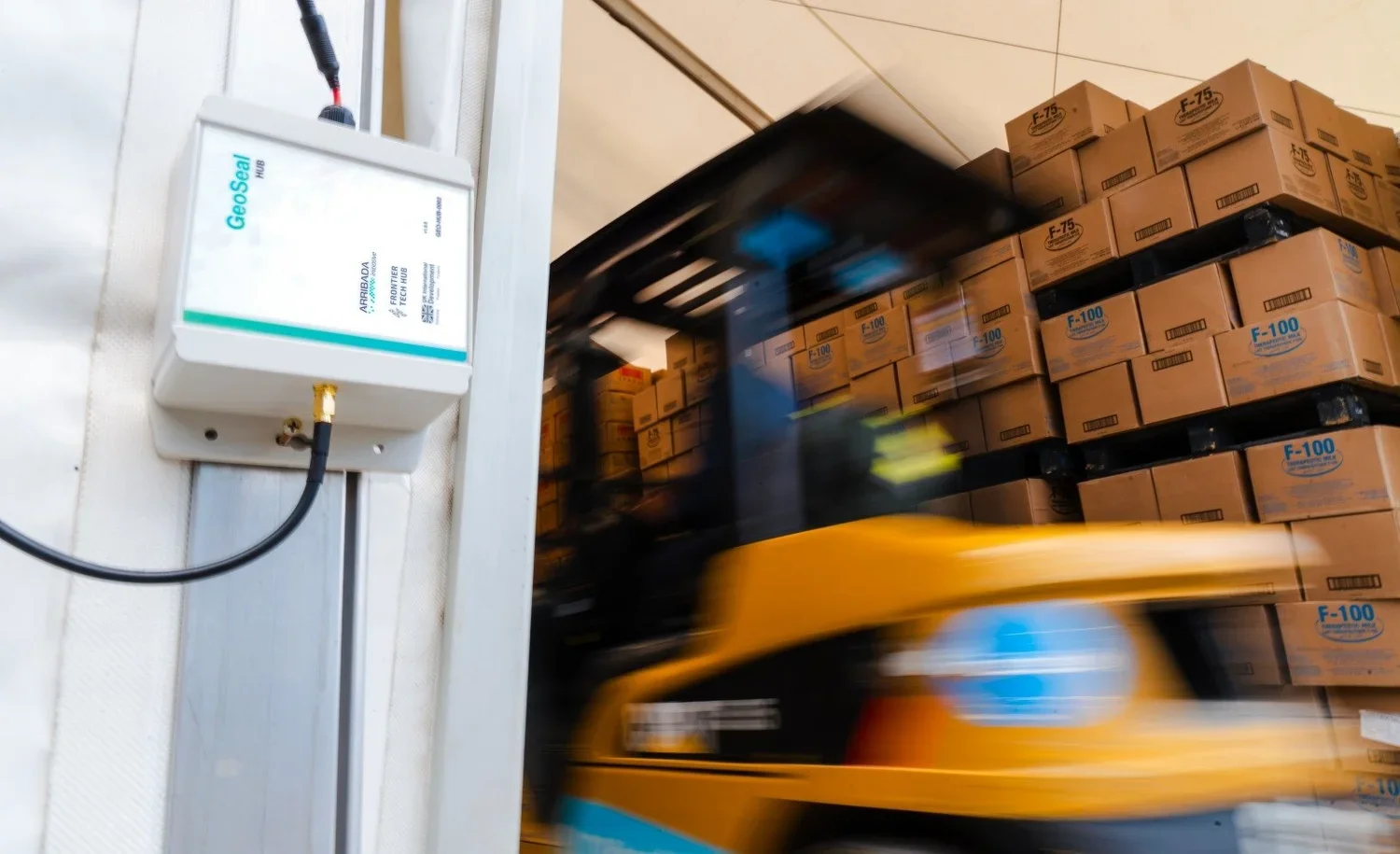
When children and mothers in Ethiopia's last-mile clinics were running out of therapeutic food, it wasn’t because it didn’t exist, but because there was a visibility gap in the supply chain.
The compounding effect was behaviour change: mothers were less likely to make the long journey on foot after experiencing a stockout.
GeoSeals puts RFID tags on individual boxes of aid to track them through the supply chain. It gives humanitarian agencies a real-time picture of where stock is moving, stalling, or disappearing, even in off grid settings.
We’re here to talk about global partnerships
Our work is only possible through collaboration. We are a global hub of partners, funders and collaborators working together to test, learn and publish insights about what works when it comes to frontier technologies.
Together we have….
1
2
3
Anchored UK–Mexico tech cooperation around the search for the disappeared
Two linked pilots - FOUND, locating clandestine graves, and IdentIA, accelerating forensic identification - have used UK funding to back Mexican-led work on one of the country's most painful crises. The work has anchored a formal agreement between Mexico's National Search Commission and Mexican research institute CentroGeo, witnessed by the British Embassy. A recent UK ministerial visit to our implementing partner LabCo took the conversation further, exploring UK–Mexico cooperation on tech for identifying missing persons alongside the National Search Commission. The same FCDO Pioneer is driving both pilots - and the partnership is deepening with each one.
Paired UK funding with private capital to electrify motorcycle taxis in East Africa
In 2018, we backed Ampersand to test a battery-swapping network for Rwanda's 30,000 moto-taxi drivers — swapping a drained battery for a charged one in minutes, cheaper than petrol. Drivers in the pilot increased their revenue by 78%, and Ampersand went on to secure a record-breaking $3.5m VC raise for African e-mobility. The pilot also helped shift Rwandan government policy on electric vehicles, and Ampersand has since expanded into Kenya with a stated aim to electrify all motorcycle taxis in East Africa by 2030.
Helped a Brazilian university spin-out land its first paying customer — and brought Pernambuco's innovation ecosystem into partnership with the UK
Stop the Spread started as a question in a lab at the Universidade Federal de Pernambuco: could a nanobiogel slow wildfires in their first critical minutes? Through our pilot, the implementing partner Arqueatec moved the science from lab to field — testing No Fire on sugarcane farms in Pernambuco, where a single arson attack last year destroyed 2,300 hectares. The pilot has since secured its first paying customer, attracted co-funding from SECTI (Pernambuco's State Secretariat of Science, Technology and Innovation), and put the British Consulate in Recife, SECTI, FCDO and a Brazilian start-up in the same room around a home-grown product with the Amazon, Cerrado and Pantanal on its radar. UK catalytic funding and FT Hub coaching took a research idea over the line; local innovation institutions are now backing it to scale.